
When considering swimwear manufacturing, it's important to choose the best location for production. If you're looking for low costs and high output, China is an excellent option. Vietnam also offers substantial production capabilities along with good quality. Bali is recognized for its ethical practices and commitment to environmental sustainability. Brands are increasingly focused on factors such as eco-friendliness, production volume, cost efficiency, and ethical responsibility. Before making a decision on where to manufacture your swimwear, you should reflect on what aspects are most important to you.
Key Takeaways
China is great for big orders because it is cheap and fast. Brands that need a lot of products should pick China.
Vietnam gives steady quality and fair prices. It is good for brands that want simple items and can order more at once.
Bali is best for small orders and cares about doing the right thing. New brands that want to help the planet should pick Bali for special designs and green materials.
Always think about what your brand needs before you pick a place to make your products. Look at things like price, quality, and doing what is right.
Talking well with factories is very important. Make sure your factory speaks good English so you do not have problems.
Quick Comparison Overview
Picking where to make swimwear can be hard. You need to think about cost, quality, speed, and what matters to you. Here’s a simple look at how China, Vietnam, and Bali compare.
Comparison Table
Feature | China | Vietnam | Bali |
|---|---|---|---|
Cost | Low to moderate | Moderate | Moderate to high |
Quality | Wide range, needs research | Consistent, good for basics | High, focus on detail and finish |
Lead Times | Fast to moderate | Moderate | Moderate to long |
MOQs | High (3,000-5,000/style/color) | Low (as low as 300/order) | |
Sustainability | Improving, still limited | Growing focus | Strong focus, eco-friendly fabrics |
Communication | Can be challenging, technical | Improving, English common | Direct, personal, English-speaking |
Tip: If you choose China, you must check factories carefully. Not all factories give the same quality or help. Vietnam has bigger minimums. Bali is good for small orders and cares about sustainability.
Best Fit by Brand Type
China: China is great if you want to make lots of swimwear. It costs less and is fast. Big brands that need many pieces and can check quality will like China.
Vietnam: Vietnam is best for brands that want steady quality. You need to order more at once. If you want to grow and need basics, Vietnam is a smart pick.
Bali: Bali is perfect for new brands, small labels, and brands that care about the planet. You can order small amounts, get custom designs, and focus on ethical production. Bali’s factories, like King Trading, use eco-friendly fabrics and let you make flexible collections.
Swimwear manufacturing is not the same for everyone. Think about your brand’s size, what you care about, and your goals before you choose a place.
China Swimwear Manufacturing
Strengths of China
China has many good points for making swimwear. Here is a table that shows the main strengths:
Strengths | Description |
|---|---|
Cost-effectiveness | Prices are 30-50% lower than Western factories. |
Advanced customization | Offers OEM/ODM services for custom products. |
Eco-friendly innovations | Uses recycled fabrics and sustainable methods. |
China uses new technology and can make lots of swimwear. You can pick your own designs and use eco-friendly materials like recycled nylon and polyester.
Drawbacks of China
There are some problems you should know about:
Intellectual property theft
Communication is sometimes hard
Shipping costs go up and down
Geopolitical issues
High minimum order amounts
To avoid trouble, check factories closely and pay attention during production.
Costs and MOQs
Making swimwear in China costs less than in other places. Most factories want you to order at least 300 pieces per style. Each piece costs between $10 and $50. The price depends on fabric, design, and how many you buy. Sometimes, you can ask for lower minimums if your designs are special.
Production Scale and Quality
China is the biggest swimwear maker in the world. Xingcheng makes about 70% of all swimwear. One-third of people there work in this business. Factories use modern machines and digital cutters. Many companies check materials, stitching, color, and seams in steps. Some factories have international certificates like ISO 9001.
Communication and Support
Most Chinese factories answer quickly. They handle questions well and want customers to be happy. They help with design and after-sales support. Manufacturers listen to feedback and try to finish orders on time.
Ethics and Sustainability
China is getting better at being ethical and green. Many factories use regenerated nylon like ECONYL® and recycled polyester like REPREVE®. You see certifications like Global Recycled Standard (GRS). Local brands also make eco-friendly yarns. If you care about the planet, you can find options that fit your values.
Vietnam Swimwear Manufacturing
Strengths of Vietnam
Many brands pick Vietnam for making swimwear. The table below shows the main strengths:
Strengths | Description |
|---|---|
Skilled Workforce | Experienced workers adept at precision cutting, stitching, and finishing, ensuring high quality. |
Advanced Production Capabilities | Investment in technology and material innovation, enabling production of high-performance swimwear. |
Sustainability Efforts | Adoption of eco-friendly practices, including use of recycled materials and ethical labor standards. |
Competitive Pricing | Offers affordability without compromising on quality, appealing to businesses of all sizes. |
Strategic Location | Proximity to global markets enhances accessibility for exports. |
Vietnam is known for quality and new ideas. Factories use eco-friendly ways. The country’s location helps brands ship products fast.
Drawbacks of Vietnam
Vietnam has some problems you should know about. Here’s a quick table:
Factor | Challenge | Solution |
|---|---|---|
Supply Chain | Limited raw material sources compared to China | Import high-quality fabrics |
Factory Availability | Fewer specialized factories than in China | Partner with established manufacturers |
Language Barriers | Communication difficulties with suppliers | Work with experienced sourcing agents |
Sometimes, factories do not have all materials. You may need to bring in fabrics from other places. There are fewer factories than in China. Talking with suppliers can be hard. Sourcing agents help with communication.
Costs and MOQs
Vietnam gives good prices for making swimwear. Most factories want you to order 3,000 to 5,000 pieces per style or color. Here’s a breakdown of costs:
Cost Component | Amount (USD) |
|---|---|
Fabric Costs | $8 |
Labor Costs | $12 |
Trims and Accessories | $2 |
Private Labeling | $1 |
Packaging | $1 |
Quality Control | $1 |
Shipping (FedEx Economy) | $5 |
Total Cost Per Bikini Set | $30 |
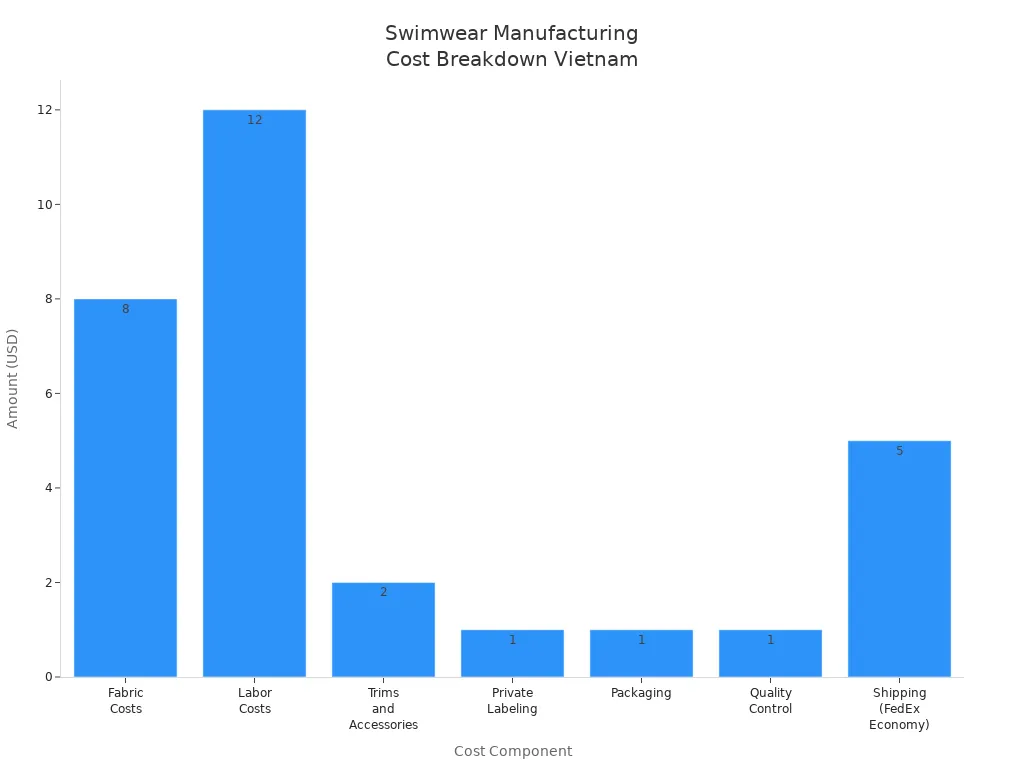
Most swimsuits cost between $9 and $30 to make. Some designs cost as little as $5 each.
Textile Infrastructure and Quality
Vietnam’s textile industry helps make good swimwear for less money. Skilled workers make products that meet global standards. Government programs help factories improve. New machines make swimwear better. Many brands like Vietnam’s eco-friendly ways.
Communication and Support
Vietnamese factories finish orders on time. They study market trends and work on design. You get customer service all day and updates. Factories listen to your needs and help you quickly.
Tip: Pick a factory with strong English skills and good support for easy communication.
Ethics and Sustainability
Vietnamese factories are open and fair. They use eco-friendly materials and pay fair wages. Some factories give health insurance and maternity leave. Some recycle fabric waste and use safe products. Brands like Strongsuit and Thygesen Textile Vietnam are leaders in ethical swimwear manufacturing.
Bali Swimwear Manufacturing
Strengths of Bali
Bali is a good place if you want careful work. Bali cares about the planet and treats workers well. The factories use skilled workers and special machines.
Strengths | Description |
|---|---|
Sustainability | Uses recycled fabrics and tries to make less waste. |
Ethical Production Practices | Factories are clean and open. They care about people. |
You can start with 100-400 pieces. This is good for small brands. | |
Artisanal Craftsmanship | Workers use skill and machines to make nice swimwear. |
You can get custom designs. Local workers pay attention to your needs. Many brands pick Bali because it mixes quality and good values.
Drawbacks of Bali
Bali does not work for everyone. Here are some things to think about:
It can take longer to finish orders, especially when busy.
Shipping costs are higher than other big places in Asia.
Some factories cannot make very large orders.
You may pay more for each piece than in China or Vietnam.
Note: If you need lots of swimwear fast, Bali may not be right.
Costs and MOQs
Bali lets you order small amounts and has flexible prices. Here is a table with examples:
Manufacturer | Cost Requirement | |
|---|---|---|
Bali Summer | 200 pieces | More than $3,000 |
Bali Swim | 100 pieces | $1,500 to start |
Bali Swim (Custom Design) | 250 pieces | Not listed |
You can start with a small order. This helps you try new ideas or start a brand.
Sustainability and Small-Batch Focus
Bali’s factories care about nature. Many use solar power and recycled materials like ECONYL and REPREVE. Most swimwear is made by hand in small factories. Small batches mean less waste and more care. Picking Bali helps local workers and the planet.
Made by local workers
Supports small crafts
Focus on strong, lasting designs
Communication and Support
Talking to Bali’s factories is easy. Most people speak English and give personal help. They help with design, samples, and updates. You get quick answers and friendly support.
Ethics and Local Practices
Bali’s factories have high standards for fairness and helping the community. Here is what you get:
Ethical Practice | Description |
|---|---|
Workers get paid more than the local average. | |
Medical Coverage | All staff get full medical care. |
Daily Meals | Meals are given at work. |
Safe Working Environments | Workplaces are clean and safe. |
Water Purification Systems | Washing and dyeing use eco-friendly ways. |
Biodegradable Packaging | Packaging breaks down naturally. |
Reduced-Waste Workflows | Cutting and printing make less waste. |
Community Support | Factories help local charities and projects. |
Many Bali factories have certifications like SA8000 and follow strict rules. When you pick Bali, you help fair labor and strong communities.
Side-by-Side Comparison
Cost Comparison
You might wonder which country is the cheapest. Costs change because of worker pay, rules, and how factories work. Here’s how they compare:
Vietnam has lower worker pay. This makes it a cheaper place to make swimwear.
China has more rules and cares about quality. These things can make it cost more.
Bali seems nice, but less rules and caring about workers can change costs.
If you want to spend less, Vietnam is a good choice. China gives you more control and better quality, but it costs more. Bali’s prices change, especially if you want fair treatment for workers.
Quality and Scale
Quality and how much you can make depends on the factory. China is known for making lots of swimwear fast. Some factories can make thousands of pieces quickly. Vietnam also makes big orders and keeps quality good. Bali makes smaller amounts and pays close attention to each piece.
Not every factory in each country is the same. Some Chinese factories make small batches and care about the planet. Vietnam and Bali have both big and small places. Always check what the factory does before you choose.
Lead Times and Flexibility
How fast you get your order is important. Being flexible helps you try new styles. Here’s a quick chart:
Manufacturer | Lead Time (Days) | Minimum Order Quantity (MOQ) |
|---|---|---|
China | 75-90 | 800 pieces/style |
Vietnam | 90-120 | 3,000 pieces/style |
Bali | 28-42 (4-6 weeks) | 30 pieces/style |
Bali lets you order small amounts and get them fast. You can get samples in about a month. Full orders take four to six weeks. China and Vietnam take longer but can make more at once.
Tip: If you want to start a new line fast, Bali is more flexible.
Minimum Order Quantities
MOQs tell you the smallest order you can make. You need to know this before you start.
Location | Minimum Order Quantity |
|---|---|
Bali | 60 pieces per order |
Hanya (Branded) | 10 pieces per article and color |
Hanya (Private Labelling) | 36 pieces per article and color |
China/Bali | 50–100 pieces per style |
Vietnam | 300–500 pieces per style |
Bali lets you order just a few pieces. You can start with only 30 per style. China and Vietnam want bigger orders. Vietnam’s minimums are the highest, so it is better for bigger brands.
Sustainability and Ethics
You may care about the earth and fair jobs. Factories in China and Bali have different rules about this. Vietnam is mixed too. You should always ask how the factory works.
Some Chinese factories use recycled materials. Bali’s small shops help local people. Vietnam’s factories are getting better at being fair and green.
Note: Don’t guess. Always check what the factory really does.
Communication
Talking to factories is important. Language problems can make things hard. You need to know how people work to avoid mistakes. Factories owned by people from other countries often talk better because they know modern business.
Good talking saves time and keeps things simple.
You can control your order better.
Clear talking saves money and keeps things organized.
Bali’s factories usually speak English and help you personally. Vietnam is getting better at this. Many Chinese factories have English speakers too. Always test how well you can talk before you decide.
Case Study Example
Brand Decision Process
Think about starting a swimwear brand. You want eco-friendly designs. You check China, Vietnam, and Bali. Each place offers something different. You look at price, quality, and how workers are treated. You also care about the earth.
You read about Remnant, a brand that picked Bali. Bali factories use recycled nylon from ocean plastic and old fishing nets. Workers get free meals and health insurance. Factories use safe dyes and care about workers.
You learn about Pauline Le at Salt and Coco Swimwear. She chose Bali for ethical practices and green materials. She wanted swimsuits made from recycled ocean plastic. Her time in Asia showed her Bali cares about nature.
You pick Bali because it matches your values. You want small batches, custom designs, and a factory that cares about people and the planet.
Lessons Learned
You can learn these things from the brands:
Bali factories care about fair work and workers.
Many use recycled materials like ocean plastic and safe dyes.
Small orders let you try new ideas without big risks.
Good talking makes everything easy and friendly.
Picking a place that fits your values helps your brand shine.
If you want your swimwear brand to help the earth and give fair jobs, Bali is a smart pick. You get good quality, care, and a story your customers will like.
You have lots of choices for swimwear manufacturing. China works well if you want low costs and big orders. Vietnam gives you steady quality and good prices. Bali stands out for small batches and eco-friendly values.
Startups: Try Bali for small orders and custom designs.
Established brands: China or Vietnam fit if you need scale and speed.
Eco-conscious brands: Bali offers strong sustainability.
Take time to list your priorities. Ask questions. Pick the place that matches your brand’s goals.
FAQ
What is the best country for small swimwear orders?
You should look at Bali. Bali factories let you order as few as 30 pieces. You can test new designs without spending much. Bali works well for startups and small brands.
Can I get eco-friendly swimwear from China or Vietnam?
Yes, you can. Many factories in China and Vietnam use recycled fabrics like ECONYL and REPREVE. Always ask for certifications before you place your order.
How long does production take in each country?
Production times change by location. Bali takes 4–6 weeks. China needs 75–90 days. Vietnam takes 90–120 days. You get samples faster in Bali.
Is communication easy with factories?
You find English speakers in Bali and Vietnam. China factories may use technical terms. Always check if your factory has good support and clear answers.