
Do you want to remain a leader in the swimsuit market? Then your competitive advantage depends on a key factor: your ability to reduce development time while maintaining quality. Time to market directly influences your competitiveness and profitability. Brands that structure their development around an ODM (Original Design Manufacturing) model generally observe:
A 20 to 50% reduction in the development cycle when standardizing their steps.
A decrease in the number of physical samples thanks to 3D and digitalization.
A better ability to launch more collections or capsules per season.
In this article, you will discover how to structure your swimwear development around a true ODM methodology to reduce your development time while controlling quality, costs, and risks.
Key Points
Reducing development time directly increases your brand's competitiveness, replenishment capacity, and profitability.
A clear ODM methodology (brief, patterns, 3D, prototyping, validation, production) standardizes the process and avoids wasted time.
Digital moodboards and 3D tools accelerate the design phase and reduce the number of physical prototypes.
Early validation of prototypes limits backtracking and can significantly reduce development costs.
A detailed reverse schedule and project management tools allow you to visualize each step and anticipate delays.
Collaborative platforms centralize information, secure validations, and improve communication with suppliers.
Anticipated and digitized sourcing reduces stock-out risks and secures your production.
Technical documentation and continuous improvement transform each collection into an optimization opportunity.
ODM Methodology for Swimwear Development
Before accelerating development, you need to clarify your organizational model. The ODM (Original Design Manufacturing) model is particularly well-suited to swimwear because it relies on a clear division of roles:
The brand focuses on positioning, style, target customer, and marketing.
The ODM manufacturer handles technical development, part of the design, grading, prototyping, and production.
Specifically, an efficient ODM process generally follows this path:
Structured creative and technical brief (style, fitting, target price, materials, certifications).
Selection of existing bases from the ODM model library (patterns, cuts, sizes).
3D simulation of priority models, then physical prototypes targeted only for high-risk pieces.
Rapid adjustments via local workshops, video calls, or fit test sessions.
Material and accessory validation (samples, tests, certifications).
Controlled pre-series then production launch.
This organization allows you to avoid starting from scratch with each collection. You capitalize on your ODM partner's experience, reuse high-performing cut bases, and limit costly back-and-forth.
Development Stages
You want to launch a swimwear collection quickly and efficiently. Every development stage is crucial to your success. By relying on a structured ODM approach, you can reduce your development time while securing quality.
Design
Design lays the foundation for your collection. You must define the guiding theme, themes, price ranges, colors, and key shapes. This stage often takes 1 to 2 months in a traditional operation. With good preparation and appropriate tools, you can reduce this timeframe.
Digital moodboards
Create a digital moodboard to gather your visual inspirations (shapes, colors, brand universe, prints). You can use tools like Canva, Pinterest, or a PLM with a moodboard module. You share your visuals instantly with your creative team and your ODM partner. You avoid paper back-and-forth and get a clear vision from the start.
Rapid idea validation
Structure the validation process from design. Organize short, pre-scheduled meetings and use collaborative platforms to gather feedback. Each idea goes through a mini "score" (cost, feasibility, brand consistency). You reduce hesitation and avoid projects that consume time with little result.
Tip: Involve your ODM manufacturer from the moodboard phase to verify feasibility (materials, constructions, costs) before committing to a direction.
Prototyping
Prototyping transforms your ideas into concrete models. This stage can last 6 to 9 months if you don't optimize it. Pattern creation requires at least 5 weeks. With an ODM methodology, using existing patterns, and 3D, you can reduce this delay and the number of back-and-forth cycles.
Pattern creation
Allow a minimum of 5 weeks to create a complete pattern if you are starting from scratch.
Expect about 8 months to prepare a first collection with a classic process, but less if you reuse existing ODM bases.
Use 3D prototypes and patterns to accelerate creation and test multiple variations without multiplying physical samples.
Plan each step (pattern making, grading, fit, rectification) in your reverse schedule to avoid hidden delays.
Express adjustments
Quickly test your prototypes. Working with local workshops or a responsive ODM partner allows you to correct defects in a few days rather than several weeks. You can organize fit test sessions with your team, take photos, annotate directly on images, and provide clear feedback.
Production
Production begins after prototypes and materials are validated. You need to source raw materials, validate quality, and then launch manufacturing. This phase can last from 1 to 4 months depending on volumes, factory location, and model complexity. Blockages often occur during sourcing or production preparation.
Material sourcing
You depend on virgin materials like cotton and polyester, but increasingly also recycled materials (fishing nets, recycled polyester, regenerated polyamide).
You sometimes need to transform waste or secondary materials into usable fibers, which complicates planning.
Environmental impacts related to manufacturing and transport can extend the process if you multiply back-and-forth journeys.
Manufacturing launch
As soon as you have validated your prototypes and materials, launch manufacturing according to a clear calendar. Anticipate volumes and communicate precisely with your suppliers (tolerances, priorities, key dates). You avoid delays, secure your deliveries, and maintain control over your schedule.
Stage |
|
|---|---|
Defining the guiding theme | 1 to 2 months |
Raw material sourcing | 1 to 2 months |
Product design | 2 to 4 weeks |
Technical development | 1 to 3 months |
Factory search | 4 to 6 months |
Prototype development | 6 to 9 months |
Raw material reception | 2 to 3 months |
Production | 1 to 4 months |
Without organization, you risk validation delays, communication problems with suppliers, or material shortages. By structuring your development according to an ODM logic and relying on digital tools, you can significantly reduce your development time and remain competitive.
Blocking Points
Internal Validation
You often encounter slowness during internal validation. Decisions are delayed, validations get lost in email exchanges, and you lose valuable time. To accelerate this process, you need to modernize your tools and clarify roles.
Implement a responsibility chart (e.g., RACI matrix) to know who decides, who validates, and who executes.
Schedule fixed validation slots (e.g., every week, same day, same time) to avoid "ad hoc" validations.
You can also rely on recent technologies:
Document each step of development with traceability tools (blockchain or PLM) to secure versions and validations.
Install IoT sensors on the production side to monitor real-time compliance with standards and critical steps.
Automate certain checks (certifications, tests, compliance) to avoid administrative bottlenecks.
Tip: Create a simple validation dashboard (model, stage, responsible, planned date, actual date). You immediately identify delays and blocking points.
Supplier Communication
Communication with your suppliers can quickly become a headache. Misunderstandings, response times, or lack of clarity slow down your project. To avoid these blockages, you must focus on both human relationships and clear procedures.
Attend trade shows to meet your suppliers in person. You create a direct link and clarify your expectations.
Use your network and ask for recommendations to select reliable partners who understand swimwear.
Consult customer reviews or references to assess the quality, responsiveness, and respect for deadlines of wholesalers and factories.
Maintain a long-term relationship with your key suppliers. You build mutual trust that facilitates exchanges and priorities.
Tip: Standardize your supplier briefs (technical sheets, quantities, dates, tolerances). The clearer your brief, the fewer questions and delays you'll have.
Material Sourcing
Raw material sourcing represents a major bottleneck. You must anticipate shortages, guarantee quality, and secure your supplies. To speed things up, adopt the industry's best practices:
Invest in understanding the entire supply chain, from Tier 1 (factory) up to upstream tiers (spinning mills, chemists).
Integrate a forward-looking vision to anticipate material needs and price evolution.
Move from classic supplier management to proactive raw material management (volume securing, alternatives).
Structure your R&D around new skills and advanced technologies (recycled materials, innovative fibers, chlorine-resistant treatments).
Leading companies show the way. A Purchasing Director in cosmetics anticipated risks in their material portfolio through a prospective approach. Patagonia requires third-party certifications to guarantee the durability of its materials. Forvia created Materi’act, an R&D center dedicated to innovative materials.
Do you want to reduce development time? Implement a clear sourcing strategy (digital catalogs, dual sourcing, safety stocks) to accelerate your decisions and secure your production.
Prototype Delays
You want to launch your swimwear collection without losing time. However, prototype delays often hinder you. You need to understand the causes to better anticipate them and accelerate your development.
Delays occur due to several factors:
Design problems slow down prototype creation (designs modified too late, incomplete technical sheets...).
Unexpected dimensional variations complicate manufacturing. A poorly adjusted pattern or a measurement error forces a prototype to be redone.
Late or multiple blocker validations (marketing, finance, artistic direction) push back the entire production chain.
To anticipate these delays, you need to stabilize geometries from the start and clarify the decision-making process. Use high-performance CAD tools to reduce discrepancies between design and reality, and organize short, frequent validation sessions.
Tip: Plan the maximum number of prototypes per model from the start (e.g., 2). Beyond that, the model is completely revised or withdrawn. You avoid endless projects.
You can also work with local workshops. They react faster and correct defects in real time. You avoid delays related to transport or remote communication, while improving fitting accuracy.
Here's how you can limit prototype delays:
Prepare precise specifications before launching creation.
Use digital moodboards to clarify your expectations from the creative phase.
Schedule regular check-ins with your pattern maker and ODM partner.
Validate each step without waiting until the end of the process to correct everything at once.
If you anticipate problems and communicate clearly, you turn each prototype into a success. You gain efficiency and reduce your development time.
Planning Management
Planning management allows you to maintain control over your project. You must organize each step to avoid delays and optimize production.
Use interactive planning tools. An electronic planning board gives you an overview of all tasks (design, prototyping, sourcing, production). You can plan and reschedule orders with simple drag-and-drop. You visualize material availability with a traffic light system. You immediately know if a material is missing or if a step is blocked.
Here are the key functionalities to adopt:
Taking into account sequencing rules for optimized production (group by material, color, model type).
Grouping similar orders to save time and resources (same fabrics, same accessories).
Instant visualization of priorities, urgencies, and critical tasks.
Tip: Update your schedule every week with your product team and ODM partner. You anticipate delays, adjust priorities, and stay on track with your objectives.
Do you want to succeed in your launch? Adopt rigorous planning management. You reduce your development time and ensure the timely delivery of your swimwear.
Digitalization and Tools
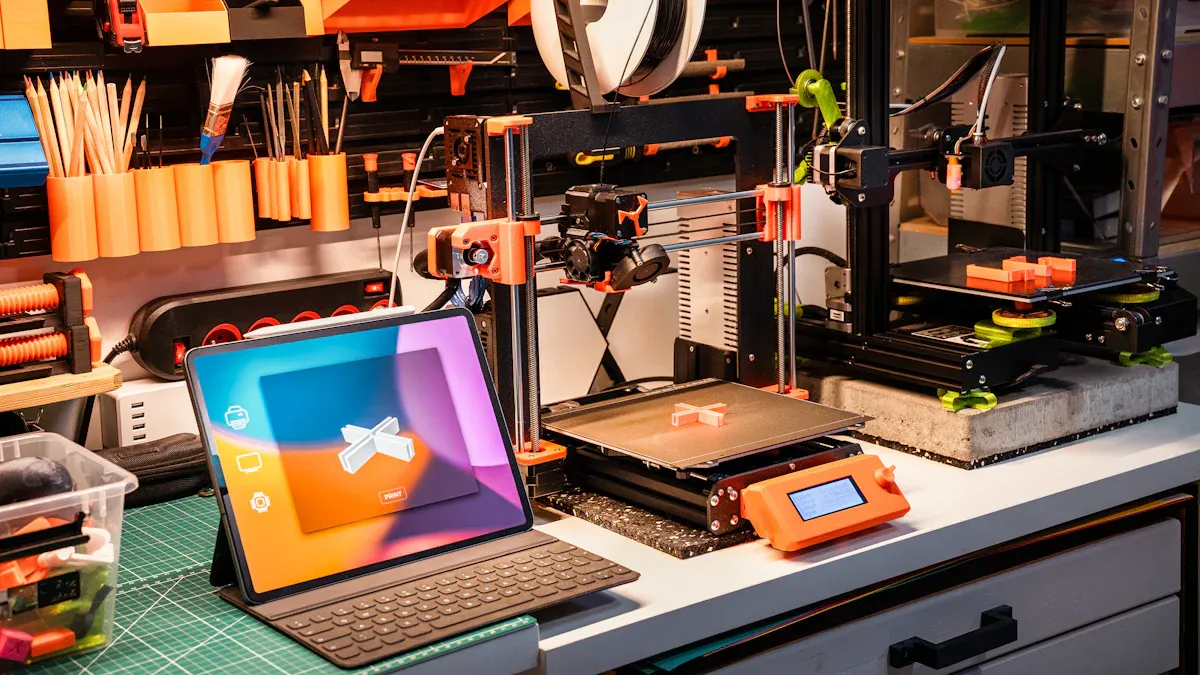 Image Source: pexels
Digitalization transforms the way you develop your swimwear. You gain speed, precision, and efficiency. To remain competitive, you must adopt the right digital tools and integrate them into your ODM method.
3D Software
Advantages
3D software is a game-changer in the textile sector. You can visualize your designs even before starting production. You test fit, correct defects, and avoid costly errors. You simplify the production lifecycle. You save time and reduce returns.
Here are the main benefits of 3D software for your development:
You visualize the final rendering without waiting for a physical prototype.
You adjust cuts, colors, and prints in real time.
You share your creations with your team, your ODM partner, or your buyers with a single click.
You reduce costs associated with unnecessary samples and multiple prototypes.
Tip: Use 3D software to select the models that will go into physical prototyping. You focus your efforts on the best options and reduce your development time.
Examples
Several 3D software options are essential in swimwear development:
Browzwear: You test the fit of your models before production.
C-Design Fashion: You create collections and simplify the entire production lifecycle.
Centric PLM: You plan your products, manage technical data, and improve your forecasts.
These tools allow you to work faster, limit errors, and optimize each development stage.
Collaborative Platforms
Project tracking
Collaborative platforms facilitate project tracking. You centralize all information (briefs, technical sheets, validations, comments). You access a single data source. You visualize the progress of each task, detect blockages in real time, and improve collaboration among all your team members.
Here is a table summarizing the advantages of digitalization in textile development:
Advantage | Description |
|---|---|
Reduced Time-to-Market | You accelerate product development through optimized processes and better collaboration. |
Improved Collaboration | You facilitate teamwork with centralized communication tools. |
Cost Reduction | You make fewer errors, use fewer samples, and negotiate more easily with suppliers. |
Quality Improvement | You ensure rigorous monitoring of specifications and standards. |
Better Decision Making | You access accurate and real-time data to make the right choices. |
Support for Traceability | You manage and track the environmental and social impact of your materials. |
Clear briefs
Do you want to avoid misunderstandings? Write clear briefs on your collaborative platform. You explain your expectations, add visuals, specify deadlines and target prices. You ensure fluid communication with your team and suppliers. You save time at every stage.
Accelerated Sourcing
Digital Catalogs
Do you want to accelerate your sourcing and save valuable time? Digital catalogs are the ideal solution. You access a complete database of materials, suppliers, and novelties with a few clicks. You compare prices, deadlines, and certifications without waiting for email responses. You eliminate endless searches in binders or paper files.
Here's why you should adopt digital catalogs right now:
You quickly find materials suited to your needs (grammage, composition, certifications).
You visualize available stocks in real time and associated lead times.
You filter by color, composition, environmental certification, or price.
You contact suppliers directly via the platform with structured requests.
Electronic catalogs enable a significant reduction in administrative costs, as shown in the Aberdeen Group report (2010).
You gain efficiency and reduce your development time with each new collection. You remain agile in the face of market trends. You avoid stockouts and secure your supplies. Major brands already use these tools to stay competitive.
Validated Samples
Do you want to avoid unpleasant surprises during production? You must validate your samples as early as possible. A validated sample guarantees the quality, color, and texture of the material. You eliminate the risks of error and save time on manufacturing.
Here's how you can optimize sample validation:
Always request a physical sample before placing an order, even if you have detailed technical sheets.
Compare the sample with your specifications (weight, feel, elasticity, transparency).
Organize a test session with your team to check resistance, feel, color, and behavior in water.
Validate the sample on the collaborative platform to keep a record of decisions.
Tip: Take photos of each validated sample and share them with your suppliers and your ODM. You avoid misunderstandings and ensure the conformity of each batch.
With digital catalogs and validated samples, you accelerate your sourcing, reduce your development time, and ensure the quality of your swimwear.
Rapid Prototyping
 Image Source: pexels
Do you want to save time on your swimwear development? Rapid prototyping gives you a decisive advantage. You go from idea to concrete model in record time. You limit errors, save on costs, and validate your concepts faster.
3D Printing
3D printing revolutionizes the creation of prototypes for accessories and specific parts. You can manufacture complex elements in a few hours (buckles, rings, decorative clasps). You test shapes without waiting weeks and without launching heavy tooling.
Here's why you should integrate 3D printing into your workflow:
Time savings: You create a prototype in one day, not several weeks.
Flexibility: You modify the design at any time. You print a new version whenever you wish.
Cost reduction: You avoid traditional tooling costs and limit material waste.
Rapid tests: You validate the ergonomics, resistance, and style of each part before moving to final metal or plastic.
Tip: Use 3D printing to test several accessory variations on the same model. You get quick feedback from your team or pilot customers.
Local Workshops
Local workshops represent an effective solution for accelerating textile prototyping. You work with artisans close to you or a major logistics hub. You communicate directly, correct defects on site, and obtain prototypes in record time.
Direct communication: You explain your needs face-to-face, show photos, and make adjustments in real time.
Responsiveness: You get a prototype in a few days.
Support for the local economy: You employ professionals from your region and build a sustainable network.
Quality control: You check every detail before validating the final model for industrialization.
Don't wait! Contact a local workshop or ask your ODM partner if they have a rapid prototyping network. You save time, reduce risks, and accelerate the time to market for your collection.
Project Management
Reverse Schedule
Do you want to deliver your swimwear collection on time? Implement a solid reverse schedule. This inverted planning gives you a clear vision of each step to complete before launch. You start from the desired release date and work backward to today. You know exactly what to do, when to do it, and who needs to act.
The reverse schedule allows you to:
Visualize all necessary steps to achieve your final goal.
Allocate your resources optimally. You avoid slack periods or overloaded work.
Strengthen communication within your team. Everyone knows their tasks, deadlines, and priorities.
Reduce the risks of delay through clear and structured planning.
Reduce frustrations and complications. You progress serenely.
Increase the success rate of your projects. You deliver on time, without stress.
Tip: Display your reverse schedule in a space visible to the entire team (office, project platform). You encourage accountability and keep everyone aligned.
Tracking Tools
Do you want to maintain control over your project from start to finish? Use high-performance tracking tools. These tools give you an overview of the progress of each task. You detect delays as soon as they appear and adjust your schedule in real time.
Here are some simple and effective tools:
Trello: You create boards for each stage (design, prototyping, production). You move tasks as they progress.
Asana: You assign tasks to each team member, set deadlines, and track workload.
Monday.com: You customize your tracking according to your needs and analyze your team's performance.
Remember: Update your tracking tools every week. You stay agile and anticipate problems before they become critical.
A good tracking tool allows you to:
Centralize all project information.
Facilitate communication between team members and your ODM partner.
Make quick and informed decisions.
Reduce development time by avoiding wasted time and oversights.
Tips for Reducing Development Time
Anticipate Material Needs
Do you want to avoid stockouts and delays? Anticipate your material needs from the beginning of the project. Good planning allows you to always have the right quantity of fabrics and accessories at the right time.
Here's how you can act now:
Plan your sales to forecast the optimal stock of finished products.
Organize your production by estimating the number of pieces to manufacture according to sizes and colors.
Regularly check your reserve stocks to meet demand, even during promotions or launches.
Store only what is necessary to avoid obsolescence and optimize space.
Plan a safety stock for critical materials (elastics, accessories, best-selling fabrics).
Organize your team to cope with demand peaks (high season, before holidays).
Use tools like an ERP or planning software to centralize all information and adjust your resources in real time.
Tip: Implement digital tracking of your stocks. You save time, minimize costs, and avoid unexpected stockouts.
Validate Prototypes Early
Validate your prototypes as early as possible. This step accelerates your entire development cycle. You detect errors before they become costly and avoid last-minute modifications.
Here are the benefits of early validation:
You accelerate the development of your collection.
You identify and correct errors from the start.
You reduce development costs, sometimes by half, by limiting samples and late modifications.
You encourage experimentation and iteration, which improves final quality.
You validate your ideas, gather feedback, and identify problems before investing too many resources.
Advice: Organize rapid test sessions with your team or a panel of customers. Ask for immediate feedback and adjust your prototypes without waiting.
Document Technically
Document every stage of your development. Clear technical documentation protects you from errors and saves valuable time. You explain procedures, specify expectations, and facilitate the transmission of information to your entire team and your ODM.
The advantages are numerous:
You avoid common errors thanks to precise instructions.
You quickly resolve the situation if a problem arises (material defect, cut, assembly).
You ensure project continuity, even if a team member changes.
Note: Update your documentation with each model or supplier modification. You maintain control and guarantee the quality of each swimsuit.
Estimate Supplier Lead Times
You want to deliver your swimwear on time. You need to estimate your suppliers' lead times accurately. If you ignore these lead times, you risk delays and lose your competitiveness.
Here's how you can effectively estimate supplier lead times:
Ask for precise lead times from each supplier at the beginning of the project. You get a clear vision of the schedule.
Compare announced lead times with actual lead times from previous orders. You identify reliable suppliers.
Integrate a safety margin into your planning (a few days or weeks depending on distance and transport method).
Use a tracking table to note each stage: order, production, shipment, reception.
Communicate regularly with your suppliers. You get updates and adjust your schedule if necessary.
Tip: Set up an alert system for each critical stage (production delay, shipment, customs). You react quickly and maintain control.
Here is an example table for tracking supplier lead times:
Supplier |
Material |
Advertised Lead Time |
Actual Lead Time |
Difference |
Action to take |
|---|---|---|---|---|---|
Supplier A |
Lycra |
3 weeks |
4 weeks |
+1 |
Plan margin |
Supplier B |
Polyester |
2 weeks |
2 weeks |
0 |
OK |
Supplier C |
Accessories |
5 weeks |
6 weeks |
+1 |
Change supplier |
Advice: If a supplier fails to meet their deadlines on several orders, implement an action plan or seek an alternative. You protect your schedule and continue to reduce your development time.
Care and Durability
Hand Washing
Do you want your swimsuits to last longer? Opt for hand washing. This gentle method protects fibers and keeps colors vibrant. You avoid premature wear caused by machine washing. Fill a basin with cold or lukewarm water, add a small dose of mild detergent, then gently rub your swimsuit. Rinse it thoroughly to remove any soap residue.
Tip: Never twist your swimsuit to wring it out. Gently press it between your hands or in a clean towel. This preserves the fabric's elasticity.
Studies show that low-temperature washing and the use of mild detergent prolong the life of delicate items like swimsuits. You take a simple step, but you gain extra seasons of use.
Rinse After Swimming
After each swim, immediately rinse your swimsuit with clear water. Chlorine, salt, and sunscreen residues damage fibers and dull colors. A quick rinse removes these aggressive agents and protects your swimsuit.
You remove salt and chlorine that weaken the fabric.
You avoid stains and bad odors.
You maintain the suppleness and softness of the textile.
This simple gesture reduces the need to replace your swimsuit too often. Brands are increasingly sensitizing consumers to these care instructions. You participate in a more sustainable and environmentally friendly approach.
Shade Drying
Drying in the shade remains the best solution to preserve your swimsuit. Direct sunlight discolors fabrics and weakens elastic fibers. Lay your swimsuit flat, away from UV rays, on a towel or a drying rack.
Advice: Avoid the dryer. Excessive heat deforms the fabric and reduces the lifespan of your swimsuit.
By drying in the shade, you preserve the shape and color of your swimsuit longer. You extend the lifecycle of each model and limit textile overconsumption.
Suitable Detergent
Do you want to keep your swimsuits looking new? Choose a suitable detergent. Classic products damage fibers and dull colors. You should use a mild detergent, specially designed for delicate textiles. This precaution protects the elasticity and shine of your swimsuit.
Here's how to select the best detergent:
Prefer a liquid detergent without bleaching agents.
Avoid abrasive powders and chemical fabric softeners.
Look for a product with the mention "special delicate laundry" or "for synthetic textiles."
Check the composition: the fewer aggressive ingredients, the better.
Tip: Use a minimal dose of detergent. Too much product leaves residues that weaken the fabric.
Do you want an optimal result? Dilute the detergent in water before immersing your swimsuit. You avoid stains and preserve the softness of the textile. Brands like Mir Laine or Ecover offer suitable solutions. You can find these products in supermarkets or organic stores.
Here's a table to help you compare:
Detergent type | Advantages | Disadvantages |
|---|---|---|
Mild liquid detergent | Protects fibers, easy to rinse | Sometimes higher price |
Powder detergent | Cleans deeply | Abrasive, risk of residues |
Classic fabric softener | Perfumes laundry | Can stretch fabric |
Advice: Always read your swimsuit's label. Manufacturers often indicate the recommended detergent type. Follow these instructions to avoid unpleasant surprises.
Continuous Improvement
Do you want to remain competitive and constantly improve your collections? Implement a continuous improvement approach. This method allows you to identify what works, correct what blocks progress, and improve with each new project.
Post-Project Analysis
After each launch, take the time to analyze your project. You need to understand what worked well and what slowed down development. Organize a meeting with your team. List the strengths and areas for improvement. Use a simple table to visualize the results:
What worked well | What needs to change |
|---|---|
Rapid validation | Material sourcing |
Local prototyping | Communication |
Digital tracking | Supplier lead times |
Advice: Note every bottleneck encountered. Look for the main cause (process, tools, organization) and propose a concrete solution for the next collection.
Capitalize on Best Practices
Have you found methods that work? Capitalize on these best practices. Write an internal guide or a knowledge base. Share it with your entire team. Update this document after each project. You create a solid foundation for all your future developments.
Note the most effective digital tools.
List reliable suppliers and their strengths.
Describe the steps that helped reduce development time.
Add tips to avoid common errors.
Tip: Organize experience-sharing workshops. Each team member presents a success or a challenge. You encourage mutual support and strengthen cohesion.
Team Training
Do you want to go even further? Invest in your team's training. A trained staff better masters tools, understands stakes, and reacts faster to unforeseen events. Offer short, targeted training sessions: 3D software, project management, communication with suppliers, reading technical sheets.
Schedule a training session every quarter.
Invite industry experts to share their experience.
Encourage self-training with online tutorials and webinars.
Note: A well-trained team adapts faster to new trends, digital tools, and market constraints. You gain agility and reduce development time with each collection.
Do you want to remain a leader in the swimsuit market? Analyze, capitalize, and train your team. You ensure the success of each project and stay one step ahead.
FAQ
How can I reduce the development time of my swimsuits?
You need to structure your process around a clear method (like ODM), use digital tools, and validate your prototypes quickly. Implement a detailed reverse schedule, anticipate your material needs, and work with partners capable of rapid prototyping.
Which digital tools are most effective for accelerating development?
Prioritize 3D software like Browzwear and collaborative platforms such as Trello, Asana, or a fashion-specific PLM. You visualize your models, centralize your tasks, and communicate faster with your team and suppliers.
Why is rapid prototyping essential?
Rapid prototyping allows you to test your ideas without waiting. You correct defects immediately, reduce the number of samples, and launch your collection faster. 3D printing and local workshops are two powerful levers to accelerate this phase.
How can I avoid supplier-related delays?
Always ask for precise lead times, compare actual supplier performance, and implement digital tracking for each order. Plan a safety margin and diversify your sources to avoid dependence on a single critical supplier.
What care tips extend the life of swimsuits?
Hand wash, rinse after each swim, dry in the shade, and use a mild detergent. You preserve color and elasticity. You reduce the need for replacement and save money.
Is it possible to combine speed and quality?
Yes, you can deliver quickly without sacrificing quality. By structuring your process (ODM), digitizing key steps, and validating prototypes early, you reduce errors while compressing lead times.
How can I involve my team in development optimization?
Organize short meetings, share best practices, and offer targeted training. Provide visibility into the reverse schedule and deadline objectives. You motivate your team and reduce development time with each collection.
What are the main bottlenecks to watch out for?
Monitor internal validation, communication with suppliers, material sourcing, planning management, and prototype quality. These points often cause delays if you don't anticipate them.