
Understanding swimwear trends is essential for manufacturers, brands, and B2B buyers who wish to build successful 2025 collections. By observing the evolution of styles, materials, and consumer expectations, it becomes possible to anticipate market needs, adjust production capacities, and secure investments in product development. Today, the global swimwear market is evolving rapidly:
-
It shows an average annual growth of 6.3% between 2021 and 2026, which reinforces the interest in reliable industrial partners.
-
The Asia-Pacific region is growing faster than other areas and is driving demand in terms of volume, particularly in the premium and trendy segments.
-
Demand for branded models is increasing, with strong expectations regarding perceived quality, comfort, and raw material traceability.
For a manufacturer or textile supplier, accurately interpreting these signals allows for defining relevant swimwear trends, better planning material purchases, and orienting product R&D towards cuts and innovations that will generate the most value for client brands.
Key Points
-
Analyze swimsuit shapes and cuts to prepare industrializable, stable patterns adapted to different target markets.
-
Prioritize certified ecological and innovative materials, a decisive criterion in B2B tenders (GRS, OEKO-TEX, ECONYL®, etc.).
-
Build color and pattern ranges consistent with 2025 trends to optimize dye baths and limit dormant stock.
-
Integrate accessories (pareos, hats, body jewelry) and fashion details compatible with mass production to enrich the brand's offering.
-
Systematically adapt cuts to the target morphology (Europe, US, Middle East, plus size, junior) to maximize commercial performance.
Criteria for Defining Swimwear Trends
For an industrial player, accurately defining swimwear trends means cross-referencing several sources: past sales data, customer feedback, trade fairs, market studies, and digital monitoring. Shapes, materials, colors, patterns, details, and accessories are all levers to integrate into a design-to-manufacturing approach. The goal: to offer brands trendy concepts that remain technically feasible, profitable, and compliant with standards.
Shapes and Cuts
Shapes and cuts evolve every year, but only some truly become long-lasting. For 2025, several styles clearly stand out and must be considered in product development and technical specifications:
-
Crochet swimsuit: requires rigorous work on dimensional stability, often lined with a technical knit base to control elongation and fit when worn.
-
Cut-out swimsuit: structured cut-outs at the waist, shoulders, or stomach require excellent control of elastic placement and tension to ensure comfort, support, and repeatability in mass production.
-
3D floral swimsuit: volumetric floral elements, made as appliqués or thermoformed, require specific tests (washing, exposure to salt and chlorine) to ensure the durability of the embellishments.
-
Smocked swimsuit: this stretchy construction offers optimal comfort but requires precise machine settings and enhanced quality control to achieve a homogeneous finish across all sizes.
-
Minimalist swimsuit: sculptural and clean cuts highlight the quality of the pattern making and construction. The slightest defect is visible, hence the importance of controlled processes and premium fabrics.
By integrating these cuts into a B2B catalog, the manufacturer can offer trendy bases ready for customization (prints, colors, accessories) for each brand, while maintaining a standardized technical structure.
Innovative Materials
Major brands now expect their industrial partners to propose materials that are both responsible and high-performing. It's no longer just about following a "green" trend, but about documenting the real benefits: certifications, durability, comfort, environmental footprint. Here are some concrete examples:
|
Brand |
Main Initiative |
Materials Used |
Ecological Commitment |
|---|---|---|---|
|
Oysho |
Recycled Collection |
Recycled Polyester |
Plastic Waste Reduction |
|
Bain de Minuit |
Virtuous Process |
Eco-friendly Nylon |
Local Manufacturing |
|
Hünkemöller |
Textile Reuse |
Recycled Elastane |
Zero Waste |
We also see the generalization of recycled polyester fibers from plastic bottles, which maintain excellent elasticity and durability comparable to virgin fibers. Regenerated nylon, made from industrial waste or fishing nets, reduces the carbon footprint while offering very good results in chlorine and abrasion resistance. For a manufacturer, integrating these materials into their offering makes it possible to meet the most demanding specifications.
Colors and Patterns
Colors and patterns structure the positioning of client brands' collections. For 2025, we observe a strengthening of vibrant hues and sophisticated harmonies. Colors like raspberry, fuchsia, royal blue, coral, and turquoise remain highly sought after for European and North American markets.
Floral, tropical, geometric, botanical, and abstract patterns are also prevalent. Vibrant colors like sun yellow, emerald green, bright orange, and electric blue dominate collections, often rendered in high-definition digital prints. Some models are inspired by Japan with traditional motifs. Bold designs, delicate details like ruffles or cut-outs, and nature-inspired elements allow the manufacturer to offer brands "signature" bases ready to be adapted.
Details and Accessories
For a B2B player, details and accessories are an important lever for differentiation. Seashells or multicolored beads can upgrade the range, provided industrial standards are met: corrosion resistance, seam strength, absence of sharp edges.
Geometric metal rings provide a modern look but require appropriate treatment (anti-oxidation, edge control). Applied 3D flowers, smocking, and gathers demand specific expertise to remain uniform and visually qualitative in volume production.
B2B Tip: During development, integrating accessories from the prototyping phase (fit & wash test) avoids costly pre-production adjustments and secures delivery schedules.
Key Cuts and Styles
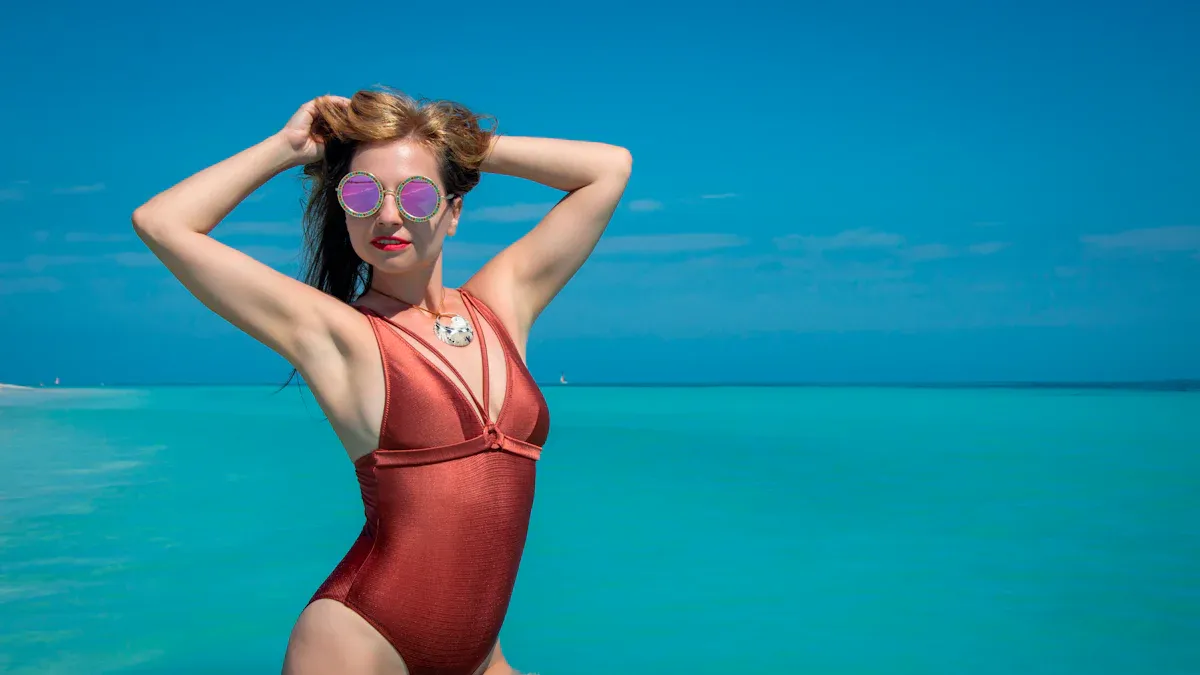 Image Source: pexels
One-Piece Swimsuit
The one-piece swimsuit is making a strong comeback in brand briefs. It is associated with an elegant and structured image that suits several segments (sport chic, resort, high-end swimwear). For a manufacturer, this model offers several strategic advantages:
-
It allows for the integration of sculpting and technical fabrics, with a strong product marketing argument (support, smoothed silhouette).
-
Wide straps and racerback or cross-back constructions ensure high comfort for users practicing swimming or surfing.
-
It lends itself well to anti-UV options, targeted linings, and graphic cut-outs without compromising support.
By offering optimized one-piece bases, the manufacturer enables brands to quickly launch trendy capsules with reduced fit risk.
Bikini and Tankini
Bikinis and tankinis remain staples in production volumes. For 2025, we observe the increasing integration of innovative cuts and eco-responsible materials. Brands expect from their partners:
-
Playful details like bows, gathers, or ruffles, compatible with industrial repeatability and efficient assembly.
-
Contemporary patterns and vibrant colors, with faithful color reproduction thanks to digital printing.
-
Technical fabrics combining support, elasticity, and chlorine resistance, adapted to different price markets.
The tankini, with its covering top, offers an alternative for "family" lines or markets sensitive to bust coverage. For the manufacturer, it's an excellent support for pooling pattern bases while offering multiple stylistic variations.
Cut-outs and Asymmetries
Cut-outs and asymmetrical shapes are highly visible elements on shelves and in e-commerce photos. However, they demand great technical rigor: placement of cut-outs, balancing of tensions, control of stitching points on stressed areas. Good industrialization of these models creates strong added value for brands.
B2B Tip: Integrating asymmetrical "test" prototypes into showroom collections demonstrates the manufacturer's level of expertise to buyers and creative directors.
Adaptation to Body Shape
For a B2B player, mastery of morphological adaptation is a decisive argument. Offering bases adapted to multiple silhouettes allows for covering different segments with the same pattern foundation. For example:
-
O-shaped body type: favor elaborate necklines, vertical cut-outs, and reinforced support areas around the bust and stomach.
-
A-shaped body type: develop more structured or padded tops to balance the silhouette, combining adjustable straps and adapted cups.
-
V-shaped body type: propose bottoms with details, bows, or ruffles to draw attention to the lower body and rebalance proportions.
-
X-shaped body type: high-waisted briefs and marked waistband cut-outs enhance the waist, highly requested in retro or pin-up capsules.
-
H-shaped body type: one-piece swimsuits with side cut-outs and color play create the illusion of a more defined waist.
By having a library of morphologically optimized cuts, the manufacturer positions itself as a true development partner for brands.
Materials and Innovations
Eco-friendly Fabrics
Eco-friendly fabrics are no longer an option, but a prerequisite for many brands. In the swimwear universe, manufacturers who master these materials gain a head start. These include:
-
Econyl, a fiber made from recycled plastic waste (fishing nets, carpets, industrial waste), highly valued for premium lines.
-
Repreve, a fabric created from recycled plastic bottles, suitable for large volumes and more accessible ranges.
-
Amni Soul Eco®, a biodegradable yarn designed to decompose faster under controlled landfill conditions.
Several French brands like Theoni Paris, Maline Bodywear, or ANJA Paris already use these materials to offer certified swimsuits. For manufacturers who integrate them into their B2B collections, this is an opportunity to meet both CSR imperatives and the marketing expectations of their customers.
Protection and Comfort
Comfort remains a decisive criterion in brand briefs, but it is now combined with quantifiable requirements: chlorine resistance, measured elasticity, drying time, UPF index. Current technical innovations allow for offering:
Chlorine-resistant fabrics, tested over several tens of cycles.
Polyamide/elastane blends offering calibrated support depending on the use (sport, beach, spa).
Softer and more stable surfaces, suitable for sensitive skin.
B2B Tip: Providing brands with technical data sheets detailing the tests performed (washing, chlorine, UV) reassures buyers and reinforces the factory's positioning as a "quality" partner.
Quick-Drying and Anti-UV
Quick-drying and anti-UV fabrics are particularly in demand in tourist and outdoor markets. Models capable of blocking more than 97.5% of UV rays, even when wet, add a competitive advantage for brands. The manufacturer's role is to select bases whose protection remains stable after numerous washes and to provide the corresponding test reports.
Trendy Colors and Patterns
Key Shades 2025
For 2025, the color ranges observed on runways and in trend forecasts are now being translated into B2B specifications. Brands are looking for palettes that are both desirable and consistent with their DNA. Among the strong shades of the season:
-
Emerald green, from deep jade to fresh mint, highly prized in premium segments.
-
Fuchsia pink, widely shared on social media and ideal for trendy capsules.
-
Butter yellow, luminous and soft, perfectly fitting into "sunny neutrals" trends.
-
Brown, chic and sunny, an alternative to black for a more natural look.
-
Taupe and blond caramel, suitable for elegant and sophisticated lines.
For the manufacturer, anticipating these colors allows for planning dye baths, negotiating MOQs, and avoiding overstocking of out-of-trend materials.
Bold Prints
Prints continue to occupy a central place, with increasing demand for exclusive visuals. Geometric, stylized floral, tropical, and abstract patterns are developed on technical bases. Digital printing, with fine color management, allows for quickly responding to small and medium series requests while maintaining a rich variety of patterns.
Tip: Offering brands an in-house or co-developed print lookbook is an excellent way to elevate the B2B relationship and become a creative partner, not just an executor.
Harmonizing with Skin Tone
Even in a B2B context, the question of color/skin tone harmony remains key. Brands expect manufacturers to advise them on the best-selling combinations per market. For fair skin, pastel and vibrant tones like peach, lilac, or powder pink are preferred. For darker or tanned skin, bright shades (yellow, vibrant orange, gold, bronze) or metallic colors create very attractive visual contrasts.
Advice: Including visuals on different skin types in B2B lookbooks helps brands better visualize and facilitates decision-making in the showroom.
Accessories and Fashion Details
Accessories play a strategic role in increasing the average basket size and the consistency of a brand's universe. As a manufacturer, offering a coordinated range (swimsuit + pareo + hat + bag) allows positioning oneself as a global partner rather than a simple swimsuit supplier.
Pareos and Hats
Colorful pareos coordinated with swimsuits enhance the perception of a well-designed collection. They can be produced in the same color ranges or patterns as the swimsuits, which optimizes fabric purchasing.
Wide-brimmed straw hats, oversized sunglasses, and coordinated tote bags complete the offering extension. They enable brands to develop complete, high-perceived-value beachwear universes.
-
Colorful pareos
-
Wide-brimmed straw hats
-
Oversized sunglasses
-
Coordinated tote bags
Tip: In B2B, offering "complete capsule" packs (swimsuit + pareo + accessory) simplifies order taking and reinforces the credibility of the manufacturer's offering.
Body Jewelry
Body jewelry contributes significantly to differentiating a collection. Necklaces, bracelets, rings, chunky chains, and statement earrings add an extra fashion dimension.
-
Necklaces and bracelets
-
Rings and chunky chains
-
Statement earrings
-
Resin or crystal jewelry
-
Marine elements
Original Finishes
Finishes directly influence the perceived quality of the product. Shaping swimsuits combine comfort and aesthetics, but require great precision in the choice of fabric weight, linings, and seams. Breathable fabrics, clean laser cuts, regular stitching lines, and detail symmetry are strong markers of professionalism for a manufacturer.
The swimsuit is becoming a technical and image product. On the B2B side, a good industrial partner enables brands to combine innovation, performance, and style identity on a single production platform.
Influence of Social Media in Defining Swimwear Trends
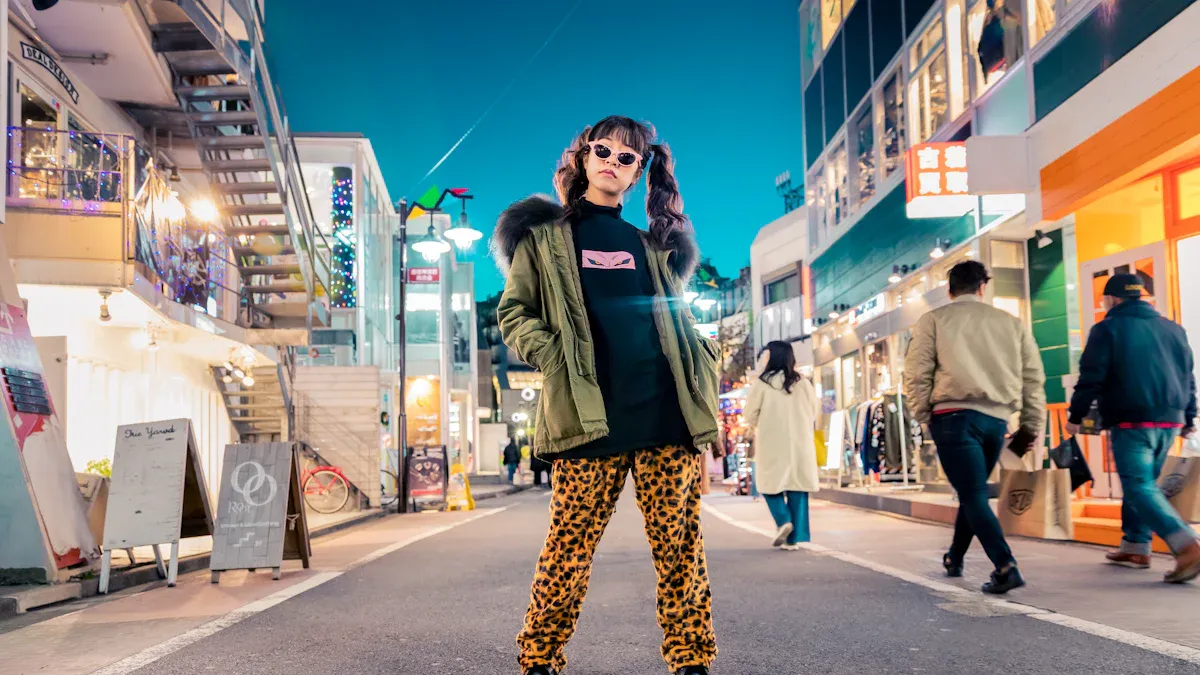 Image Source: unsplash
Role of Influencers
Social media has become a quick indicator of consumer adoption. Every day, influencers showcase their looks on Instagram or TikTok, and some trends gain momentum in a few weeks. Many creators are launching their own brands or signing collaborations with established labels.
-
Influencers launch their own brands and test innovative silhouettes.
-
They co-create capsule collections with brands that have a strong social media impact.
-
Their massive audience allows for real-time measurement of public reaction to a model.
-
Brands rely on this feedback to adjust their orders with manufacturers.
Trend Propagation Cycle
A trend can emerge from a viral post, a fashion show, or a designer-brand collaboration. In B2B, this translates into accelerated briefs, urgent prototype requests, and sometimes reallocation of production capacities. Manufacturers capable of reacting quickly – while maintaining their quality standards – become primary partners for brands.
Inspire and Adapt
For an industrial player, the role is not to copy, but to interpret and adapt. By relying on storytelling (responsible materials, know-how, certifications, local or controlled production), the manufacturer can offer lines aligned with trends while respecting their clients' cost and deadline constraints.
Advice: Integrating a "social media watch" component into the development process helps feed sales and style teams with fresh inspirations to present to brands during showrooms or B2B meetings.
Tips for Choosing and Maintaining Your Swimsuit
Adapting the Trend to Your Body Shape
For brands, offering models that genuinely enhance different body types is a key success factor. A good manufacturer can guide on:
-
The use of delicate floral prints, vertical stripes, or asymmetrical patterns to visually slim the silhouette.
-
The choice of belted or high-waisted swimsuits that redefine the waist and structure the bust.
-
The integration of technical shaping fabrics (polyamide, high-performance elastane) that offer both support and comfort.
By adapting trends to different body types, brands improve the successful try-on rate and customer satisfaction, while the manufacturer strengthens its legitimacy as an advisory partner.
Choosing According to Your Style
Consumers are looking for swimsuits that reflect their personality. Vibrant colors, original patterns, or more classic cuts should be able to coexist within the same collection. A manufacturer who offers a base of varied cuts, modulable by color, prints, and accessories, facilitates the work of brands' style teams and accelerates the development of assortments.
Care and Durability
Care strongly impacts the lifespan of a swimsuit and thus the brand's perceived quality. The manufacturer plays a key role in recommending care instructions adapted to the materials used. Some best practices:
-
Preferably wash by hand or in a machine at low temperature.
-
Use a short program and a laundry bag to limit friction.
-
Wash the swimsuit inside out to preserve color and prints.
-
Separate colors to avoid transfers and dulling.
-
Use gentle liquid detergents specialized for technical textiles.
-
Rinse immediately after use to remove salt and chlorine.
-
Avoid soaking the swimsuit for too long.
-
Dry flat and in the shade to protect pigments and elastic fibers.
“To set the color of your swimsuits, it is essential to separate colors. Put light shades with light ones, and dark ones with their counterparts.”
By integrating these recommendations into labels and brand materials, manufacturers help their clients reduce after-sales returns related to discoloration or deformation.
To structure their offering, brands can rely on a few key points:
-
Choose a color palette consistent with the brand's DNA and target markets.
-
Decide on the distribution between solid and printed models, depending on price positioning and retail expectations.
-
Ensure that the selected cuts cover different body types.
-
Align swimsuit types (sport, beach, resort) with distribution channels and launch calendar.
A structured manufacturer, with a trendy and well-documented range, helps brands make the right trade-offs while securing time-to-market.
FAQ
What are the criteria for recognizing a swimsuit trend? ?
In B2B, a trend is recognized by the convergence of several signals: recurrence in major brands' collections, prominence at trade fairs, sales performance, rapid adoption on social media, and industrial feasibility (available materials, controlled costs, proven manufacturing processes).
How to choose a swimsuit adapted to my body shape? ?
Brands rely on pattern bases adapted to different body types (O, A, V, X, H) and then develop designs. The manufacturer's role is to offer proven, correctly graded cuts, and to assist clients in choosing the most suitable constructions for their target market.
How to care for my swimsuit to make it last longer? ?
As a manufacturer, it is recommended to provide precise instructions: rinse with clear water after each swim, hand wash with a mild detergent, dry flat and in the shade. These good practices limit deformation, discoloration, and extend the product's lifespan.
Are ecological materials just as resistant? ?
Yes, the latest generation recycled or biodegradable fabrics offer performance levels comparable to conventional materials. When properly selected and tested (elasticity, chlorine resistance, color fastness), they allow for combining environmental commitment, wearing comfort, and durability, making them an excellent choice for brands and their industrial partners alike.