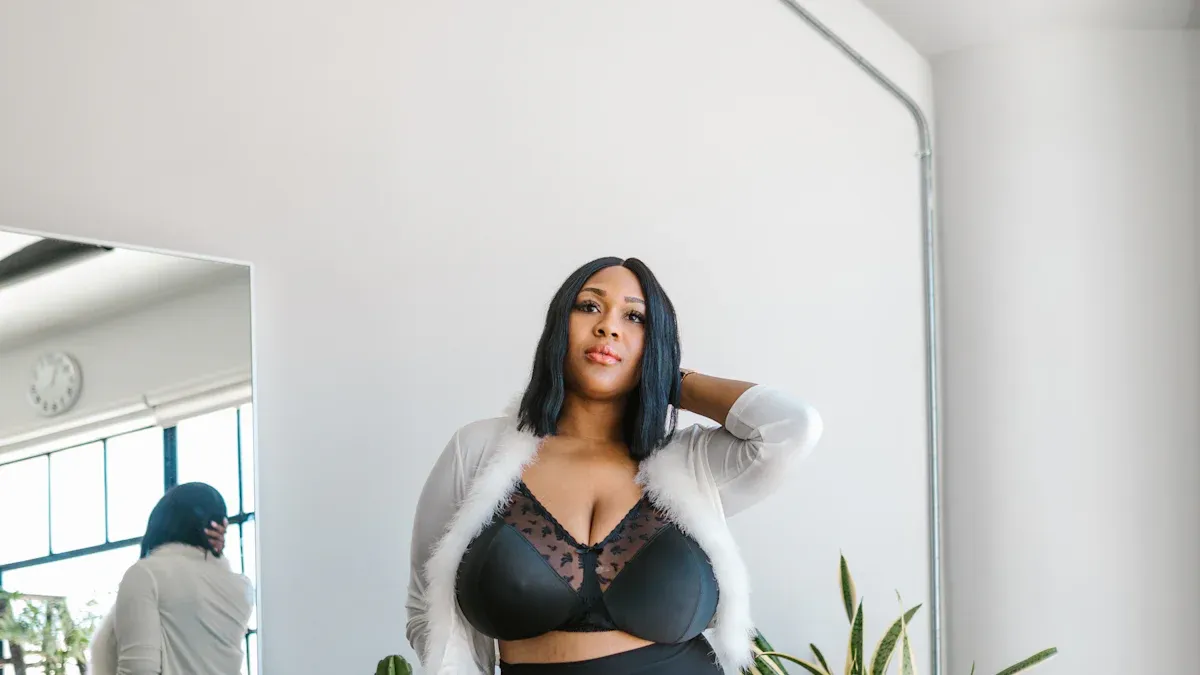
Getting quick swimwear samples in 3 weeks might seem ambitious, but it's an entirely achievable timeframe if you rely on a professional methodology. Rigorous preparation of technical documents, early selection of final materials, and choosing a manufacturer experienced in accelerated processes are the most effective levers. With clear organization and quick validations, you can receive reliable prototypes without compromising quality.
🔍 Key Points — Enhanced Version
Prepare a complete technical pack (tech pack) before the first contact: spec sheets, measurements, gradations, bills of materials, material references, tolerances, and quality requirements.
Immediately select your final fabrics and provide physical samples identical to those intended for production.
Choose a swimwear specialized manufacturer capable of working on a just-in-time basis, equipped with 3D tools, and accustomed to short deadlines.
Organize multi-morphology fittings according to standardized protocols (e.g., fit tolerance ±0.5 cm).
Use professional digital tools for project management, modification tracking, and document control.
1. Prepare design documents
A fundamental step to reduce the sampling cycle is to present a complete technical file. In the textile industry, this file is equivalent to a contractual specification: the more precise it is, the fewer back-and-forths, and the faster manufacturing begins.
1.1 Compile technical sheets (reinforced tech pack)
The pattern's technical sheet is essential, but to achieve a professional level, it must also include:
Pattern name + internal code
Exact dimensions + repeat (rapport)
Official Pantone® TCX codes (international textile standard)
Acceptable color tolerance ΔE (e.g., ΔE ≤ 1.5 on spectrophotometer)
Version history to avoid confusion
The sourcing file must be enriched with:
Complete size chart (+ tolerances, e.g., ±0.3 cm for static areas, ±0.5 cm for elastic areas)
Precise gradations according to a European or US standard
Normative requirements: UV resistance, colorfastness (ISO 105-E04), elasticity (ASTM D2594), recovery (modified ASTM D2594)
Detailed material sheets with controlled grammage (e.g., ±5 g/m²)
💡 PRO Tip: create a separate tech pack per model. Manufacturers evaluate feasibility more quickly and reduce error risks by up to 30%.
1.2 Choose final fabrics (with technical data)
Fabrics influence the fit, durability, and appearance of the swimsuit. To avoid misleading prototypes, you must send the final materials from the start, including:
Precise grammage (e.g., Lycra® 220 g/m²)
Measured elasticity rate (e.g., 4-way stretch 180–200%)
Recovery rate (≥ 90% recommended for swimwear)
Chlorine and saltwater resistance
Summary table
Model | Fabric chosen | Supplier reference | Pantone color |
|---|---|---|---|
Bikini Luna | Recycled Lycra 220g | ABC-123 | 17-1463 |
One-piece Vague | Matte Polyamide 200g | XYZ-456 | 19-4052 |
By providing this data, you give the manufacturer the necessary benchmarks to achieve a compliant result from the first sample.
2. Get quick swimwear samples in 3 weeks

2.1 Select a responsive manufacturer (professional criteria)
A manufacturer truly capable of delivering in less than three weeks must:
Have an integrated workshop (no uncontrolled subcontracting)
Use 3D software (Clo3D, Browzwear)
Provide a contractual and documented sample lead time
Present client references or quality certificates (ISO 9001, BSCI)
👉 Some manufacturers advertise "samples in 3 days." This is only possible if:
All files are complete,
Materials are available in stock,
Validation times are instantaneous.
2.2 Negotiate deadlines with realistic conditions
Prepare these professional questions:
Actual lead time (min/max) depending on model complexity
Revision procedure: how many versions included?
Express fees: surcharge (%) and conditions
Material availability: immediate stock or supplier lead time?
The table provided in the initial text is retained, but it can be supplemented by adding a clarification: deadlines vary depending on material availability and workshop workload.
📢 PRO Tip: impose an hourly cut-off for validations (e.g., 3:00 PM). After this time, the day no longer counts towards the deadline.
3. Efficient logistics organization
3.1 Fast and compliant material shipment
Beyond shipping, ensure:
Clear labeling (model reference, color, yardage)
A detailed delivery note
A material tolerance (e.g., provide +10% fabric)
Express services (DHL, FedEx) reduce the risk of uncertainty thanks to their simplified customs declarations.
3.2 Validate digital prototypes (with technical requirements)
The 3D prototype allows for:
Early volume verification
Pattern placement analysis (especially for localized prints)
Reduction of **1 to 2 cycles** of physical sampling
👀 Tip: create an internal validation grid (fit, tension, print, seam, finish…). It professionalizes tracking.
4. Test quick swimwear samples on different body types

4.1 Organize structured fittings
The swimwear industry recommends:
Minimum 3 body types
Comparative measurement on mannequin + live model
Fit tolerance: ±0.5 cm
4.2 Collect actionable feedback
Questions should be standardized:
Static / dynamic comfort
Bust support (if applicable)
Compression / tension
Transparency when stretched
📢 PRO Tip: create an internal fit sheet. Manufacturers love this type of document because it speeds up corrections.
5. Final validation and adjustments
5.1 Quality control according to standards
Recommended tests for swimwear:
Color Fastness (ISO 105-E04, E01)
Seam Strength (ISO 13935-2)
Elasticity/Recovery (ASTM D2594)
Pilling Resistance (ISO 12945-2)
You can use a certified QC checklist to professionalize the approach.
5.2 Fast and traceable corrections
To speed up revisions:
Number each defect
Use direct annotation on photos
Provide a corrected version of the tech pack (avoids misinterpretations)
⏱️ Tip: a "photo + graduated scale" validation system can sometimes avoid a new physical sample, saving 4 to 7 days.
6. Professional tips to save time
6.1 Use digital tools
The tools mentioned (Trello, Asana, Slack) are relevant. To increase the professional level, you can add:
Notion for technical documentation
Figma for visual comments
Clo3D for precise simulation
Google Data Studio to track lead time/manufacturing KPIs
6.2 Anticipate common problems
Keep your table, but add a recommendation:
Logistics emergency plan including alternative carriers, backup yardage, and a second material source.
Optimized FAQ
Optimal number of samples
1 to 3 per order for a realistic express lead time.
Recommended fabrics
High-elasticity 4-way Lycra® (180–220%), matte polyamide, or GRS-certified recycled fibers.
Accelerate validations
Use 3D + structured annotations.
Non-responsive manufacturer
Foresee a response SLA (service level agreement) of ≤24h.
Modifications after sample
Yes, but beyond the 2nd revision, expect a new quote.