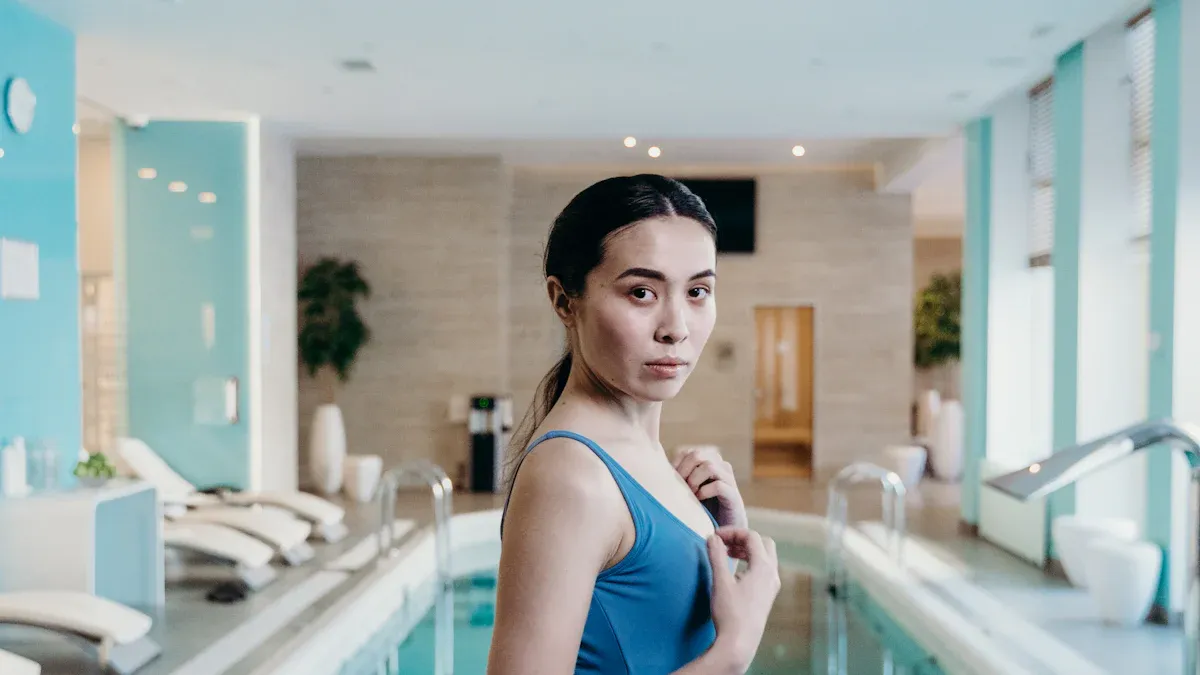
You can launch your high fashion swimwear brand even if you only order a small quantity. Thanks to the rise of textile micro-factories, 3D pattern-making tools, and on-demand production, manufacturers now offer great flexibility and adapt to the needs of small brands.
To succeed, you need to meticulously plan each step: cost calculation, material selection, quality control, testing, and certifications. With a structured strategy, you can build a premium collection, limit financial risks, and position yourself in the high fashion low MOQ segment.
Expert tip: Always compare several manufacturers by checking their certificates (e.g., ISO 9001:2015, OEKO-TEX®, BSCI), their defect rate, average prototype development times, and their transparency on unit costs.
Key Points
Understand MOQ: MOQ, or Minimum Order Quantity, varies depending on the manufacturer, fabric type, and model complexity. For a swimwear brand, aiming for workshops that accept between 30 and 150 pieces per model is ideal for testing the market without overproducing.
Avoid hidden costs: Be vigilant about development fees (pattern making, grading, prototypes), color surcharges, testing, and logistical costs. Always ask for a detailed itemized quote to avoid unpleasant surprises.
Prioritize quality: Implement a structured quality control process (samples, TOP sample, AQL inspections, chlorine and UV resistance tests) to ensure an impeccable finish level, even on small series.
Choose the right supplier: Analyze customization options, reputation, certificates, MOQ flexibility, and the ability to produce high-end swimwear. A good partner simplifies low MOQ production and reduces risks.
Build supplier loyalty: A long-term relationship of trust allows for more favorable conditions (shorter lead times, discounts, production priority) and better quality consistency.
Understanding Low MOQ in High Fashion
Definition of MOQ
You need to understand what MOQ, or "Minimum Order Quantity," is. This term refers to the minimum quantity of products a manufacturer agrees to produce for an order. In the high fashion and premium swimwear sector, this threshold depends on several factors: model complexity, number of colors, fabric type, production line organization, and expected quality control level.
Some manufacturers impose a high standard MOQ, but others agree to work with much lower quantities, giving you more flexibility to test your designs.
Here is a table presenting some key criteria for defining an MOQ in high fashion:
Criterion | Details |
|---|---|
Standard MOQ | 500 units per model for industrial workshops; high fashion micro-series can go well below this threshold. |
Defect tolerance rate | ≤ 2% (level close to AQL 2.5), to ensure customer satisfaction in the premium segment. |
You can sometimes negotiate an MOQ much lower than the standard, especially if you choose a manufacturer specialized in high fashion low MOQ or with lines dedicated to small series.
Benefits for Small Brands
If you are launching your brand or want to test a new design, a low MOQ offers you many advantages:
You can order as few as 30 pieces per model, which significantly limits financial risks.
You benefit from personalized rates for custom manufacturing, which helps you better control your unit costs.
You avoid overstocking and adapt your production to the actual demand of your community or e-shop.
You can test several cuts, colors, or prints without tying up too much capital in a single model.
Tip: A low MOQ allows you to adopt a make-to-order or pre-order model: you first validate market interest, then produce only what is sold.
High Fashion Low MOQ: Challenges and Solutions
Hidden Costs
When you choose high fashion low MOQ production, you must pay particular attention to hidden costs. Small orders often result in higher unit prices. You also pay development fees (tech pack, pattern making, grading, prototypes) which can vary, in practice, from €80 to over €600 per model depending on complexity.
Sometimes additional storage costs in case of overproduction, surcharges related to special colors or very technical fabrics, as well as testing and certification costs, are added.
Here are some examples of hidden costs to watch out for:
Small series reduce production efficiency, which increases the hourly cost per piece.
Each swimsuit bears a larger share of setup, machine programming, and tuning costs.
Small batches often require more intensive and frequent quality control to avoid defects.
Advice: Always ask your manufacturer for a detailed quote separating development, production, quality control, and logistics. This helps you manage your actual margin.
Quality and Control
Quality remains a major challenge in high fashion low MOQ production. You must guarantee an impeccable level of finish, even for small quantities, because your client expects a quality at least equivalent to established major brands.
Specialized manufacturers use several methods to ensure quality:
Meticulous pattern development: they create precise and digitized patterns for each model, sometimes in 3D, to limit cutting errors.
Strict quality controls: inspections are carried out at each key stage (material, cutting, assembly, finishing), based on AQL sampling plans.
Sampling: one or more samples are prepared before mass production to validate the cut, comfort, opacity when wet, and specific finishes for swimwear.
On your side, you must validate each step and clearly communicate your expectations (measurement tolerances, finish level, tests to be performed). This helps you avoid defects and ensure customer satisfaction.
Logistical Challenges
Logistics also pose challenges in high fashion low MOQ. Production lead times can vary depending on manufacturer flexibility, material availability, and production line congestion. Some workshops, such as those working with Friendtex, accept low minimum orders and produce quality garments while maintaining reasonable lead times.
You can choose between different types of manufacturers:
Manufacturer | Characteristics | Benefits for small brands |
|---|---|---|
Factory A | Sophisticated production lines dedicated to swimwear | Handles small customized series with high customization capacity (prints, cuts, accessories). |
Factory B | Solid infrastructure, quality process-oriented (ISO 9001:2015 certification, regular audits) | Meets 100% of brand requirements in terms of quality, traceability, and regulatory compliance. |
This flexibility allows you to launch your collection without tying up too much capital. However, you must properly organize transport, inventory management, and delivery to avoid delays and stockouts.
Tip: Prioritize manufacturers who offer logistical support, clear production tracking (WIP report), and fluid communication via email or instant messaging.
By understanding these challenges and choosing the right partners, you can succeed in high fashion low MOQ production and confidently grow your swimwear brand.
Pitfalls to Avoid
Neglected Prototypes
You should always attach great importance to prototypes. Many young brands skip this step to save time or money. This choice can be very costly later. A prototype (or pre-series) allows you to check the cut, material, support level, elasticity, opacity in wet conditions, and real comfort.
Thanks to the prototype, you can identify defects, adjust measurements, improve comfort, and validate the overall aesthetic before launching production.
Advice: Always ask for a validated prototype (TOP sample) before launching mass production. Take photos, note the requested adjustments, and keep a signed version as a quality reference.
Supplier Communication
Communication with your supplier remains essential. You must clearly explain your needs, expectations, and constraints (budget, deadlines, quality requirements, brand positioning). If you don't provide enough details, the manufacturer may misunderstand your request, leading to errors or delays.
Here is a list to improve your communication:
Prepare a detailed specification (Tech Pack) with measurements, materials, colors, finishes, and tolerances.
Use diagrams, technical drawings, and reference photos to illustrate your expectations.
Request a written report after each key stage (prototype, fabric validation, production launch).
Tip: Schedule regular check-ins (weekly at first) to monitor progress and quickly clarify outstanding questions.
Unexpected Costs
You need to watch out for unexpected costs. Some fees are not always announced upfront, such as pattern modification fees, import taxes, shipping surcharges, or storage costs. These expenses can quickly increase the final price of your product and reduce your margin.
Cost Type | Example |
|---|---|
Modification | Fabric change, pattern adjustment, addition of lining or specific accessories |
Shipping | Express delivery or changing from sea to air freight to meet a collection launch |
Customs | Import taxes, VAT, customs duties specific to textile products |
Note: Always ask for a detailed quote and check each expense item before signing. Plan for a safety margin (e.g., 10–15%) to absorb cost variations.
Optimizing Low MOQ Production
 Image Source: pexels
Choosing the Right Supplier
To succeed in high fashion swimwear production with a low MOQ, you must carefully choose your supplier. Don't limit yourself to price: evaluate their ability to support you long-term, their specialization in swimwear, and their knowledge of international standards.
Look for manufacturers who offer customization options and accept small quantities. Prioritize those who use quality materials, have a good reputation, and can provide compliance certificates, such as the ISO 9001:2015 standard for quality management.
Available customization options (prints, accessories, brand packaging).
Low and flexible minimum order quantities.
Sustainability practices (recycled materials, waste management, energy).
Verifiable reputation and customer reviews.
Quality of materials and recognized fabric suppliers.
Ability to provide certificates, test reports, and audits.
Rigorous and documented quality control (reports, photos, process).
Tip: Always ask for a sample before validating a supplier, and test it under real-world conditions (seawater, pool, sun exposure, rubbing on a deckchair).
Negotiating Terms
You can negotiate a low MOQ even with high-end manufacturers, especially if you demonstrate a serious project and a long-term vision. Highlight your status as a growing brand and, for example, suggest pooling certain production steps with other SMEs to share costs.
Some manufacturers accept orders as low as 300 units or offer custom prints starting from 500 meters of fabric. This flexibility allows you to test the market without taking excessive financial risks.
Propose production pooling (same fabric, different designs for several brands).
Request exclusive prints or fabrics in small quantities, even if it means paying an exclusivity premium.
Favor manufacturers who support startups and accept progressive growth programs.
Optimizing Design
To optimize your costs without sacrificing quality, consider intelligently simplifying your models. For example, you can design modular designs (mix & match tops and bottoms), plan adjustable straps common to several models, or use timeless colors that are easy to restock.
This reduces the number of prototypes, facilitates inventory management, and improves your cash flow. Use standard high-quality materials (e.g., specialized Italian swimwear fabrics) to ensure the durability of your pieces. By adapting your design to high fashion low MOQ production, you gain efficiency without losing your brand identity.
Advice: A well-thought-out design, with few component variations, facilitates production, limits errors, and improves your brand's profitability.
Ensuring Quality
 Image Source: pexels
Control at Every Stage
You must monitor quality at every stage of your high fashion swimwear production. Even for small quantities, every detail matters. Here's an effective approach:
Initial sampling: Share your ideas with a technical drawing, a complete tech pack, or an original sample. This allows the manufacturer to precisely understand your vision.
Sample & feedback: Receive a sample from the manufacturer (proto, then pre-production). Take the time to try it on different body types, observe the fabric's performance when wet, and compare each measurement with your size chart.
TOP Sample: Once all modifications are integrated, you validate a final sample that will serve as a reference for mass production.
Production & quality control: Production strictly follows the validated TOP sample. The manufacturer performs several quality checks (up to five inspections) during the process to verify measurements, seams, labeling, linings, and specific swimwear finishes.
Final inspection & report: Before shipping, a final inspection is carried out based on an AQL sampling plan. You can request a detailed report with photos and measurements, or even involve an independent third-party control.
Tip: Take notes on each control step, keep photos and reports. This helps you build an internal quality standard for your next collections.
Tests and Certifications
You also need to think about tests and certifications, especially if you are positioning yourself in a premium or eco-responsible segment. Swimwear fabrics must be resistant to chlorine, salt, sunscreen, and UV rays. Ask your supplier what tests they perform on materials and finished products.
Check for certificates (e.g., OEKO-TEX® STANDARD 100) for each fabric batch.
Request a test report for critical points: colorfastness, elasticity, chlorine, and UV resistance.
Favor suppliers who comply with international standards and can prove their processes through audits.
Note: A certified swimsuit, for which you can prove the tests, inspires confidence in your customers, strengthens your brand's credibility, and better justifies a premium positioning.
Strengthening Your Brand's Authority and Credibility
In addition to standards and tests, your brand's authority is also built through social proof and external recognition. Even with a low MOQ, you can highlight:
Customer case studies: sales figures, low return rates, verified customer reviews.
Mentions in specialized fashion or entrepreneurship media.
Collaborations with influencers or athletes who have tested your swimsuits in real conditions.
Recognized labels and certifications on the market (quality, environment, ethics).
On your site, create a section dedicated to these proofs (press, testimonials, certifications). This immediately reinforces the confidence of new visitors and supports your high-end positioning.
Sustainable Supplier Relationship
Transparent Communication
You must establish transparent communication with your supplier from the beginning of the collaboration. This approach facilitates understanding of your needs and objectives (quality, price, deadlines, brand image).
Here's why clear communication significantly improves low MOQ production:
You quickly resolve issues that may arise during development or manufacturing.
You ensure better quality consistency from one series to another.
You build a strong relationship of trust with your supplier, who becomes a strategic partner.
Tip: Use simple tools like emails, video calls, or instant messaging to communicate regularly. Request a report after each key stage (prototyping, launch, QC).
When you share your feedback in a structured and respectful way, you show your involvement. The supplier better understands your requirements and can adjust their work to meet them precisely.
Loyalty
You should also think about retaining your supplier. A lasting relationship brings many benefits. The supplier gets to know your product line, your expected quality level, and your collection schedule. With each new order, they become more efficient and responsive.
To build loyalty with your partner, you can:
Respect payment deadlines and commitments made.
Value good work with thanks, positive feedback, and honest communication.
Propose long-term collaborations (collection plan over 12–24 months, volume projections).
Note: A loyal supplier often grants you advantageous conditions, such as shorter lead times, production priorities, retention of your patterns, and sometimes more competitive prices in the long run.
When you invest in the relationship, you create a climate of trust. You ensure the stability of your production, even with a low MOQ, and you gain a true ally for the development of your swimwear brand.
You succeed in high fashion swimwear production with a low MOQ if you anticipate each step, choose reliable partners, and never neglect quality, even for small quantities.
Be confident: apply these tips, test your first models in small series, and gradually increase your volumes. You have all the keys to confidently advance in the world of high fashion low MOQ.
FAQ
What fabrics should you choose for high fashion swimwear?
You should choose fabrics resistant to chlorine, salt, UV rays, and abrasion. Prioritize quality polyamide and elastane, or OEKO-TEX® certified fabrics. Technical fabrics specially designed for swimwear offer good support, excellent elastic recovery, and beautiful color retention, even after several seasons of use.
Is it possible to customize each piece with a low MOQ?
Yes, you can customize each piece even with a low MOQ. You choose colors, patterns, accessories, brand labels, and sometimes even packaging. Some manufacturers offer embroidery, digital printing, or sublimation starting from 30 units, or even less, with an additional charge.
How long does it take to produce a small series?
Production generally takes between 4 and 8 weeks, depending on the supplier, the number of models, design complexity, and material availability. To this, transport times (air or sea) are added. Always ask for a precise schedule with milestones (prototype, pre-production, production, QC, shipment).
How can you limit costs when ordering small quantities?
To limit costs with a low MOQ, you can:
Simplify your models (fewer panels, few color variations, standardized accessories).
Use standard fabrics available in stock with the supplier to avoid high minimums.
Pool your orders with other brands for certain materials or colors.
Plan your collection in advance to avoid urgency and express shipping surcharges.
Tip: Start with a coherent mini-collection (e.g., 2–3 models in 2 colors), then gradually expand based on actual sales.