
Are you looking for excellence for your swimsuit? In the world of high-end swimwear, it's the artisanal finishes that make all the difference. Luxury lingerie and swimwear houses, like Maison Lejaby, rely on precise craftsmanship, certified materials, and rigorous quality controls to create pieces that are durable, comfortable, and visually impeccable.
If you are a brand or a designer, mastering these finishes allows you to position yourself clearly in the premium segment, justify a higher price, and increase customer satisfaction season after season.
Key takeaways
Handcrafted finishes (hand embroidery, lace, piping, laser cuts, etc.) strongly increase the perceived value of a swimsuit.
Premium materials (glass beads, Calais lace, PVD-treated metal, chlorine-resistant fabrics) improve durability.
Advanced techniques like laser cutting ensure precision impossible to achieve by hand.
Proper care (hand washing, flat drying) extends the life of elastic fibers and embellishments.
For a brand, these finishes strengthen identity, differentiation, and the justification of a luxury positioning.
Hand embroidery and haute couture swimwear
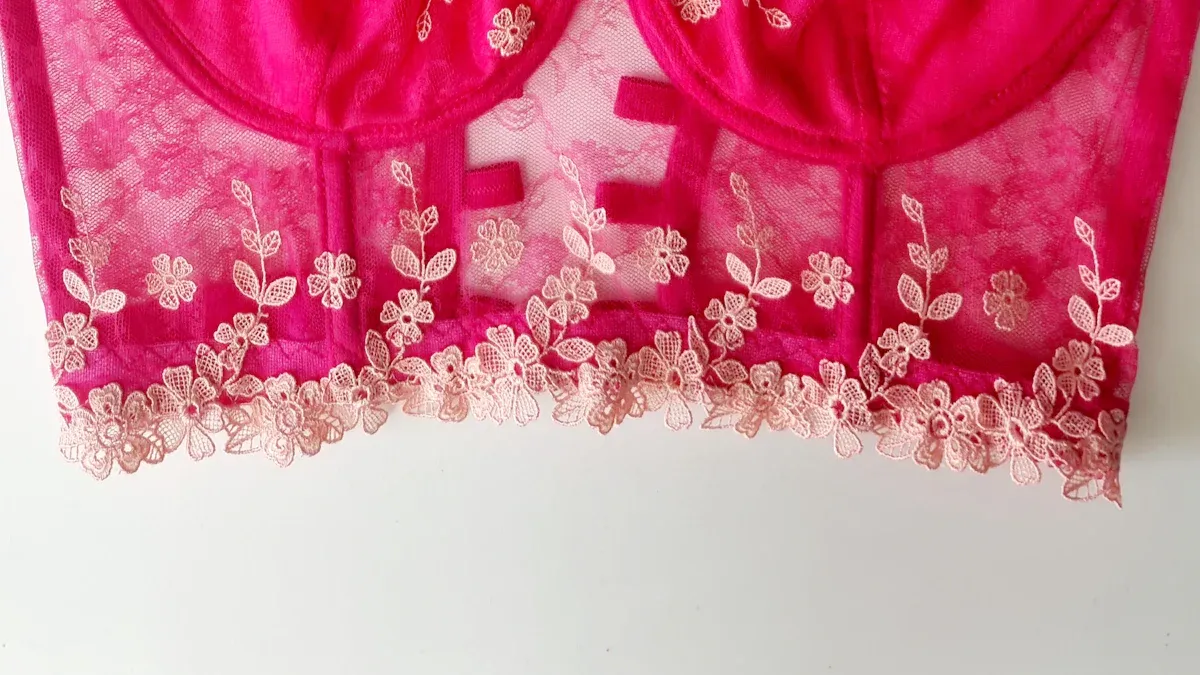 Image Source: pexels
Artisanal craftsmanship
Hand embroidery remains one of the strongest signatures of luxury. Each motif is created with a needle or crochet hook, sometimes using the Lunéville embroidery technique, which requires an extreme level of precision and patience. This manual work makes each piece unique and allows the motif to be adapted to the exact cut of the swimsuit.
Some houses that excel in this approach:
Brand | Specificity |
|---|---|
MAIÔ Paris | Exclusive hand-embroidered motifs, very refined finishes |
La Perla | Delicate embroideries inspired by luxury corsetry |
Mediterranean vintage ambiance, embroidered details and durable fabrics |
Recommended technical parameters
High-tenacity polyester thread (compliant with ISO 2062 for tensile strength).
Bead attachment: backstitch + double knot, anchored in a minimum of two fabric layers.
Ornament pull-out resistance test: recommended load ≥ 7 N.
Total ornament weight ideally less than 10% of the swimsuit's weight to preserve comfort.
Strategic asset for the brand
Strong, immediately identifiable visual signature.
Perception of a “couture” piece vs. a simple swimsuit.
Powerful argument for storytelling and editorial photos.
Beads and sequins
Application techniques
For beads and sequins, workshops combine several techniques: hand sewing, multi-needle mechanical embroidery, or premium heat sealing. Hand sewing remains the most durable over time, especially with repeated exposure to salt, chlorine, and friction.
Tip: Hand-sewn sequins offer much better wash resistance than simply glued versions.
Luxury rendering
Do you want a swimsuit that sparkles under the sun? Beads and sequins create a shimmering, glamorous effect that immediately catches the light. Beads evoke the world of jewelry, while sequins add a festive and modern dimension.
Type of ornament | Visual effect | Brand examples |
|---|---|---|
Beads | Refinement, jewelry sparkle | Eres, Oséree |
Sequins | Shine, modernity | Hunza G, Banana Moon |
Glitter | Mirror effect, party spirit | Oséree, Pain de Sucre |
Material selection
To ensure durability and comfort:
Prioritize glass or high-density resin beads, resistant to salt water and chlorine.
Choose premium plastic sequins with UV treatment to prevent discoloration.
Use hypoallergenic ornaments to prevent irritation.
Check color fastness and material durability with resistance tests (ISO 105 standards for dye fastness).
Lace and inlays
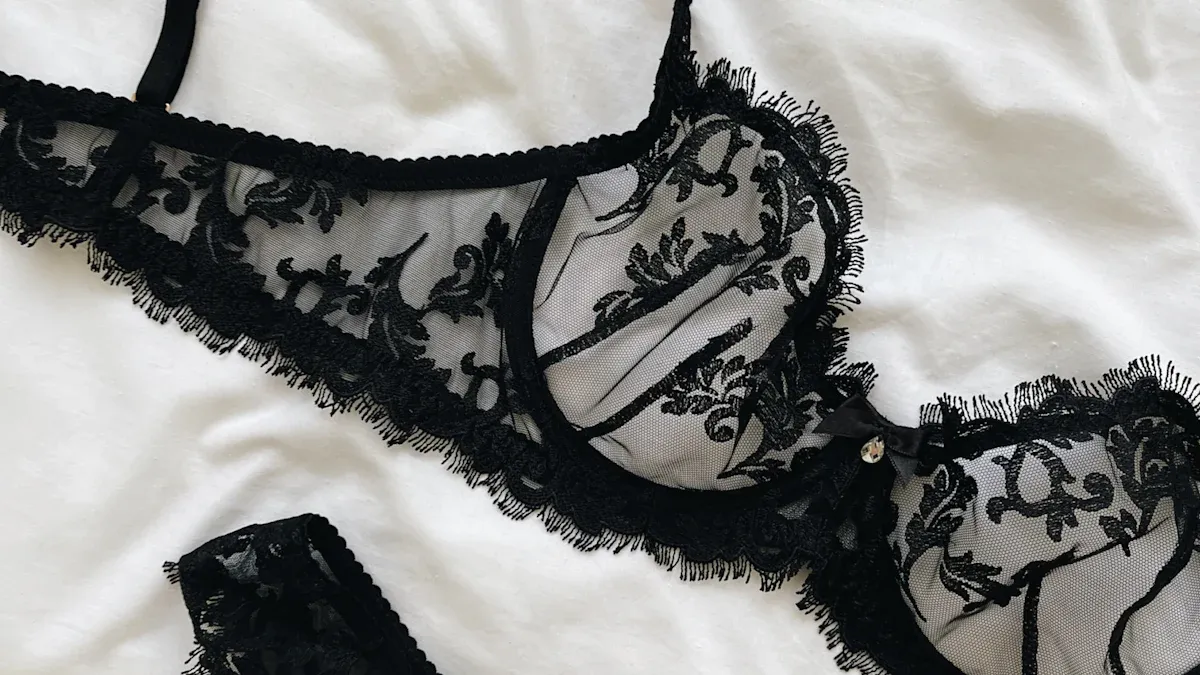 Image Source: pexels
Refinement
Lace is a must-have for adding an immediate touch of refinement. Houses like La Perla use Calais lace to create delicate motifs on the edges, necklines, or back of the swimsuit. These plays of transparency remain elegant without being excessive.
Tip: Black or ivory lace on a solid fabric gives a chic and timeless effect.
Originality
Inlays allow full expression of creativity:
Lace placed on the sides to visually slim the silhouette.
Embroidered tulle on the neckline for a "textile jewel" effect.
Applications of contrasting motifs on a plain background for a strong graphic impact.
Care
To preserve lace and inlays:
Hand wash in cold water with a mild detergent.
No tumble drying, no ironing.
Rinse with clear water after each swim, then dry flat.
Note: Proper care protects delicate fibers and keeps your swimsuit "like new" for much longer.
Piping and contrasting bias binding
Definition
Piping and contrasting bias binding transform a classic swimsuit into a sophisticated piece. Piping involves inserting a fabric-covered cord between two seams, while bias binding is a strip of fabric cut diagonally, used to edge, reinforce, or highlight the lines of the design.
You can find many types of bias binding in luxury collections, for example, through specialized high-end haberdashery suppliers:
Solid and printed bias binding
Jersey bias binding (more flexible)
Satin bias binding
Faux leather bias binding
Lurex bias binding
Tone-on-tone or contrasting piping
Style
Contrasting bias binding allows playing with colors and textures: black bias binding on a white swimsuit creates a very chic graphic effect, lurex bias binding adds a brilliant and festive touch, while faux leather bias binding brings an assertive modernity.
Tip: Well-placed contrasting bias binding can visually slim the silhouette and accentuate curves.
Durability
Technically, bias binding and piping reinforce seams and protect the edges of the swimsuit from repeated friction. They thus contribute to extending the product's lifespan while maintaining a beautiful appearance.
Invisible seams
Technique
Invisible seams are made with specialized machines (flatlock, 3-point zigzag) or by hand, so that the stitches remain hidden inside the fabric. The result: a completely smooth outer surface, with no visible threads.
Tip: Invisible seams reduce the risk of irritation, especially for sensitive skin or sports activities.
Comfort
The main advantages for comfort:
No rubbing on the skin.
Second-skin feel, ideal for swimming, tanning, or playing beach sports.
Total freedom of movement, even on very fitted cuts.
Added value
Asset | Impact on the product |
|---|---|
Clean aesthetic | Modern, minimalist, and high-end look |
Increased durability | Resistance to wear and tears |
Superior comfort | Significantly improved user experience |
Note: Major luxury houses systematically integrate this finish to guarantee impeccable quality.
High-end metal accessories
Materials
Metal accessories (rings, buckles, decorative chains) add a touch of jewelry to a swimsuit. Designers generally favor:
316L stainless steel (highly corrosion resistant).
Polished brass with gold or silver PVD plating.
Anodized aluminum, lightweight and durable.
Tip: Always choose corrosion-treated accessories to keep your swimsuit impeccable for longer.
Design
The design of accessories follows fashion trends: geometric rings, delicate chains, beaded ornaments... Some designers like Christopher Esber, for example, use metal rings to create a graphic and modern look.
Gold or silver rings to highlight the waist or hips.
Decorative chains at the straps or neckline.
Beaded ornaments for a sophisticated jewelry effect.
Resistance
High-end metal accessories are tested to resist water, salt, sand, and sun without deforming or rusting. The fastenings must withstand significant traction without breaking, to avoid any unpleasant surprises during real use.
Advantage | Impact on your swimsuit |
|---|---|
Treated metal | Resistant to corrosion (salt water, chlorine) |
Hypoallergenic finishes | Comfort even on sensitive skin |
Reinforced fastening | Durability and security during wear |
Note: A simple rinse with clear water after use prolongs the beauty of metal accessories.
Artisanal prints
Batik and tie & dye
Among the most appreciated artisanal techniques in luxury swimwear are batik and tie & dye. Batik uses wax to reserve certain areas of the fabric before dyeing, thus creating very precise motifs. Tie & dye plays on knots, folds, and dye baths to achieve unique gradients.
The Blue Man brand uses batik for its pareos and summer pieces.
Tie & dye is recurrent in summer collections for its vibrant colors and "holiday" effect.
Tip: A batik or tie & dye swimsuit immediately catches the eye and allows you to highlight your personality.
Uniqueness
Each artisanal print is slightly different, even within the same series. These variations in color and motif become a marketing asset: you can communicate on the idea of a "unique" or "numbered" piece, highly valued in luxury.
Technique | Result obtained | Emblematic brand |
|---|---|---|
Batik | Precise and contrasting ethnic motifs | Blue Man |
Tie & dye | Gradients, marbled and blurred effects | Several swimwear designers |
Note: Gentle hand washing helps preserve the beauty of colors and the fineness of motifs.
Laser and openwork cuts
Precision
Laser cutting is a cutting-edge technique that allows for creating ultra-precise patterns on fabric without fraying. The edge is "sealed" by the heat of the laser, which prevents fraying and guarantees a very clean finish.
Tip: Laser cutting is ideal for personalizing small series with initials, logos, or signature motifs.
Modernity
Openwork cuts bring a contemporary and bold touch. They create plays of transparency that highlight certain areas of the body (hips, waist, back, neckline) while remaining controlled.
Graphic lines on the hips.
Openwork patterns on the stomach to structure the silhouette.
Teardrop-shaped openings in the back for a couture effect.
Sophistication
Advantage | Impact on the swimsuit |
|---|---|
Laser precision | Clean and regular patterns, even very complex ones |
Openwork effect | Modern, graphic, and refined style |
Personalization | Creation of unique and exclusive models |
Note: Laser cuts require delicate care to avoid weakening the openwork edges.
Conclusion: building a brand signature through artisanal finishes
You now understand that artisanal finishes are not mere decorative details: they fully contribute to the perceived quality, durability, and luxury positioning of your swimsuit. Hand embroideries, lace, laser cuts, metal accessories, or artisanal prints must be chosen in coherence with your brand's DNA and your audience's expectations.
To stand out in the world of haute couture swimwear, draw inspiration from major fashion houses, while developing a signature that is unique to you: a motif, a technique, a type of finish that is immediately recognizable.
Tip: Observe trends, test different suppliers, and document your choices (tests, customer feedback, photo shoots) to refine your range of finishes from one season to the next.
FAQ
How to care for a swimsuit with artisanal finishes?
Rinse your swimsuit with clear water after each swim. Hand wash it in cold water with a mild detergent. Avoid tumble drying and ironing, then let it dry flat, in the shade.
Do artisanal finishes make the swimsuit more fragile?
When well-made, they actually offer superior quality and better resistance. However, care instructions must be followed (no aggressive machine washing, no strong wringing).
Can I customize my swimsuit with these finishes?
Yes, some brands and workshops offer custom options: personalized embroideries, choice of bias tape colors, types of metal accessories, or laser patterns.
Do metal accessories rust over time?
High-end accessories made of stainless steel, PVD-plated brass, or anodized aluminum are designed to resist salt water and chlorine. Rinsing your swimsuit with clear water after use further prolongs their shine.
Where can I find brands that offer this level of finishes?
You can turn to houses renowned for their craftsmanship, such as La Perla, Pain de Sucre, MAIÔ Paris, or designers specializing in couture swimwear and limited editions.