You may ask what recycled swimwear is. It uses things like fishing nets, carpet waste, and industrial plastic. These materials would harm the environment if not reused. Recycled fabrics are different from regular swimwear. They help lower carbon emissions. They also keep plastic out of oceans.
Waste Source | Impact on the Environment |
|---|---|
Carpet Waste | Stops waste from filling landfills |
Fishing Nets | Helps make oceans cleaner |
Industrial Plastic | Uses less crude oil |
Fabric Scraps | Reduces waste from making clothes |
Key Takeaways
Recycled swimwear is made from things like fishing nets and plastic bottles. This helps cut down on ocean pollution and trash in landfills.
Picking recycled swimwear means less carbon goes into the air. It also saves resources and helps the environment.
Check for labels like RCS and GRS. These show your swimwear is really made from recycled stuff.
Take care of recycled swimwear by hand washing and air drying it. This makes it last longer and stops microplastics from getting out.
Buying from brands that use recycled materials helps the fashion industry be more sustainable.
Why Recycled Swimwear Matters
Environmental Concerns
Many people do not know how regular swimwear hurts the earth. Most swimsuits are made from nylon or polyester. These come from fossil fuels. They do not break down in the ground. When you wash them, they lose tiny microplastics. These microplastics go into rivers and oceans. Fish and other animals can get hurt by them. Old swimsuits are thrown away in landfills. They stay there for a very long time because they cannot rot.
Nylon and polyester use up resources that cannot be replaced.
Synthetic fabrics let out microplastics when washed.
Swimwear made from plastics adds to trash and ocean waste.
Materials from fossil fuels do not break down and harm nature.
Benefits
Recycled swimwear helps you protect the earth. Brands use plastic bottles and old fishing nets to make new swimsuits. This keeps trash out of landfills and oceans. You help save resources when you pick recycled materials. The clothing industry is trying to be more eco-friendly. By 2026, recycled synthetic fibers could be 20% of all fibers made. This change helps lower the pollution from making swimwear.
Swimsuits made from recycled bottles or fishing nets keep trash out and save resources.
Picking recycled materials means we need less new plastic.
Buying from brands that use recycled swimwear shows you care about the earth.
Using recycled nylon and polyester saves resources and makes less waste.
Eco-friendly recycled nylon is strong and better for the planet.
Tip: When you choose recycled swimwear, you help the earth. You cut down on pollution and help keep the planet clean.
Types of Recycled Swimwear Fabrics
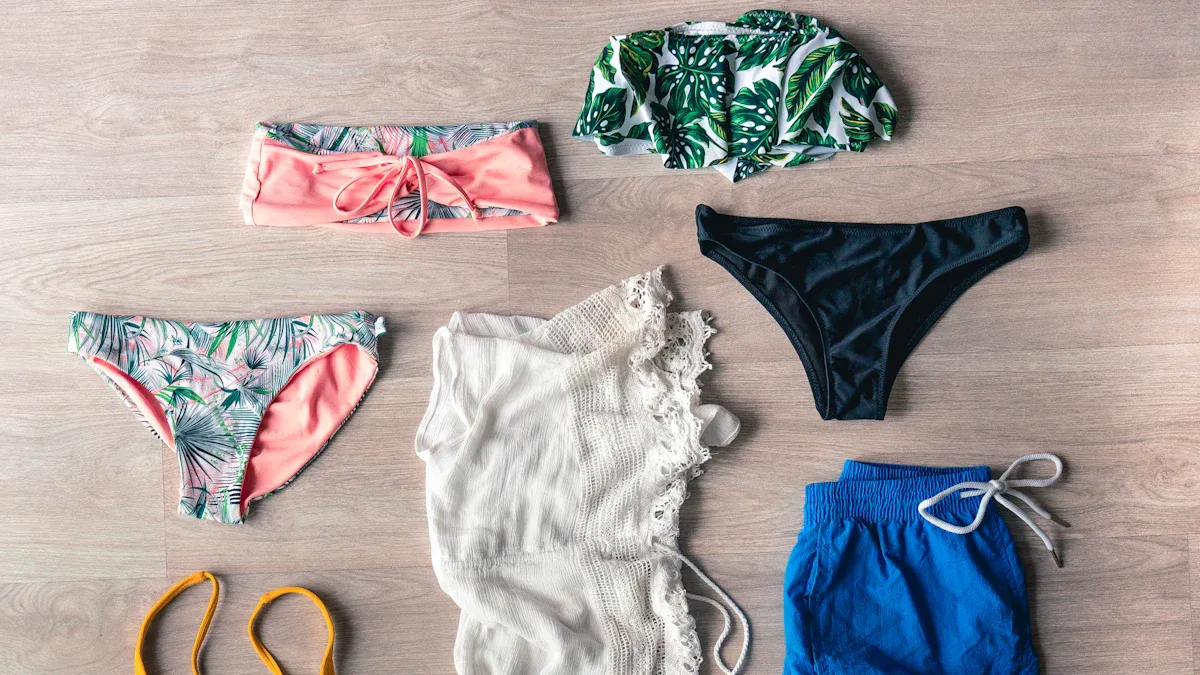
When you shop for recycled swimwear, you will see many fabrics. Each fabric comes from different sources. Each one has its own benefits. Let’s look at the most common types.
Recycled Nylon (Econyl)
Econyl is a recycled nylon used in swimwear. Factories use waste that could harm the planet. They collect old fishing nets, fabric scraps, carpets, and plastic waste. These materials are cleaned and processed. Then, they become new nylon yarn.
Source of Waste | Description |
|---|---|
Abandoned fishing nets | Taken from oceans |
Fabric waste from textile mills | Leftover from making clothes |
Old carpets | Carpets that would go to landfill |
Industrial plastic waste | Plastics from factories |
Econyl is as strong as regular nylon. It resists UV rays and chlorine better. Swimsuits made with Econyl last longer and keep their color. Econyl can be recycled many times. This makes it good for the environment.
Feature | Traditional Nylon | |
|---|---|---|
Raw Material | Petroleum | Waste (nets, carpets, scraps) |
Environmental Impact | High | Lower emissions & waste |
Recyclability | Limited | Infinitely recyclable |
Strength | Strong | Equally strong |
UV/Chlorine Resistance | Lower | Higher |
Sustainability Level | Low | High |
Durability | High | High |
Note: Brands mix Econyl with a little virgin spandex. This helps the fabric stretch and fit better.
Recycled Polyester (Repreve, rPET)
Recycled polyester is another popular fabric for swimwear. You may see names like Repreve and rPET. These fabrics come from used plastic bottles. Factories collect and clean the bottles. They shred and melt them. Then, they spin the plastic into new yarn.
REPREVE makes soft, strong fabric from plastic bottles.
rPET uses bottles from homes or beach clean-ups.
Sandbar Swimwear uses 5-8 bottles for each swimsuit.
Using recycled polyester lowers carbon emissions and saves resources.
Fabric Type | Description |
|---|---|
REPREVE | Fabric made from recycled fishing nets and polyester; soft and tough. |
Vita | Recycled polyester from fishing nets; stronger than regular polyester. |
Recycled Polyester | Made from 100% recycled polyester from bottles and other materials. |
UNIFI, the company behind REPREVE, has recycled 46 billion bottles. They want to reach 65 billion bottles by 2030. Choosing recycled polyester keeps plastic out of landfills and oceans.
Tip: Recycled polyester is often mixed with virgin fibers. This makes the fabric last longer and stretch better.
Recycled Spandex
Spandex makes swimwear stretchy. Recycling spandex is hard because it mixes with other fibers. Factories use special chemicals to recover spandex. These methods are new and not common yet. Some brands use a little recycled spandex in blends. This makes the fabric flexible and comfortable.
Getting spandex from blended fabrics is tricky.
Chemicals can dissolve spandex without hurting other fibers.
Most recycled swimwear uses recycled nylon or polyester with a bit of virgin spandex.
Alternatives
Some swimwear uses other recycled or eco-friendly materials. Brands use upcycled fibers from bottles and fishing nets. Some try plant-based materials like hemp, corn, or castor beans. Hemp needs little water and no pesticides. Organic cotton and hemp blends are natural and break down easily.
Hemp: Renewable, needs little water, no pesticides.
Plant-based materials: Made from corn or castor beans.
Organic cotton and hemp blends: Natural and biodegradable.
Upcycled fibers: Made from bottles and fishing nets.
Callout: Picking recycled swimwear supports new ideas and cuts waste. You help brands use more sustainable materials.
How Recycled Swimwear Is Made

Sourcing Materials
You help make recycled swimwear possible. Factories use waste from many places. They collect old fishing nets, plastic bottles, and scraps from clothes. These items would harm the earth if not reused. Workers sort the waste by type. They remove anything dirty or broken. Machines shred the clean waste into small bits. Chemicals break down these bits into fibers. The fibers are spun into yarn. Factories use this yarn to make fabric for swimsuits.
Here are the steps to see how waste turns into fabric:
Collection: Factories gather fishing nets, bottles, and scraps.
Sorting: Workers sort materials and remove dirty pieces.
Processing: Machines shred waste and break it into fibers.
Spinning: Fibers are spun into yarn.
Manufacturing: Yarn is woven or knitted into fabric, then dyed and finished.
Tip: Recycling bottles or old clothes helps make new swimwear.
Production Process
You see how the process works in factories. They use advanced systems to turn waste into good fabric. For example, the ECONYL® Regeneration System collects fishing nets and scraps. It changes them into new nylon that feels like regular nylon. This process is very efficient. Factories can recycle nylon again and again without losing quality. You help cut waste and pollution by picking recycled swimwear.
The regeneration process for ECONYL® nylon is very efficient. Factories can recycle nylon many times.
This process lowers waste and cuts the impact of making new nylon.
ECONYL® keeps the strength and durability of regular nylon.
Note: Recycled Swimwear uses these methods to make eco-friendly products that protect the planet.
Environmental Impact
Recycled vs. Conventional Fabrics
Choosing recycled swimwear helps the planet. Regular swimwear uses fossil fuels like crude oil. Making these fabrics causes more pollution and uses more energy. Recycled swimwear is better for the environment in many ways:
Upcycled swimwear does not need crude oil. This lowers greenhouse gas emissions.
Upcycled swimwear works just as well as regular fabrics. You still get good quality.
Recycled polyester comes from things like PET bottles and old clothes. Making it uses less energy and creates less pollution.
Recycled nylon cuts emissions by 26%. Chemically regenerated nylon uses 60% less energy than new nylon.
Picking recycled materials helps the earth. You support cleaner ways to make clothes and less pollution.
Note: Recycled swimwear fabrics use waste that could hurt nature. You help lower the impact of making clothes.
Waste Reduction
Recycled swimwear keeps plastic out of landfills and oceans. Factories turn waste like fishing nets and bottles into new fabric. This stops trash from piling up and hurting nature.
One pair of upcycled swim trunks stops about 100-150 bottles or parts of fishing nets from polluting the earth.
Recycled polyester uses waste from before and after people use it. This means less trash and fewer resources needed.
Using recycled polyester lowers emissions by 32% and saves 59% energy compared to new polyester.
You help cut down on plastic pollution and save energy.
Fabric Type | Emissions Reduction | Energy Savings |
|---|---|---|
Recycled Polyester | 32% | 59% |
Recycled Nylon | 26% | 60% |
Tip: Every time you pick recycled swimwear, you help keep the earth clean for the future.
Identifying Genuine Recycled Swimwear
Certifications
You can find real recycled swimwear by looking for trusted certifications. These certifications prove the fabric has recycled content and follows strict rules. The Recycled Claim Standard (RCS) and Global Recycled Standard (GRS) are two common certifications. RCS checks if recycled material is in the fabric. GRS checks for recycled content and safe manufacturing.
Certification | Recycled Content Guarantee | Additional Criteria |
|---|---|---|
RCS | At least 5% | Tracks recycled material to finished product |
GRS | More than 50% | Has social and environmental rules, limits chemicals |
You should look for certification logos on tags or websites. These logos show the swimwear meets recycled content rules.
Material Percentages
Reading labels helps you know how much recycled material is in your swimwear. Labels often say the percentage of recycled fibers, like "80% recycled polyamide." Some brands list the source, such as Econyl or Repreve, which means the fabric comes from recycled waste.
Look for certification logos and check them on the certifying group’s website.
Read the label to see what percent is recycled.
Check material claims to confirm the source and amount of recycled fibers.
Find transparency reports from brands that explain their environmental impact.
Review return policies to see if the brand supports its product quality.
Tip: Higher recycled percentages mean more waste stays out of landfills and oceans.
Avoiding Greenwashing
You need to be careful about greenwashing. Some brands use words like "eco-friendly" or "sustainable" to get buyers, but they may not use much recycled material. They might show one green feature and ignore other bad practices. Vague words and fake certifications can trick you into thinking a product is better for the planet than it is.
Brands may call clothes recycled or sustainable for marketing.
Some show only a little recycled content and do not fix other problems.
Look for clear facts about recycled and virgin materials.
Ask for honest sustainability reports from brands.
True sustainability in swimwear is still changing.
Note: Always check details and ask questions. Real recycled swimwear uses clear labels, trusted certifications, and honest reports.
Recycled Swimwear Care
Washing Tips
You want your swimwear to last and look good. The way you wash it matters a lot. Always hand wash your suit after each use. Fill a sink or basin with cold or lukewarm water. Add a small amount of mild, pH-neutral detergent. Gently swish your suit in the water. Do not twist or wring the fabric. This keeps the fibers strong and helps the colors stay bright. If you notice a strong smell or stain, add a tablespoon of white vinegar to the water. Vinegar helps remove chlorine and keeps the fabric safe.
Follow these steps for best results:
Fill a basin with cold or lukewarm water.
Add a small amount of gentle detergent.
Soak your swimwear for 15–20 minutes.
Gently rub any dirty spots with your fingers.
Rinse well to remove all soap.
Let your swimwear air dry flat in the shade. Avoid using a dryer or hanging it in direct sunlight. Heat and sun can damage the fabric and fade the colors.
Tip: Hand washing your swimwear helps reduce microplastics released into the water.
Longevity
You can make your recycled swimwear last longer with a few simple habits. Always rinse your suit after swimming to remove salt, chlorine, and sunscreen. Store your swimwear flat or folded, not crumpled in a bag. Keep it away from rough surfaces that can snag the fabric.
Gentle washing keeps the fabric strong.
Avoid harsh chemicals and bleach.
Protect your suit from too much sun and chlorine.
Use cold water to help the fabric keep its shape.
Proper care can add months or even years to the life of your swimwear. When you treat your recycled swimwear well, you help the planet and save money.
You make a real difference when you choose recycled swimwear. These fabrics cut CO2 emissions by 75% and keep plastic out of landfills. Eco-friendly swimwear lasts longer and supports fair working conditions. You can track brands’ supply chains and see how many bottles they recycle. Caring for your suit by rinsing and storing it properly helps it last. The swimwear industry is growing and moving toward sustainability. Your choices help protect the planet and inspire others to do the same.
FAQ
What makes swimwear fabric "recycled"?
Recycled swimwear uses waste like bottles and fishing nets. Factories change these items into new fibers. Brands make swimwear from these fibers. This helps protect the planet.
Is recycled swimwear as durable as regular swimwear?
Recycled fabrics like Econyl and Repreve are strong. They last a long time and resist chlorine and UV rays. You get comfort and performance like regular swimwear.
How can you tell if swimwear is truly recycled?
Look for certifications like GRS or RCS on tags. Read the label to see recycled material percentages. Brands list sources like Econyl or Repreve. Avoid vague claims and check for clear facts.
Does recycled swimwear cost more?
Recycled swimwear may cost a bit more. Brands use special methods and certified materials. You pay for quality and help reduce waste. Many brands have affordable choices.
Can you recycle your old swimwear?
Some swimwear can be recycled if it has recycled fibers. Check local recycling programs or mail-back options. Some brands take old suits for recycling. This helps keep waste out of landfills.