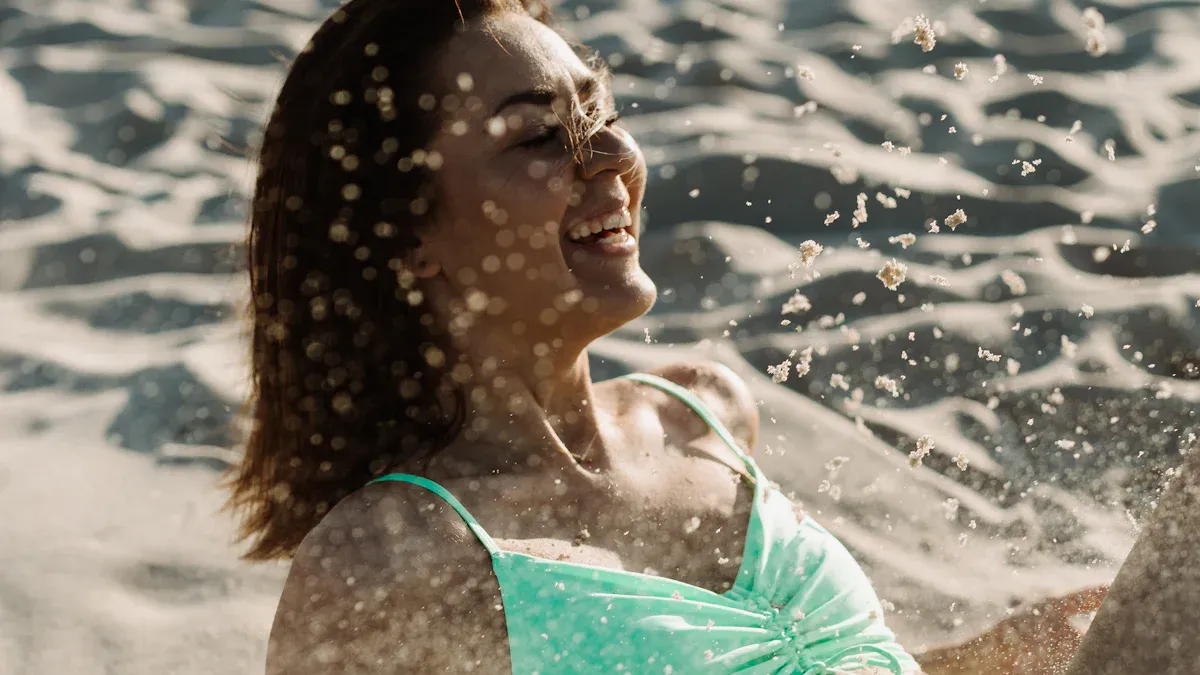
You want swimwear that not only lasts season after season but also reduces its impact on the planet. High-durability sustainable swimwear is built on verified performance testing, traceable fibre sourcing, and independent certifications such as OEKO-TEX® Standard 100 (latest 2024 version) and the Global Recycled Standard (GRS v4.0). Choosing these materials gives you reliable comfort, long-term value, and a measurably lower environmental footprint.
Traditional swimwear can contribute to microplastic release, high chemical load, and significant energy use.
Responsible brands use recycled fibres, cleaner chemistry, and validated supply chains.
Durable designs retain colour and elasticity for longer, reducing waste and replacements.
How This Guide Uses Data & Standards
This guide compiles public information from standards organisations (ISO, ASTM International), certification bodies (OEKO-TEX, Textile Exchange), and fibre producers like Aquafil and Unifi. It does not include proprietary in-house testing but offers a reliable technical framework.
Standards & Certifications: ISO/ASTM methods, OEKO-TEX, GRS.
Environmental Data: Based on publicly available LCA summaries.
Brand Examples: Illustrative educational examples only.
Editorial Disclosure: All brands mentioned are non-sponsored educational references.
Key Takeaways
Prioritise certified materials such as ECONYL®, Repreve®, and bio-based nylon blends.
Look for durability performance such as chlorine resistance and stretch recovery.
Choose brands with verified certifications like OEKO-TEX® Standard 100, GRS v4.0, and Fairtrade.
Maximise lifespan by washing cold, drying in shade, and avoiding heat.
Prefer transparent brands that publish fibre sources and recycled content percentages.
What Is Durable Sustainable Swimwear?
Durability Explained
Durability means long-term retention of elasticity, colour, tensile strength, and opacity even after repeated wear and washing. The most reliable indicators come from internationally recognised tests:
ISO 105-E03:2018 — Chlorine resistance
ISO 105-B02:2014 — Lightfastness to UV
ASTM D2594 / ISO 20932-1 — Stretch & Recovery
ISO 12947-2 (Martindale) — Abrasion resistance
Test Type | Standard | Purpose |
|---|---|---|
Chlorine fastness | ISO 105-E03 | Evaluates colour retention in chlorinated water. |
Lightfastness | ISO 105-B02 | Measures UV fade resistance. |
Stretch & recovery | ASTM D2594 / ISO 20932 | Assesses elasticity performance. |
Abrasion | ISO 12947 | Tests fibre wear and pilling resistance. |
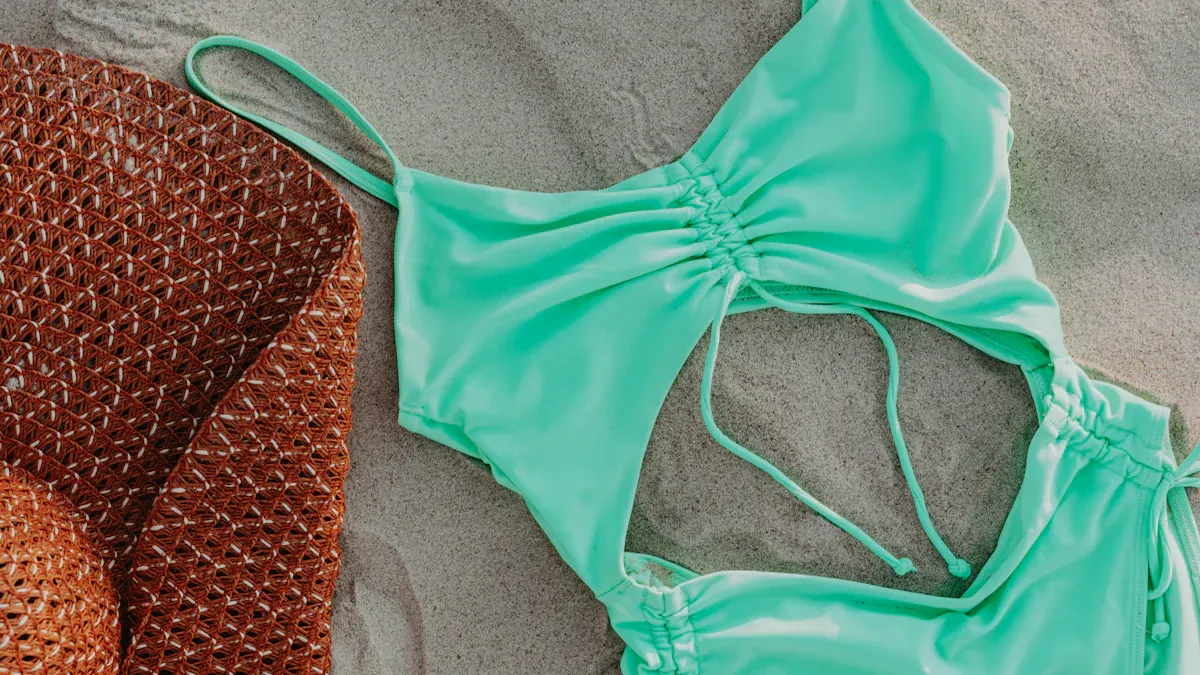
High-quality sustainable swimwear typically features double lining, flatlock seams, and high-denier nylon blends.
Tip: A brand showing actual test ratings (e.g., “ISO 105-E03 rating 4–5”) demonstrates stronger transparency than vague claims like “chlorine resistant.”
Sustainability in Swimwear
Sustainability is more than recycled materials—it's about responsible chemistry, traceability, and social standards across the supply chain.
Recycled fibres (ECONYL®, Repreve®)
Cleaner dye processes & OEKO-TEX compliance
Supplier transparency: mills, dyehouses, recycled content percentages
Key Materials & Certifications
Material | Description |
|---|---|
ECONYL® | Regenerated nylon from fishing nets and nylon waste. |
Merino Wool | Natural UPF, breathable, often blended for stretch. |
Hemp | Low-impact fibre, used mainly for beachwear. |
Organic Cotton | Used in blends for comfort, not main swim fabric. |
EVO® | Castor bean–based bio-polyamide. |
Repreve® | Recycled polyester with traceable certification. |
OEKO-TEX Standard 100 — Harmful substances testing
GRS v4.0 — Recycled content verification + audits
Fairtrade / SA8000 — Labour standards
Benefits of Durable Sustainable Swimwear
Longevity & Value
Fewer replacements needed
Better long-term fit
Reduced textile waste
Comfort & Fit
Feature | Benefit |
|---|---|
High-quality materials | Improved resilience and comfort |
Quick-drying fabrics | Reduced chafing and heaviness |
Adjustable straps | Better support |
Breathable linings | Cooler skin feel |
Environmental Impact
Less demand for virgin petroleum fibres
Recycled nylon diverts ocean/industrial waste
Repair & take-back schemes support circularity
How to Choose Durable Sustainable Swimwear
Identifying Genuine Sustainability
Check certification numbers
Look for supplier transparency
Prefer measurable goals over vague claims
Understanding Labels
GRS v4.0 — Recycled content + chain-of-custody
OEKO-TEX Standard 100 — Chemical safety
Fairtrade — Ethical labour practices
Red Flags
Tactic | Description |
|---|---|
Green imagery | Nature visuals without evidence |
No proof | No test data or certifications |
Irrelevant claims | Minor eco tweaks while core remains unsustainable |
Superficial sustainability | Lack of measurable data |
Care & Maintenance
Washing & Drying
Rinse after every swim
Use mild detergent
Wash cold
Dry in shade
Avoid heat & wringing
Practice | Benefit |
|---|---|
Cold washing | Protects colours and fibres |
Shade drying | Reduces UV degradation |
Early repairs | Extends garment life |
Recommended Sustainable Swimwear Brands
Disclaimer: The following are illustrative examples based on public information.
Brand | Sustainability | Durability | Unique Features |
|---|---|---|---|
Hunza G | OEKO-TEX-certified materials | Resilient crinkle fabric | One size fits most |
Away That Day | Recycling programme | Regenerated nylon | Mix-and-match styles |
Oceanus | Recycled fabrics | High-quality embellishments | Hand-finished designs |
Aliya Wilkinson | Recycled yarn blends | Timeless cuts | Soft luxurious textures |
Where to Buy in the UK
Batoko
Davy J
Finisterre
Ruby Moon
Stay Wild
Glossary
Term | Meaning |
|---|---|
LCA | Lifecycle Assessment |
UPF | Ultraviolet Protection Factor |
Denier | Fibre thickness measure |
OEKO-TEX Standard 100 | Chemical safety certification |
GRS | Recycled content certification |
Durable Swimwear Checklist
Certified recycled fibres (ECONYL®, Repreve®)
Recognised certifications (OEKO-TEX, GRS)
Chlorine resistance & UPF details
Double lining & reinforced seams
Cold wash & shade dry care instructions
FAQ
What makes swimwear sustainable?
Sustainable swimwear uses recycled or responsibly sourced materials and transparent production processes.
How do I know if my swimwear is durable?
Check for ISO/ASTM test data, reinforced seams, and customer reviews.
Can I recycle my old swimwear?
Some brands offer take-back schemes; recycling options vary by region.
How should I wash sustainable swimwear?
Rinse after wear, wash cold, use mild detergent, and dry in shade.
Are sustainable swimsuits more expensive?
Usually, but they last longer and reduce environmental waste.