
As a service provider for swimwear brands, we understand the critical role fabric selection plays in defining brand identity, product performance, and market competitiveness. Among the myriad of swimwear fabrics, Nylon and Polyester are undoubtedly the two mainstays. Their unique properties determine the most suitable swimwear types and target audiences. This article provides an in-depth comparison of these two fabrics, aiming to help swimwear brands make precise choices to create high-quality products that align with their brand ethos and consumer demands.
Is This Page for You?
For Swimwear Brands, Wholesalers, and Custom Clients: This is your comprehensive B2B fabric decision guide. We will dive deep into production considerations, bulk manufacturing insights, and how fabric choice impacts your bottom line.
For Individual Consumers: If you are just looking to buy a swimsuit for yourself, here is the quick summary: choose nylon for soft, luxurious comfort on the beach, and choose polyester if you swim frequently in chlorinated pools and need maximum durability.
Key Differences at a Glance
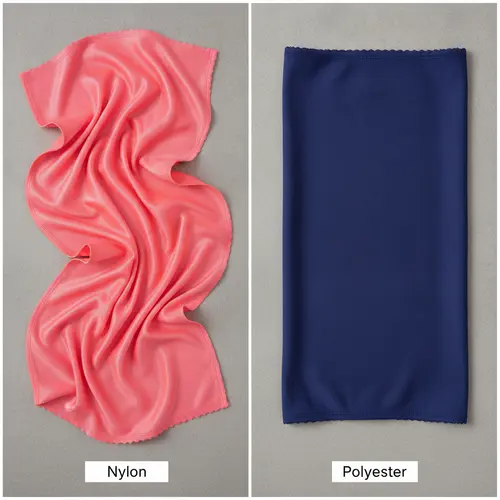
Nylon is renowned for its exceptional softness, skin-friendly feel, and elasticity, making it ideal for swimwear brands that prioritize comfort, fashion-forward design, and casual wear. Imagine your brand is positioned as "beach resort style" or "high-end fashion swimwear"; nylon can impart a luxurious touch and fluid lines to your swimsuits. However, nylon is relatively weak in chlorine and UV resistance, and prolonged use or frequent contact with pool water can lead to fading and loss of elasticity.
In contrast, Polyester stands out for its outstanding durability, chlorine resistance, UV resistance, and color stability, making it the perfect choice for performance-oriented brands. If your brand focuses on "professional competitive swimwear," "high-intensity training swimwear," or "children's swimwear," polyester ensures that the swimsuits retain their shape and color even in harsh conditions. The downside of polyester is that its handfeel may not be as soft as nylon, and its elasticity is slightly inferior, although modern manufacturing processes have significantly improved this.
Nylon: The Epitome of Comfort and Style
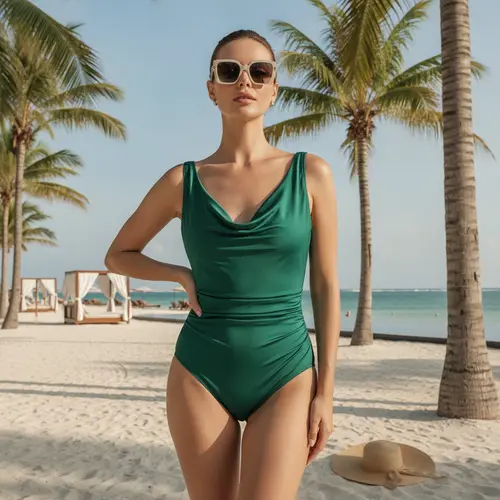
Nylon, also known as Polyamide, is a historically popular and widely used fabric in the swimwear industry. Its unique fiber structure gives it a series of excellent properties, making it the preferred choice for many fashion and casual swimwear brands.
Key Characteristics:
•Softness and Skin-Friendly: Nylon fibers have an exceptionally soft and smooth touch, providing superior comfort when worn, feeling like a second skin. This is crucial for brands that pursue the ultimate wearing experience.
•Excellent Elasticity and Recovery: Nylon possesses good elasticity, and is often blended with a small amount of Spandex (Lycra/Elastane) to further enhance its stretch and shape retention capabilities. This allows swimsuits to perfectly conform to body curves, providing freedom of movement.
•Lightweight and Quick-Drying: Nylon fabric is light and thin, with relatively low water absorption, thus offering quick-drying properties, enhancing convenience for wearers.
•Luster and Dyeing Effect: The surface of nylon fabric typically has a natural luster and is easy to dye, presenting vibrant and saturated colors, making it very suitable for designs with a strong sense of fashion.
Brand Application Scenarios:
•Fashion and Casual Swimwear: Nylon's soft handfeel and good drape make it an ideal choice for designing fashionable bikinis, one-piece swimsuits, and beachwear. Brands can leverage its excellent dyeing properties to launch products with rich colors and diverse patterns.
•Resort Collections: For brands targeting the high-end resort market, nylon swimwear can offer a luxurious wearing experience, meeting consumers' dual demands for comfort and aesthetics.
•Shapewear Swimwear: Nylon blended fabrics with a high proportion of Spandex can provide excellent shaping effects, helping brands create slimming swimwear collections.
Limitations and Brand Considerations:
Despite nylon's significant advantages, its chlorine resistance and UV protection are generally average. Prolonged exposure to chlorinated water and strong sunlight can easily lead to fading, fiber damage, and loss of elasticity in nylon swimwear. Therefore, for swimwear brands focused on competitive or high-frequency use, pure nylon may not be the optimal choice. When selecting nylon, brands should clearly communicate its applicable scenarios and proper care instructions to consumers to extend product lifespan.
For Brands: Production Considerations
When sourcing nylon for bulk production, it is important to note that premium nylon (especially sustainable variants) often commands a higher price point than standard polyester. Minimum Order Quantities (MOQs) for custom-dyed nylon can range from 300 to 500 yards depending on the mill. Because nylon absorbs dye beautifully, it is excellent for solid, vibrant colors, but brands must ensure their manufacturing partner conducts rigorous colorfastness testing to prevent bleeding during the first wash.
Polyester: The Guarantee of Performance and Durability
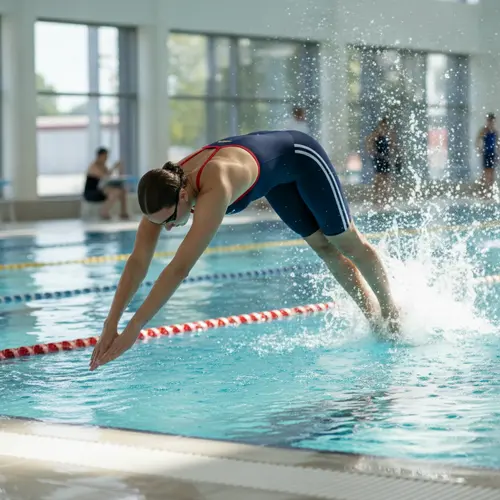
Polyester is another widely used fabric in the swimwear industry, particularly favored by brands with high demands for durability and functionality . Its chemical structure allows it to perform exceptionally well in harsh environments. According to industry testing, high-grade polyester blends can withstand over 300 hours of continuous exposure to chlorinated water without significant degradation, whereas standard nylon may begin to break down after 50-100 hours .
Key Characteristics:
•Excellent Chlorine Resistance: Polyester's resistance to chlorine far surpasses that of nylon, meaning it is less prone to damage, fading, or loss of elasticity after frequent contact with pool water. This is crucial for professional training and competitive swimwear.
•Superior UV Protection: Polyester effectively resists UV radiation (often achieving UPF 50+ ratings natively), helping to protect the wearer's skin and maintain the swimsuit's vibrant colors, preventing aging due to sun exposure.
•High Strength and Durability: Polyester fibers are tough and abrasion-resistant, giving polyester swimwear a longer lifespan, maintaining good condition even under high-intensity use.
•Shape Retention: Polyester fabric is not easily deformed; it quickly recovers its original shape even after repeated stretching, ensuring the swimsuit's fit.
•Quick-Drying: Polyester has low water absorption and dries quickly, enhancing wearing comfort.
•Printability: Polyester is highly suitable for digital sublimation printing, capable of producing clear, vivid patterns and rich colors without adding weight or stiffness to the fabric.
Brand Application Scenarios:
•Competitive and Training Swimwear: For professional athletes or consumers who frequently swim, polyester swimwear is the best choice. Brands can emphasize its chlorine resistance, durability, and shape retention properties to meet high-performance demands.
•Children's Swimwear: Children's swimwear needs to withstand frequent washing and play. Polyester's durability and easy-care properties make it an ideal fabric for children's swimwear, effectively extending product life.
•Outdoor Water Sports Swimwear: Outdoor water sports like surfing and paddleboarding require high UV resistance and abrasion resistance from swimwear. Polyester provides reliable protection.
•Eco-Friendly Collections (Recycled Polyester): With the growing awareness of sustainability, recycled polyester (e.g., REPREVE®) has become the choice for an increasing number of brands. It retains the excellent properties of virgin polyester while reducing environmental impact.
Limitations and Brand Considerations:
Compared to nylon, pure polyester fabric may feel slightly rougher and less soft. Its elasticity is also somewhat inferior to nylon. However, modern textile technology and blending processes are continuously improving these aspects. When choosing polyester, brands can consider blending it with a higher amount of Spandex to enhance wearing comfort and elasticity while retaining polyester's core advantages.
For Brands: Production Considerations
Polyester is generally more cost-effective than nylon, making it an excellent choice for scaling brands. It is the undisputed champion for complex, multi-colored prints because it supports digital sublimation printing—a process that allows for photorealistic designs with zero water waste and often lower MOQs (sometimes as low as 50-100 pieces per print).
Nylon vs. Polyester: Brand Decision Comparison Table
To more intuitively assist swimwear brands in fabric selection, the following table summarizes the key characteristics of Nylon and Polyester in swimwear applications:
| Feature | Nylon | Polyester | Brand Strategy Advice | Production Complexity |
|---|---|---|---|---|
| Handfeel | Extremely soft, smooth, skin-friendly | Soft, but potentially slightly less than nylon | Choose nylon for luxurious comfort; polyester for performance | Low |
| Elasticity | Excellent, often blended with spandex | Good, but slightly lower than nylon | Emphasize fit with nylon; shape retention with polyester | Medium (Requires precise spandex blending) |
| Chlorine Resistance | Poor, easily damaged, fades | Excellent, highly chlorine-resistant | Casual fashion chooses nylon; competitive training chooses polyester | Low |
| UV Resistance | General, easily aged by sun | Excellent, effectively resists UV radiation | Daily wear chooses nylon; outdoor sports chooses polyester | Low |
| Durability | Good, but long-term chlorine reduces it | Excellent, high strength, abrasion-resistant | Short fashion cycle chooses nylon; long-lasting chooses polyester | Low |
| Dyeing & Printing | Easy to dye, vibrant solid colors | Excellent for digital sublimation printing | Solid colors choose nylon; complex patterns choose polyester | Nylon: Medium (Colorfastness testing); Polyester: Low (Sublimation is highly reliable) |
| Eco-Friendly Options | [Recycled Nylon](https://www.swimsuitcustom.com/blogArticle/rpet-vs-recycled-nylon) (e.g., ECONYL®) | Recycled Polyester (e.g., REPREVE®) | Both have sustainable options | Medium (Requires certified sourcing) |
Talk to our fabric specialist about which is right for your next collection.
The Role of Spandex (Lycra/Elastane): The Source of Elasticity
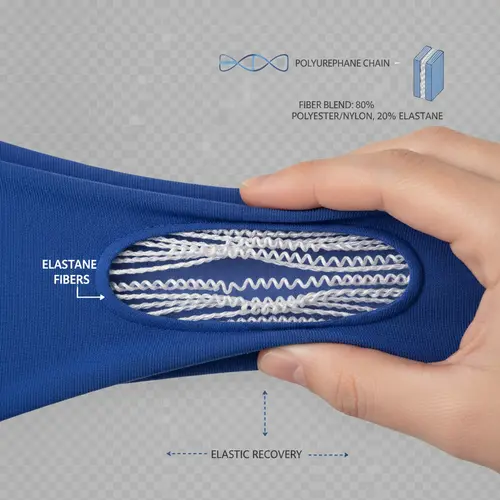
Spandex (often called Elastane in Europe, with LYCRA® being a well-known brand) is not a primary swimwear fabric. Instead, it serves as an elastic fiber, blended with nylon or polyester to give swimwear excellent elasticity and recovery. Its main function is to ensure the swimsuit fits snugly, provides a comfortable wearing experience and freedom of movement, and helps the swimsuit quickly return to its original shape after stretching, maintaining its form.
•Blend Ratio: The Spandex content in swimwear typically ranges from 10% to 30%. A higher Spandex ratio means better elasticity and shaping effects, but also increases costs.
•Brand Considerations: When choosing Spandex, brands should pay attention to its quality and chlorine resistance. High-quality Spandex (such as LYCRA® XTRA LIFE™) can effectively resist the erosion of chlorinated water and sunscreens, extending the lifespan of the swimsuit.
Eco-Friendly Fabrics: A Sustainable Brand Opportunity
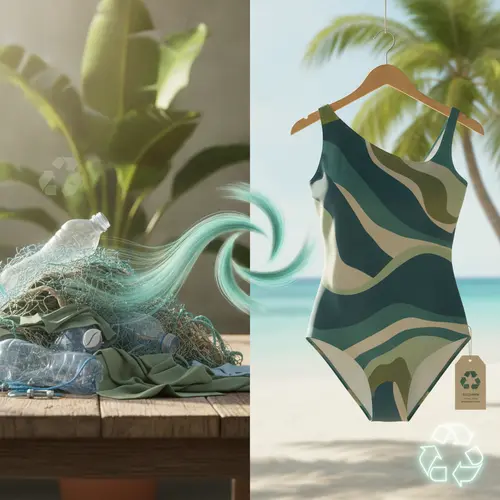
In the current market environment, consumer concern for sustainability is growing. Swimwear brands can leverage eco-friendly fabrics, such as recycled nylon and recycled polyester, to enhance brand image and market competitiveness.
•Recycled Nylon (e.g., ECONYL®): Typically made from recycled nylon waste such as discarded fishing nets and carpet scraps. It retains the softness, elasticity, and comfort of virgin nylon while reducing environmental impact. Suitable for fashion brands pursuing a high-end eco-friendly image .
•Recycled Polyester (e.g., REPREVE®): Primarily made from recycled plastic bottles. It inherits the durability, chlorine resistance, and UV protection characteristics of virgin polyester, making it an ideal choice for performance-oriented eco-friendly swimwear .
How to Choose the Best Swimwear Fabric for Your Brand?
Choosing the most suitable swimwear fabric for your brand requires a comprehensive consideration of brand positioning, target customers, product use, and budget. Here are some key decision-making factors:
1.Define Your Brand's Core Values: Does your brand emphasize luxurious comfort, fashion-forward design, or high performance and extreme durability? If the former, nylon and its blends are ideal; if the latter, polyester and its blends will be your first choice.
2.Understand Target Customer Needs: Are your customers casual vacationers, fashion trend followers, or professional swimmers and water sports enthusiasts? Different groups have vastly different demands for swimwear fabric performance.
3.Consider Product Use Scenarios: Is the swimwear primarily for indoor pools, beach vacations, professional training, or outdoor water sports? Different environments have varying requirements for chlorine resistance, UV protection, and durability.
4.Balance Cost and Performance: There may be differences in cost between nylon and polyester, and high-quality blended fabrics and eco-friendly fabrics will also affect the cost. Brands need to find the optimal balance between performance, quality, and price.
From Fabric Choice to Bulk Production: What Brands Must Know
Selecting the fabric is only the first step. Moving from a fabric swatch to bulk production involves several critical B2B considerations:
•Minimum Order Quantities (MOQ): Understand your manufacturer's MOQ per fabric and per color. Custom dyeing nylon usually requires higher MOQs than digitally printing on polyester.
•Sourcing Risks & Lead Times:Sustainable fabrics like ECONYL® or REPREVE® require certified supply chains. Ensure your manufacturing partner has direct access to these mills to avoid delays. Lead times for specialized fabrics can add 2-4 weeks to your production calendar.
•Prototyping and Fit Testing: Nylon and polyester drape and stretch differently. A pattern designed for a nylon-spandex blend may need adjustments if you switch to a polyester-spandex blend. Always request pre-production samples (PPS) to verify the fit and fabric behavior.
•Supplier Qualification: Ensure your OEM partner conducts rigorous quality control, including colorfastness testing (especially for neon or dark nylon) and stretch recovery testing.
Next Step for Swimwear Brands
Ready to bring your swimwear designs to life? Whether you need the luxurious touch of premium recycled nylon or the indestructible performance of sublimation-printed polyester, partnering with an experienced manufacturer is key. Contact our production team today to request fabric swatches and discuss the best material strategy for your upcoming collection.
Conclusion
When it comes to swimwear fabric selection, nylon and polyester each have their merits; it's not about which is superior, but which is "most suitable." As a swimwear brand service provider, we recommend that brands deeply understand the characteristics of these two fabrics and make the most informed choices based on their brand positioning and market strategy. Whether pursuing ultimate comfort and fashion with nylon, focusing on excellent performance and durability with polyester, or embracing eco-friendly recycled fabrics, precise fabric selection will be a crucial step towards your brand's success.
Swimwear Fabric Frequently Asked Questions (FAQ)
Q1: Should I choose nylon or polyester for my private label swimwear line?
A1: It depends entirely on your brand positioning. If your private label focuses on luxury resort wear, high-fashion bikinis, or shapewear, nylon is the better choice for its soft drape and premium feel. If you are launching an activewear, surf, or children's line, polyester is highly recommended for its durability and UV/chlorine resistance.
Q2: Does recycled polyester meet performance requirements for competitive swimwear?
A2: Yes, absolutely. High-quality recycled polyester (like REPREVE®) offers the exact same molecular performance as virgin polyester. It provides exceptional chlorine resistance, shape retention, and UV protection, making it fully capable of meeting the rigorous demands of competitive swimwear while offering a strong sustainability narrative.
Q3: Which is more comfortable, nylon or polyester swimwear?
A3: Generally, nylon swimwear is more comfortable due to its soft and smooth handfeel. Polyester may be slightly inferior in handfeel, but modern manufacturing processes have significantly improved the softness of polyester.
Q4: Which fabric is more chlorine-resistant for swimwear?
A4: Polyester swimwear has excellent chlorine resistance, far surpassing nylon. Therefore, for swimwear frequently used in chlorinated pools, polyester is the more durable choice.
Q5: What is the role of Spandex in swimwear?
A5: Spandex is not a primary swimwear fabric but serves as an elastic fiber blended with nylon or polyester to provide swimwear with excellent elasticity and recovery, ensuring a snug fit and comfortable wear.