The swimwear industry is witnessing a quiet revolution. While seamless construction (knitted in one piece on specialized circular machines) has absolutely exploded in the activewear and athleisure markets, it remains barely touched in the swimwear sector. For independent brands looking to differentiate themselves in a crowded market, seamless swimwear represents a massive, untapped opportunity.
However, there is a reason why seamless swim is still rare. The technical challenges are significant. Swimwear must survive harsh environments—chlorine, saltwater, high heat, UV exposure, and sunscreen—conditions that standard seamless activewear yarns simply cannot withstand. Fortunately, recent developments in circular knitting technology and advanced elastomeric yarns are finally making seamless swimwear viable.
This guide bridges the knowledge gap. We will explore everything independent brands need to know about seamless swimwear production, from yarn selection and machine types to design limitations and minimum order quantities (MOQs).
The Technical Challenges of Seamless Swimwear
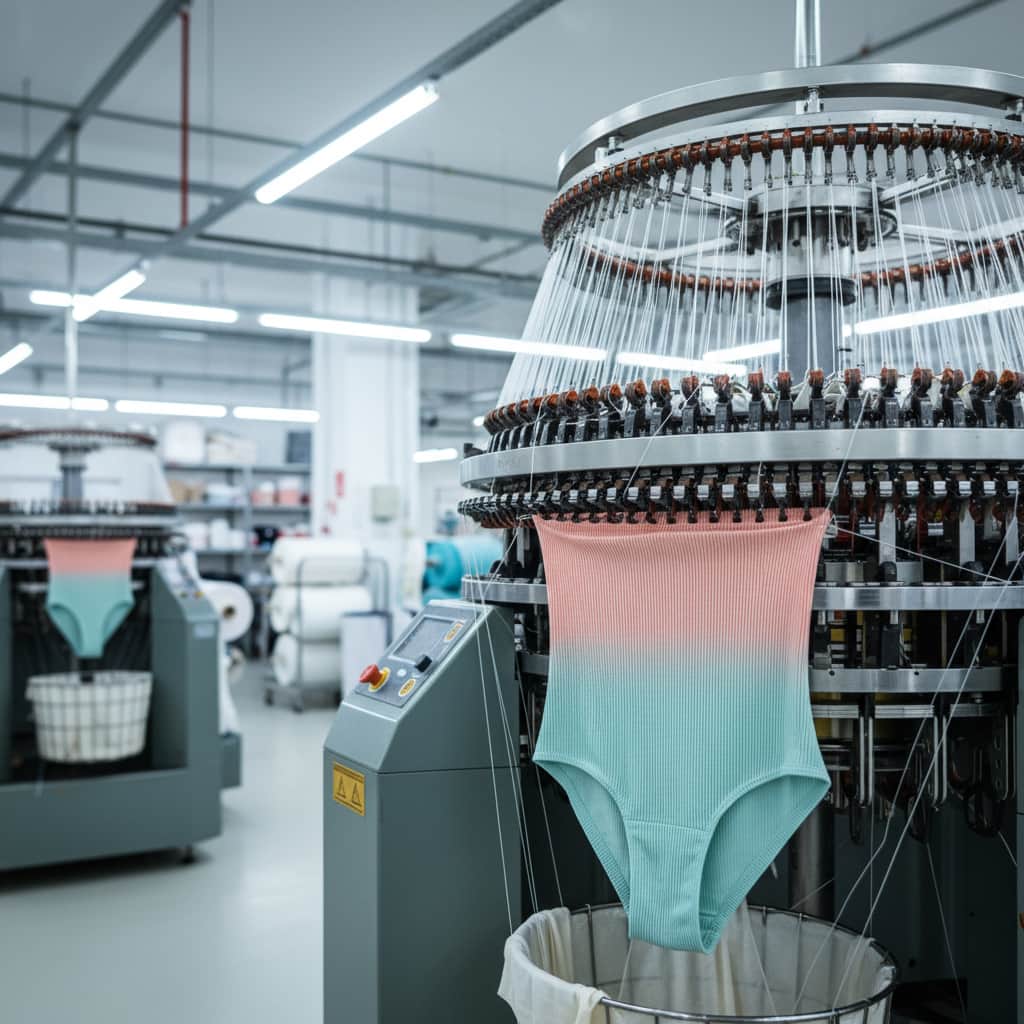
Seamless apparel is created using circular knitting machines that knit the garment as a continuous tube, eliminating the need for traditional cut-and-sew side seams. While this provides unparalleled comfort and a flawless "second-skin" fit, translating this technology to swimwear introduces severe technical hurdles.
The Harsh Reality of the Pool and Ocean
Unlike yoga leggings, which primarily deal with sweat and stretching, swimwear is subjected to chemical and environmental degradation.
Chlorine and Saltwater Degradation: Chlorine is notoriously harsh on synthetic fibers, particularly standard elastane (spandex). It breaks down the molecular structure of the yarn, leading to a loss of elasticity, sagging, and eventual fabric failure. Saltwater accelerates the breakdown of certain dyes and fibers. UV Exposure and Sunscreen: Prolonged exposure to ultraviolet rays causes color fading and weakens the fabric. Furthermore, the chemicals in sunscreens and body oils can degrade standard elastic fibers. Stretch and Recovery: Swimwear must maintain a high degree of stretch (elongation) to fit tightly, but more importantly, it needs rapid and powerful recovery to prevent bagging when wet.
Standard seamless activewear is often made with basic nylon/elastane blends that will rapidly deteriorate if used for swimwear. To succeed in seamless swim, brands must engineer the garment from the yarn up.
Essential Yarn Selection for Seamless Swim
The secret to durable seamless swimwear lies entirely in the yarn. Because the garment is knitted directly from yarn (rather than cut from pre-treated fabric rolls), selecting the correct technical fibers is non-negotiable.
Advanced Elastomeric Yarns
Standard spandex will not survive. Brands must specify chlorine-resistant elastane.
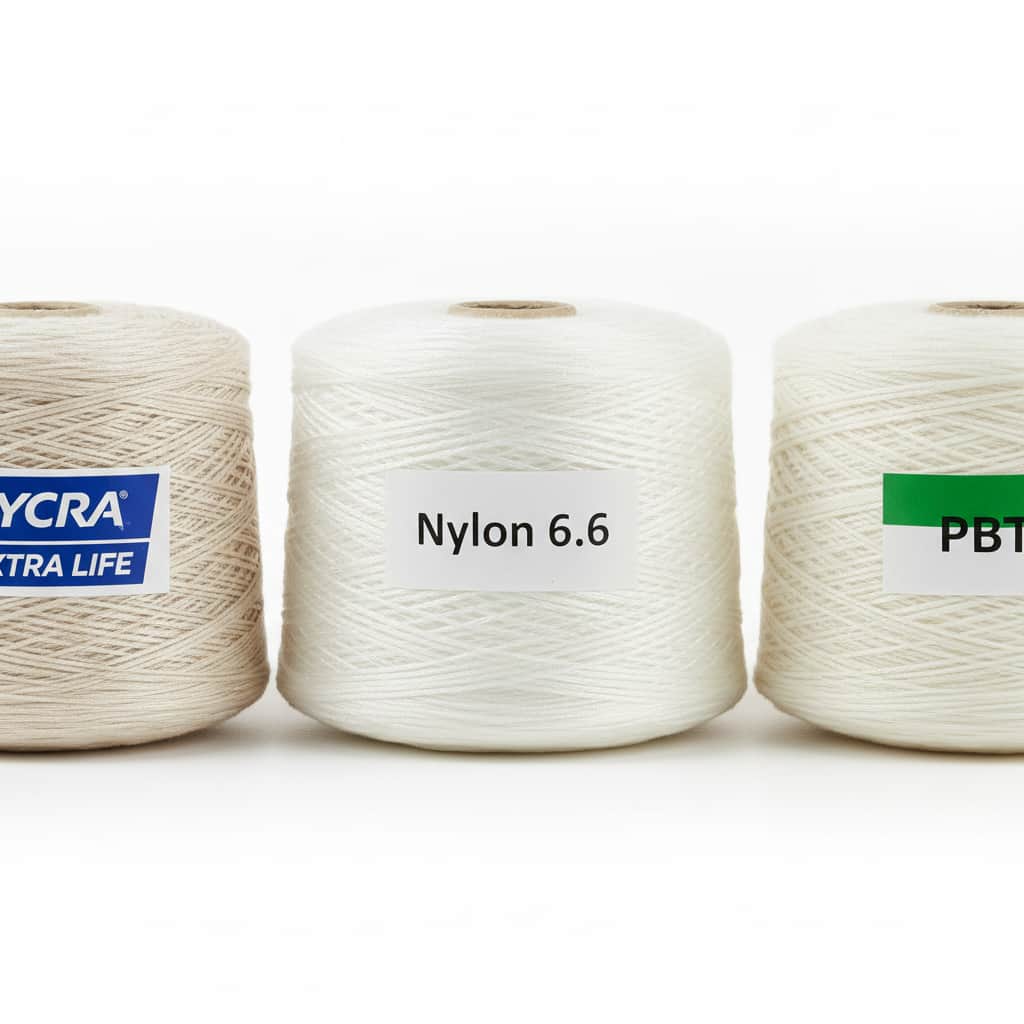
LYCRA® XTRA LIFE™: This is the industry gold standard for swimwear. It is engineered to resist degradation from chlorinated water, heat, and sunscreen up to 10 times longer than unprotected elastane.
CREORA® Highclo™: Produced by Hyosung, this is another premium chlorine-resistant spandex that delivers excellent stretch and shape retention in swimwear applications.
The Base Fiber: Nylon vs. PBT
The elastane provides the stretch, but the base fiber provides the structure.
Polyamide (Nylon 6.6): Nylon is the preferred choice for premium seamless swimwear due to its incredibly soft hand-feel, excellent dyeability, and quick-drying properties. When blended with chlorine-resistant elastane, it creates a luxurious, high-performance garment.
Polybutylene Terephthalate (PBT): PBT is a specialized type of polyester known for its exceptional, inherent chlorine resistance. While it does not have the same extreme stretch as nylon/elastane blends, it is virtually indestructible in pools. PBT is often used in competitive swimwear but is becoming more common in seamless applications where durability is the primary concern.
Fiber Type | Primary Benefit for Swimwear | Consideration for Seamless Knitting |
|---|---|---|
LYCRA® XTRA LIFE™ | Superior chlorine and sunscreen resistance; excellent shape retention. | Must be carefully plated with the base yarn during knitting. |
Nylon 6.6 | Ultra-soft feel; brilliant color retention; quick drying. | Susceptible to chlorine if not paired with resistant elastane. |
PBT (Polyester) | Ultimate chlorine proofing; excellent durability. | Less stretch than Nylon; slightly firmer hand-feel. |
Machine Types and Design Limitations
Understanding the machinery used in seamless production is crucial for designing feasible tech packs. Seamless garments are primarily produced on specialized circular knitting machines, most notably manufactured by Santoni (Italy).
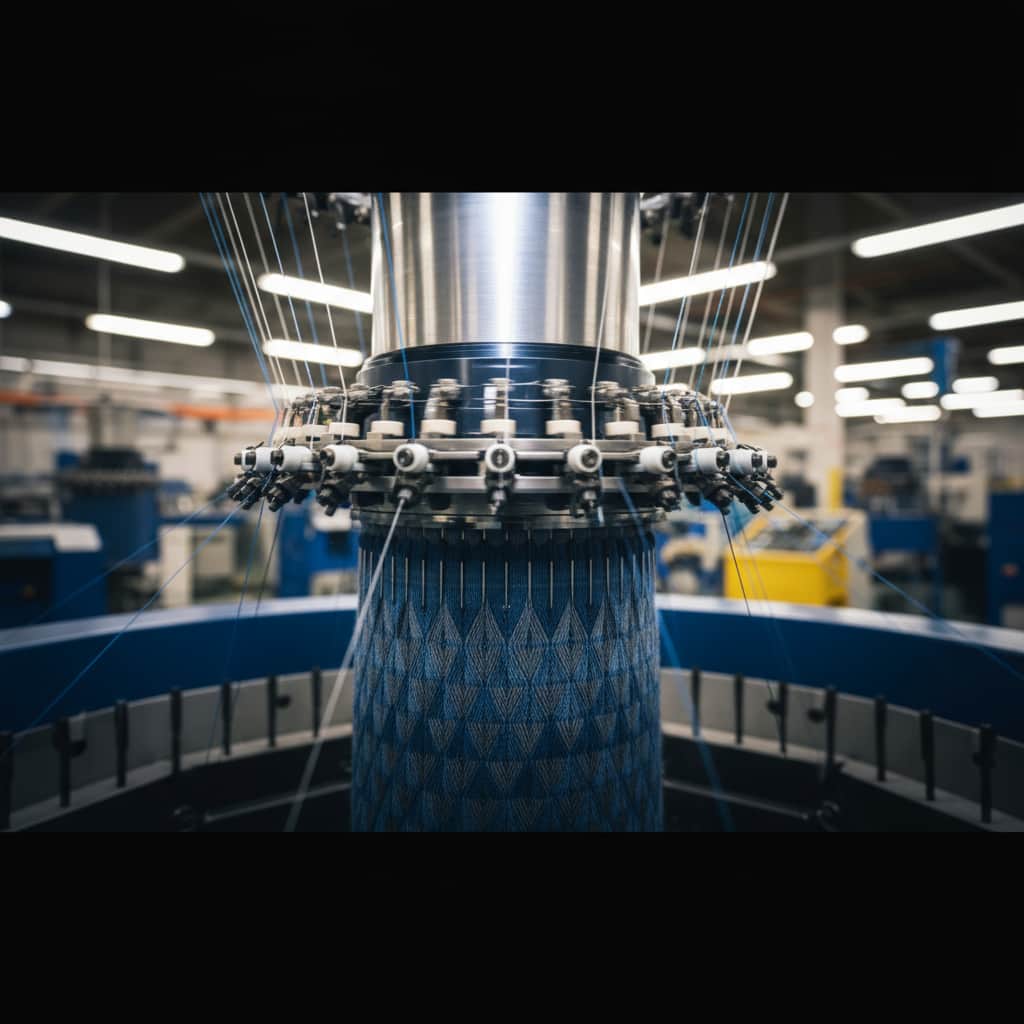
The Circular Knitting Process
These machines knit in a tubular format. The diameter of the machine cylinder dictates the width of the tube, which roughly corresponds to garment sizing. The "gauge" (needles per inch) determines the density and fineness of the knit. For swimwear, a fine gauge (e.g., 28G or 32G) is required to ensure opacity and a smooth, premium finish.
Design Constraints for Brands
While seamless technology offers incredible comfort, it is not without design limitations. Independent brands must design for the machine.
Color and Pattern Restrictions: A single seamless knit cycle is typically limited to one or two colors. Intricate, multi-colored placements or complex color-blocking are generally not feasible during the knitting process. If you want multi-color designs, they must be achieved through post-production dyeing or sublimation printing, which adds cost.
Hardware Integration: You cannot knit a zipper, underwire, or metal clasp directly into the garment. Any hardware must be manually inserted and sewn after the tubular knitting is complete. This introduces manual labor, negating some of the efficiency of seamless production.
Multi-Panel Complexity: The beauty of seamless is the single tube. If your design requires complex, multi-panel shapes (like a highly structured bikini top), it will require cutting the tube and manually seaming pieces together, defeating the purpose of the technology.
Sampling Timelines: Because the entire garment is programmed into the machine, adjusting a design often requires a complete re-knit. This means sampling iterations can take longer compared to simple cut-and-sew pattern adjustments.
Navigating Minimum Order Quantities (MOQs)
For small and independent brands, MOQs are often the biggest barrier to entry. Seamless knitting machines require significant setup time. Programming the design, threading the specific technical yarns, and calibrating the tension takes hours.
Because of this setup cost, traditional seamless manufacturers often demand MOQs of 1,000 to 3,000 pieces per style/color.
Strategies for Small Brands
If you are an independent brand, how do you access seamless technology without ordering thousands of units?
Seek Specialized OEM/ODM Partners: Look for manufacturers that specifically cater to startup and boutique brands. Some forward-thinking factories have optimized their production lines to accept lower MOQs (sometimes as low as 300-500 pieces per style) by grouping similar yarn runs.
Standardize Yarn Colors: You can often negotiate lower MOQs per style if you use the same base yarn color across multiple different silhouettes (e.g., knitting a seamless one-piece and a seamless bikini set using the exact same black nylon/Xtra Life Lycra cone).
Leverage Stock Tube Sizes: Designing within the standard cylinder diameters the factory already runs frequently will reduce setup time and potentially lower your minimums.
Elevate Your Swimwear Brand with Expert Manufacturing
The transition into seamless swimwear requires more than just a great design; it requires deep technical expertise in yarn selection, machine programming, and quality control. Attempting to navigate this complex supply chain alone can lead to costly mistakes and product failures.
Ready to launch a cutting-edge seamless swimwear collection? We specialize in premium swimwear customization, OEM, and ODM services for independent brands. Our team understands the precise technical requirements for chlorine resistance, UV protection, and seamless circular knitting. Whether you are looking to develop a completely custom seamless line or need reliable brand cooperation services, we provide the technical guidance and manufacturing capabilities to bring your vision to life.
Contact us today to discuss your seamless swimwear project, request a tech pack review, and learn how we can support your brand's growth.
Frequently Asked Questions (FAQs)
1. Why is seamless swimwear more expensive to develop than traditional cut-and-sew swimwear? The initial development cost is higher because the garment must be digitally programmed stitch-by-stitch for the circular knitting machine, and the specialized chlorine-resistant yarns (like LYCRA® XTRA LIFE™) are more costly than standard fabrics. However, at scale, the reduction in manual sewing labor can offset these initial costs.
2. Will seamless swimwear become see-through when wet? If engineered incorrectly, yes. To prevent transparency, seamless swimwear must be knitted on fine-gauge machines with high stitch density. Additionally, critical areas often require strategic double-layer knitting or the integration of thicker yarn structures.
3. Can I print custom patterns on seamless swimwear? Yes, but it is done post-knitting. Because the garment is knitted as a tube, traditional roll-to-roll fabric printing doesn't apply. Seamless garments can be piece-dyed for solid colors or utilize sublimation printing (specifically on polyester/PBT blends) to apply custom patterns after the garment is formed.
4. Is seamless swimwear supportive enough for larger bust sizes? Seamless technology can integrate different compression zones within the same garment by altering the stitch structure (e.g., creating a ribbed underband). While it offers excellent compression, it cannot provide the rigid support of a traditional cut-and-sew underwire bikini. It is best suited for low to medium-impact support.
5. How do I know if a manufacturer is truly capable of producing seamless swimwear? Ask specifically about their yarn sourcing. A capable manufacturer will immediately discuss the necessity of chlorine-resistant elastane and UV-stable nylons. Furthermore, ask to see their circular knitting machinery (like Santoni machines) and request samples of previous swimwear projects to test their stretch recovery.