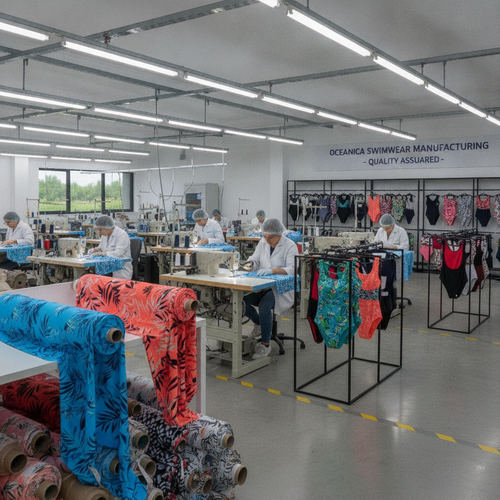
What looked perfect on paper nearly became a costly production mistake.
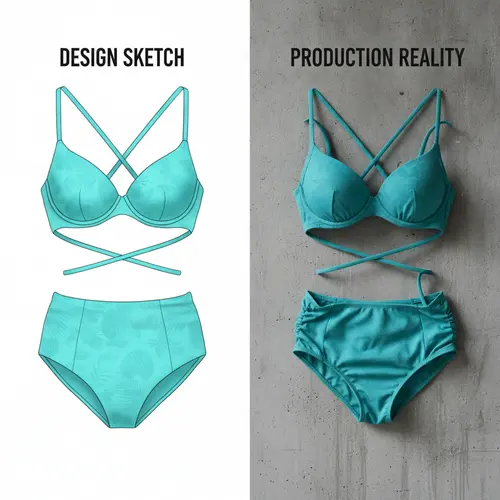
Sometimes the Best Thing We Can Do Is Say "No"
One of the hardest conversations we have with new swimwear brands is telling them that their design needs to change.
Not because it isn't beautiful.
Not because it isn't fashionable.
But because we've seen what happens when a design looks great on a sketch but doesn't work in real life.
Many first-time founders spend weeks perfecting every detail of their bikini. Naturally, they become attached to the design. So when we suggest changing it, the first reaction is often:
"This is exactly how I want it."
We completely understand.
After all, it's their brand and their vision.
But sometimes, making a small adjustment before production can prevent a much bigger problem later.
A Beautiful Design Isn't Always a Manufacturable Design
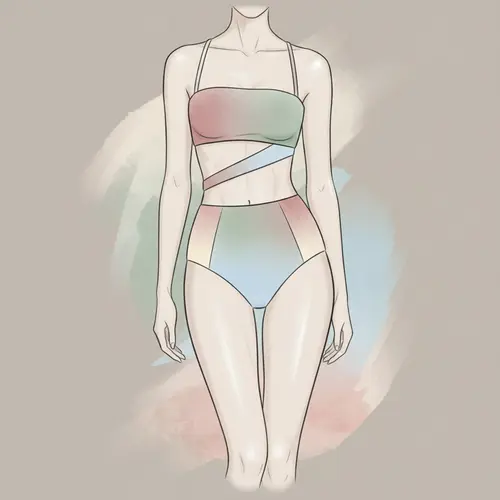
A while ago, a client sent us a beautiful bikini concept.
The silhouette was modern.
The proportions looked elegant.
The overall style matched current fashion trends.
At first glance, there didn't seem to be any obvious issues.
However, once our pattern maker reviewed the design and we produced the first prototype, we immediately noticed something.
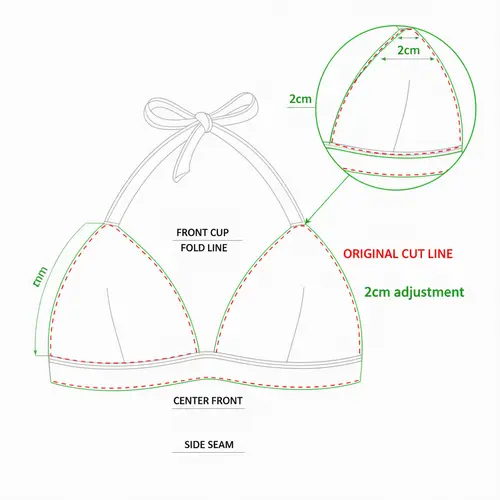
The underarm curve had been cut much deeper than normal.
On a fashion illustration, it looked sleek and flattering.
On an actual person, it created a completely different result.
The Problem Didn't Appear Until Someone Put It On
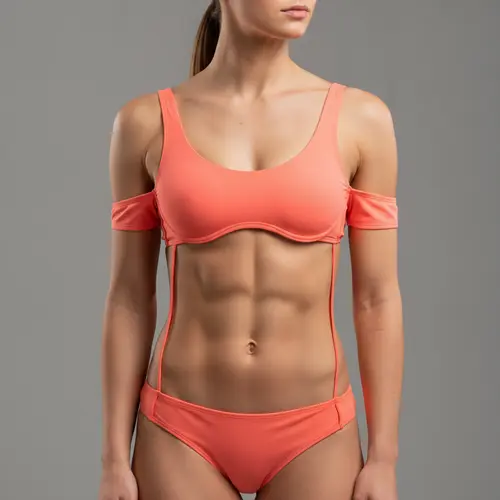
The sample looked great on the mannequin.
It even looked fine lying flat on the table.
But once our fit model tried it on, the problems became obvious.
As she moved naturally:
- The bikini cup shifted outward.
- Side support became unstable.
- The neckline no longer stayed in place.
- Small gaps appeared around the bust.
None of these issues were visible in the original sketch.
This is one of the biggest differences between designing swimwear and manufacturing swimwear.
A drawing doesn't stretch.
Fabric does.
A drawing doesn't move.
Real people do.
We Recommended a Small Change
Instead of approving the sample, we suggested modifying the pattern.
The change was surprisingly small.
We raised the underarm curve by approximately 2 cm and adjusted the cup connection to provide better support.
Everything else remained almost identical.
From the customer's perspective, the bikini looked nearly the same.
From an engineering perspective, however, it became a much more stable product.
The Customer Was Hesitant at First
Like many founders, the client was worried that changing the design would make it less attractive.
That's completely understandable.
Design is personal.
Instead of asking them to simply trust us, we produced another sample.
Then we placed both versions side by side.
The difference became obvious immediately.
The updated version:
- Fit better.
- Stayed in place during movement.
- Offered improved support.
- Looked more balanced on different body shapes.
Once they saw both samples in person, the decision became much easier.
A Small Adjustment Prevented a Much Bigger Problem

Imagine if we had skipped this step.
The bulk production might have gone ahead exactly as originally designed.
Thousands of swimsuits could have reached customers with poor fit.
That would likely have resulted in:
- Returns
- Negative reviews
- Customer complaints
- Expensive rework
- Damage to a new brand's reputation
Instead, we solved the problem before production even started.
The client later told us they were grateful we insisted on making the adjustment.
Sometimes the best manufacturing advice isn't saying "yes."
It's explaining why a small change today can save a business tomorrow.
What We've Learned After Manufacturing Swimwear for Hundreds of Brands
Over the years, we've noticed that the most successful swimwear brands share one important characteristic.
They treat manufacturers as production partners, not just suppliers.
A factory sees things that aren't visible in a sketch.
We think about:
- Fabric stretch
- Seam construction
- Elastic recovery
- Pattern grading
- Production consistency
- Long-term wear performance
These details often determine whether a bikini simply looks good—or actually performs well after months of use.
Final Thoughts
If you're developing your first swimwear collection, don't be afraid when your manufacturer suggests changes.
Ask why.
Request a second sample.
Compare both versions.
Sometimes a 2-centimeter adjustment is the difference between a product customers love and one they return.
In swimwear manufacturing, great products aren't created by protecting every original idea.
They're created by combining creative design with real production experience.
Why This Story Matters
This wasn't about changing someone's creativity.
It was about protecting it.
As manufacturers, our goal isn't to redesign your collection.
Our goal is to help your design succeed in the real world—where people swim, move, stretch, and wear your products again and again.
Because beautiful swimwear should also be wearable swimwear.