
For swimwear brands and buyers, one of the most frustrating customer complaints is: "Why did this swimsuit stretch out and go saggy after just a few wears?"
The first instinct is usually to blame the fabric quality or the customer's care routine. But the real culprit is often hiding in a step that gets overlooked — the printing process.
In plain language, here's the truth behind why swimsuits lose their shape — and a dead-simple visual test you can do in seconds to tell whether a swimsuit is built to last.
Why Do Swimsuits Lose Their Shape After a Few Wears?
The reason a swimsuit fits snugly and bounces back to its shape is a stretchy fiber called spandex (also known as elastane or Lycra) woven into the fabric. Think of it as thousands of tiny rubber bands running through the material.
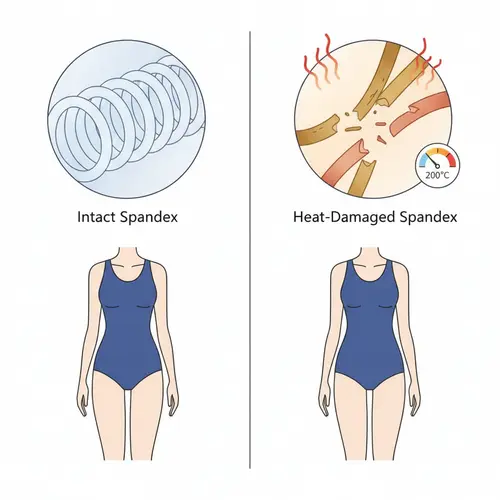
These "rubber bands" are incredibly elastic — but they have one major weakness: they cannot handle high heat.
The vast majority of printed swimsuits on the market are made using a process called high-temperature digital printing (dye sublimation). To lock the colors permanently into the fabric, this process requires pressing the fabric at temperatures close to 200°C (390°F).
That's where the problem starts. Spandex fibers begin to break down at temperatures above 150°C (300°F).
When the swimsuit comes off the production line, everything looks fine — the fabric is still flat and smooth. But the moment a customer puts it on, stretches it out, and washes it a few times, those spandex fibers that were quietly "burned" during the printing process snap and lose their elasticity for good. The result: a swimsuit that sags, loses its shape, and never bounces back.
The Solution: Direct-to-Fabric Printing
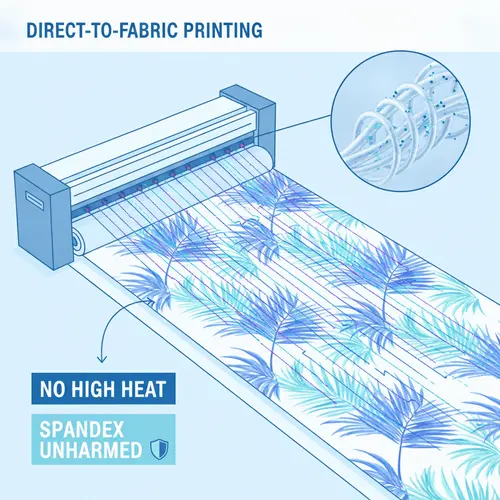
If high heat is the problem, is there a better way? Yes — and it's called direct-to-fabric (DTG/DTF) printing.
Think of it like a home inkjet printer, but for fabric. The ink is sprayed directly onto the material without any high-temperature pressing involved.
Because there's no extreme heat, the spandex fibers inside the fabric stay completely intact. Swimsuits made with direct printing keep their full stretch and recovery — no matter how many times they're worn or washed — which dramatically extends their lifespan.
The One-Second Test
: Flip It Over and Check for "Color Bleed-Through"
As a buyer or brand, how can you tell — without any lab testing — whether a swimsuit was made with the heat-damaging digital print or the more durable direct print?
Simple: just flip the swimsuit over and look at the inside (back) of the fabric.
1.The back is plain white - High-temperature digital print (prone to sagging)
Digital sublimation printing only bonds color to the surface layer of the fabric. The color doesn't penetrate through to the other side. So no matter how vibrant the print looks on the front, the back will show the fabric's original base color — almost always white. This is a sign that the spandex may have been heat-damaged during production.
2.The back shows color bleed-through - Direct-to-fabric print (built to last)
With direct printing, the ink is sprayed into the fibers themselves, so the color naturally bleeds through to the back. Flip the swimsuit over and you'll faintly see the colors and shapes from the front showing through. This "bleed-through" is a good sign — it means no high heat was used, the spandex is unharmed, and the swimsuit will hold its shape far longer.
| **High-Temperature Digital Print** | **Direct-to-Fabric Print** | |
|---|---|---|
| **Processing Temperature** | ~200°C (390°F) | Low temperature |
| **Effect on Stretch** | Burns spandex fibers; swimsuit sags after a few wears | Spandex stays intact; shape is maintained long-term |
| **How to Spot It** | **No bleed-through** (back is plain white) | **Color bleeds through** (back shows front colors) |
Key Takeaway for Brands and Buyers
Reducing returns and building a strong brand reputation starts with choosing the right production process.
Next time you're sourcing swimwear, flip the garment over and check the back. Prioritize swimsuits where color bleeds through to the back — a sign of direct-to-fabric printing. The unit cost may be slightly higher, but it solves the "goes saggy after a few wears" complaint at the root, and delivers a noticeably better experience for your customers.