Choosing a custom swimwear manufacturer is about more than finding a factory that can sew your designs. The right partner should help translate your brand positioning into swimwear that fits consistently, performs in its intended environment, and can be produced within your commercial requirements.
For an emerging swimwear label, that may mean developing a focused first collection without committing to too many styles. For an established retailer, it may mean refining an existing fit and making repeat orders more consistent. A resort business might need an exclusive capsule that reflects its destination and works within a limited retail space.
Each project calls for a different approach. Understanding OEM, ODM, fabric selection, sampling, and production planning helps you evaluate potential partners and build a collection with a clearer path from concept to launch.
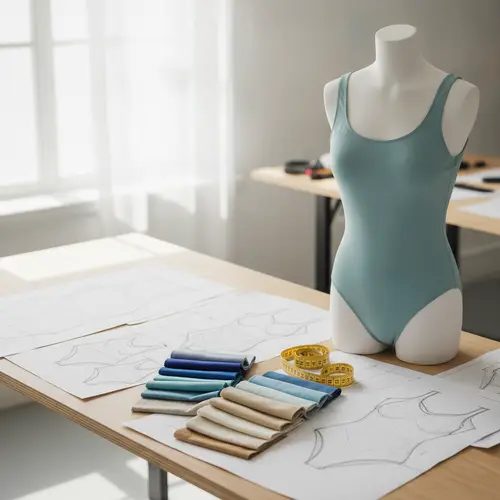
Start With Your Customer and Collection Strategy
Before comparing swimwear manufacturers, define who will wear your products and why they will buy them. A fashion-led bikini collection has different priorities from swimwear designed for regular pool training. Supportive one-piece swimsuits require different development decisions from minimal resort styles.
Give your manufacturer a practical brief covering your target customer, intended use, preferred silhouettes, size range, and target retail positioning. Explain where the collection will be sold, whether through your own online store, wholesale accounts, or a hospitality retail program.

These details shape material and construction choices. A premium resort collection may prioritize a soft hand feel, distinctive prints, and coordinated styling. A pool-focused range may place greater emphasis on verified resistance to repeated chlorine exposure and reliable shape retention. An extended-size collection needs thoughtful support and fit development rather than simply larger measurements.
A clear brief also makes quotations more useful. Suppliers cannot meaningfully compare costs when one is pricing a basic unlined style and another is pricing a fully lined garment with custom hardware.
Understand OEM, ODM, and Private Label Swimwear
The terms OEM, ODM, and private label describe common manufacturing arrangements, but suppliers do not always use them in the same way. Confirm what is included rather than relying on the label alone.
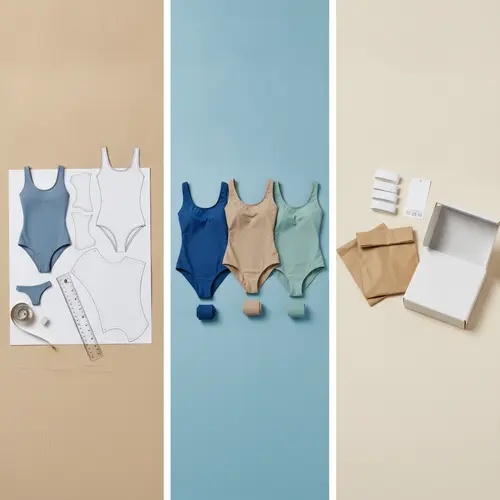
OEM Swimwear: Develop Your Own Designs
OEM stands for original equipment manufacturer. In swimwear sourcing, it commonly refers to production based on a brand's designs and specifications. Your input may include technical sketches, measurement charts, fabric requirements, construction details, and branding instructions.
OEM swimwear manufacturing can suit brands that want a distinctive silhouette, a specific fit, or detailed control over product construction. It is particularly relevant when a signature bikini or one-piece design forms a central part of the brand's identity.
If your concept is not yet production-ready, clarify whether the supplier offers pattern development and technical support. Establish ownership of patterns, artwork, and development files in writing. An OEM arrangement does not automatically settle intellectual property rights or guarantee exclusivity.
ODM Swimwear: Build on a Manufacturer's Designs
ODM stands for original design manufacturer. This model usually starts with designs developed by the supplier, which a brand may select or adapt.
An ODM swimwear project might involve changing colors, adjusting coverage, choosing different fabrics, or adding branded details. Depending on the changes, it can reduce some early design work compared with developing every style from scratch.
However, an existing design still needs evaluation against your own customers and size requirements. Confirm which modifications are available and whether the same base style is offered to other brands. Any exclusive use should be negotiated explicitly.
Private Label Swimwear: Apply Your Brand to an Existing Product
Private label swimwear generally involves selling a manufacturer's product under your own brand. The arrangement may use an existing style with customized labels and packaging, although the available product changes vary by supplier.
This can be useful for a retailer testing a swimwear category or a business adding a small branded collection. Private label is not necessarily ready-to-ship inventory, so confirm stock availability, production requirements, and lead times.
These models can also coexist. A brand might develop a signature style through OEM while using ODM designs for complementary products. The best choice depends on your need for differentiation, development resources, and launch schedule.
Evaluate Swimwear Expertise Through Relevant Samples
General apparel experience does not automatically demonstrate swimwear capability. Stretch fabrics, elastic application, lining, and close-fitting construction require specific attention.
Ask to review samples that resemble your proposed products. A supplier's experience with simple triangle bikinis does not, by itself, demonstrate capability in underwire styles, supportive one-pieces, or reversible construction.
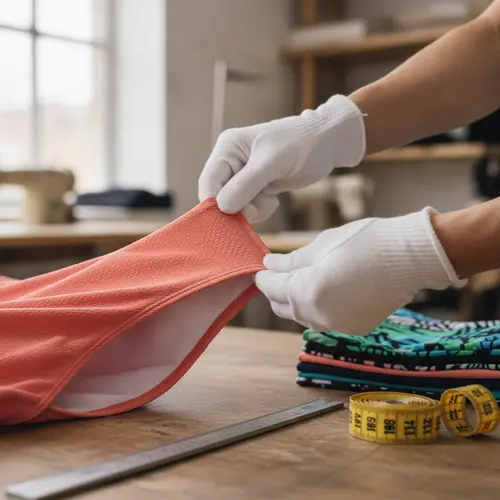
Inspect how seams behave when stretched, whether elastic sits smoothly, and how lining affects comfort and coverage. Check adjustable straps and closures for ease of use. Decorative hardware should suit the garment's intended exposure to water and should not create uncomfortable pressure points.
Discuss who will make your samples and who will handle bulk production. If processes are subcontracted, establish how the supplier manages quality and communication across those stages.
The goal is not to find a manufacturer that promises to make everything. It is to find one that can explain how it will produce your particular collection.
Choose Fabrics for Real Wearing Conditions
Fabric selection should reflect how the swimwear will be used, not just how a swatch looks on a desk. Nylon-elastane and polyester-elastane blends are common options, but fiber composition alone does not establish performance.
Evaluate the actual fabric for stretch, recovery, hand feel, and coverage. Recovery is especially important: a fabric should return toward its original shape after stretching rather than remaining loose. Review how the fabric and lining work together, because their combined behavior influences support and fit.
For light colors, assess opacity when stretched and wet. A pale swimsuit that appears opaque in a relaxed sample may behave differently during wear. Printed materials also need evaluation for color appearance under stretch and placement on the finished garment.
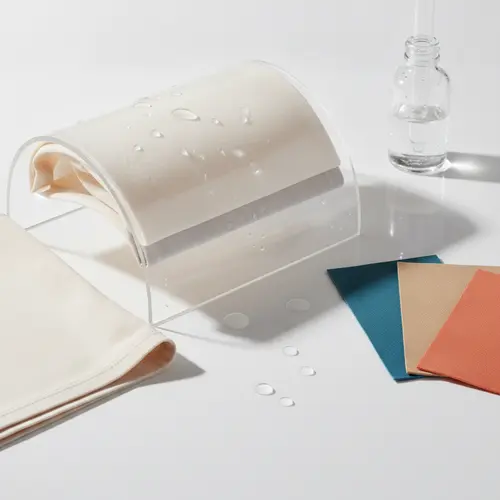
If your collection targets frequent pool use, ask for relevant chlorine-resistance information and testing appropriate to that use. If you intend to market sun-protective swimwear, obtain suitable evidence for the claimed protection level. Neither claim should be assumed from a fabric description alone.
For recycled swimwear fabrics, request documentation supporting the stated recycled content and any certification claim you plan to use. A recycled material is a specific product attribute, not proof that every aspect of the garment or production process is sustainable.
Treat Fit Development as a Commercial Priority
Fit can influence customer satisfaction, reviews, and repeat purchases. A swimsuit may look attractive in campaign photography yet feel uncomfortable when the wearer swims, sits, or moves.
Evaluate samples on fit models or testers relevant to your customer base. Review bust support, torso length, leg openings, strap placement, and intended coverage. For bikini separates, consider whether customers need different top and bottom sizes and how that affects your assortment.
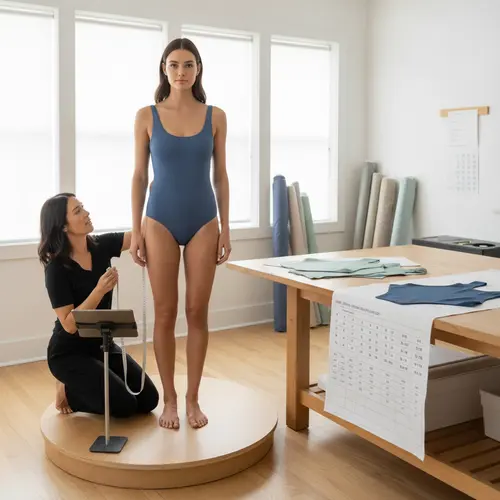
Size grading deserves separate attention. Grading means developing the measurements and patterns for different sizes. Simply increasing every measurement by the same amount may not preserve the intended fit or support.
For example, a brand extending its size range should review strap proportions, cup construction, elastic tension, and lining support across that range. A successful base-size sample does not prove that every other size will perform equally well.
Record fit comments precisely. Instead of requesting a vague improvement in comfort, identify the problem, where it occurs, and the adjustment to evaluate. Clear feedback gives your manufacturer a more reliable basis for revision.
Understand What Drives MOQ and Pricing
A minimum order quantity, or MOQ, is only useful when you know what it applies to. Confirm whether the minimum is calculated per order, style, color, print, or individual product.
For two-piece swimwear, establish whether quantities are counted as sets or separate tops and bottoms. Also clarify how quantities can be distributed across sizes.
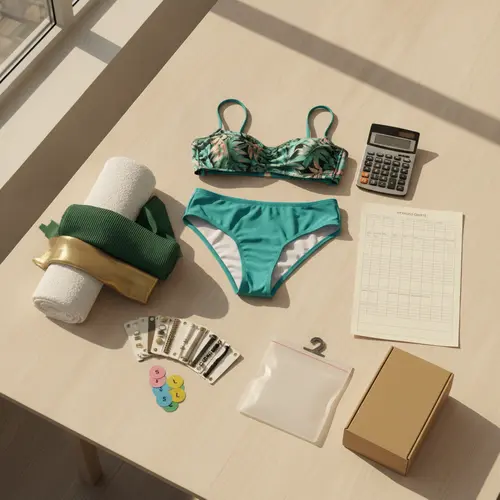
Fabric mills, printing processes, custom hardware, and branded packaging may have their own minimums. A low garment MOQ does not necessarily remove those constraints. Stock fabrics and standard trims may offer more flexibility, but the manufacturer should explain the options for your specific project.
Request an itemized quotation that distinguishes product costs from development, sampling, testing, and packaging charges. Confirm whether freight, duties, and other delivery-related expenses are included or excluded.
Compare suppliers on the same approved specifications. A lower unit price may reflect a different lining, simpler construction, or fewer included services. Assess the total project cost rather than treating the cheapest initial quote as the best value.
Agree on Sampling and Quality Checks Before Bulk Production
Sampling should reduce uncertainty before you commit to a production run. Depending on the project, development may involve an initial prototype, fit revisions, size-set samples, and a pre-production sample made with the intended materials and trims.
Record approvals and revisions in a single, current specification. If several versions circulate without clear status, the factory may work from outdated measurements or construction instructions.
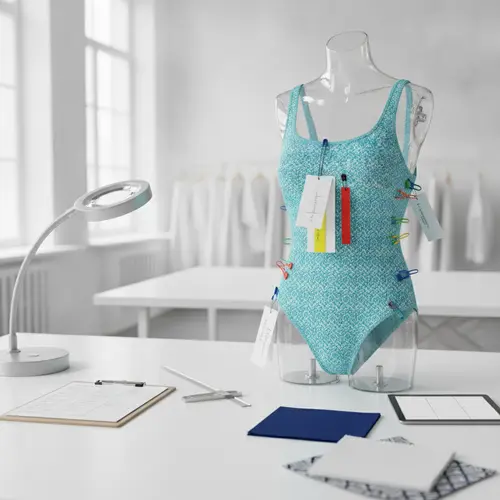
Before bulk cutting, confirm which sample and specification will serve as the production reference. Any remaining material substitutions or unresolved details should be addressed explicitly.
Agree on checks at incoming-material, in-production, and finished-garment stages. Relevant checkpoints include measurements, seam quality, elastic application, color consistency, print placement, labels, and packaging accuracy. Performance claims may require separate testing rather than visual inspection alone.
For pre-shipment inspection, define the inspection approach, defect classifications, acceptance criteria, and process for resolving problems. An inspection reduces risk; it does not replace clear specifications or guarantee that every item is defect-free.
Plan Brand Details and Delivery Together
Custom swimwear branding extends beyond a logo. Labels, trim finishes, prints, and packaging should support the same product positioning as the garment itself.
A resort capsule might use coordinated colors across bikinis and one-pieces to create a recognizable collection. A minimalist online label might prioritize consistent fit, discreet branding, and packaging that works well for direct-to-consumer fulfillment. A wholesale collection may need specific barcodes, packing ratios, and retailer-ready presentation.
Confirm care labeling and other product information requirements for the markets where you intend to sell. Treat these as part of product development, not a final packing-room task.
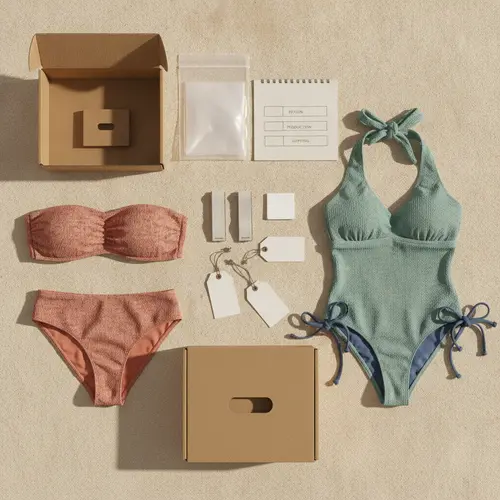
Build the launch schedule backward from the date products must be available. Allow for design decisions, material sourcing, sample revisions, approvals, manufacturing, inspection, and transportation. The bulk production period is only one part of the timeline.
Ask suppliers to identify dependencies and approval deadlines. For repeat orders, confirm fabric availability, color consistency expectations, and whether production capacity must be reserved. A reliable launch plan depends on both the manufacturer and the brand making decisions on time.
Build a Swimwear Collection That Reflects Your Brand
The strongest manufacturing partnership connects design decisions with practical production requirements. Clear positioning, appropriate materials, verified fit, and documented approvals give your collection a better foundation than price comparisons alone.
Whether you are launching a new label, developing an exclusive retail range, or expanding an established collection, contact our team to discuss custom swimwear, OEM/ODM manufacturing, and brand collaboration services. Share your design references or tech pack, target customer, estimated quantities, and intended launch date so we can explore a development approach suited to your project. Start a conversation about creating swimwear that represents your brand and supports your next collection.
Frequently Asked Questions
1. What is the difference between OEM and ODM swimwear manufacturing?
OEM swimwear manufacturing generally starts with a brand's designs and specifications, while ODM generally starts with designs developed by the manufacturer. OEM can provide more control over a distinctive product; ODM can reduce some initial design work. The exact services, modification options, design ownership, and exclusivity should be agreed with the supplier rather than assumed from the terminology.
2. What should I prepare before contacting a custom swimwear manufacturer?
Prepare your target customer profile, design references or tech pack, intended size range, preferred fabrics, estimated order quantities, target pricing, and launch schedule. If you do not have technical specifications, explain the concept clearly and confirm whether development support is available. A well-defined brief helps the manufacturer assess feasibility and provide a relevant quotation.
3. Can a startup brand order custom swimwear in small quantities?
Small-batch production may be available, but feasibility depends on the manufacturer and the design. Fabric, printing, custom trims, and packaging can each introduce separate minimums. A focused collection using available fabrics and standard components may offer more flexibility than many styles with fully customized materials. Request the minimums for each element of your proposed order.
4. How can I check swimwear quality before approving bulk production?
Review samples for fit, stretch recovery, opacity, seam quality, lining, and trim performance. Check relevant sizes and assess the garment under conditions appropriate to its intended use. Obtain suitable testing evidence for performance claims. Approve the production specification and reference sample, then agree on manufacturing checks and pre-shipment inspection criteria.
5. Can I customize swimwear labels, packaging, and other brand details?
Many manufacturing arrangements allow branded labels, care labels, logo applications, and packaging, with additional options depending on the supplier. Custom prints, hardware, or construction changes may require separate development and minimum orders. Confirm what is available, what costs extra, and whether any branded elements affect the production timeline before placing your order.