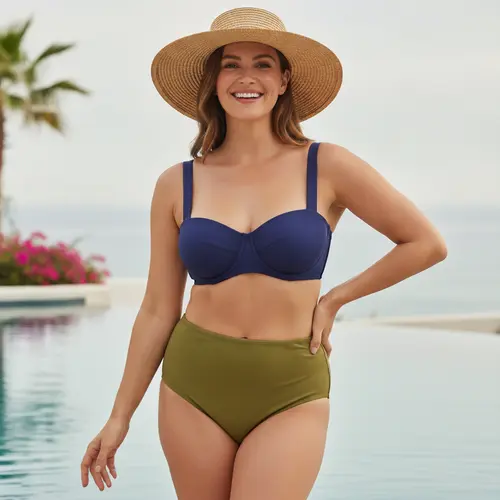
A swimsuit should not make you choose between a supportive top and comfortable bottoms. Yet many shoppers know the problem: the top fits the bust but the bottoms pinch, or the bottoms fit the hips while the top gaps, slips, or lacks coverage.
The problem is not your body. It is the assumption that one label should fit your bust, waist, and hips equally well. Treating the top and bottom as separate fit decisions is the answer. Accurate measurements, flexible styles, and smarter shopping can deliver swimwear that feels secure, looks intentional, and moves comfortably.
Why Different Swimsuit Top and Bottom Sizes Are Normal
Bust, underbust, waist, and hip measurements are independent. You may have a fuller bust with narrow hips, a smaller bust with a fuller seat, or similarly sized measurements on a differently shaped torso. All are normal proportions, not issues to correct.
A matching set is drafted around a brand’s preferred fit model. Its medium assumes a particular bust-to-hip ratio, which will suit some customers but not all. Swimwear makes a mismatch noticeable because it is close-fitting, provides limited coverage, and must stay stable in water and during movement.
Sizing standards also vary across brands. Fabric stretch, cup depth, lining, and construction can make identical labels fit very differently.
A swimsuit size is a starting point, not a rule. The best size supports your movement and feels comfortable on your body.
Four Solutions When Your Bikini Top and Bottom Are Different Sizes
1. Buy Swimsuit Separates
Separates are the simplest solution. Choose the top for bust support, band stability, and coverage. Choose the bottom for your waist, hips, seat coverage, and leg-opening comfort. This removes the pressure to make one size work for two different areas.
Check fit before color. A top should stay in place when you lift your arms or lean forward. Bottoms should lie flat without digging in, rolling, or riding up. Then coordinate the pieces through matching colors, similar textures, or a print and complementary solid.
2. Choose a Mix-and-Match Brand
Mix-and-match collections are designed to pair multiple top and bottom silhouettes within one color story. They let you combine a supportive bra-style top with a high-waisted bottom, a bandeau with fuller coverage, or another fit-led combination.
Choose matching fabric and color for a deliberate look. This model serves more proportions than fixed bundles.
3. Consider Custom or Made-to-Order Swimwear
Custom swimwear can combine separate sizes or adjust straps, coverage, waist height, and cup support. Often, the value is a proven silhouette in the right combination.
A large underwire top can pair with a small high-leg bottom, or the reverse. Brands can build this flexibility into OEM or ODM collections.
4. Choose Adjustable Styles
Adjustable details make standard sizes more flexible. Look for adjustable shoulder straps, tie backs, side ties, sliding cups, lace-up sides, or adjustable back closures. These features refine fit around the bust, rib cage, waist, and hips.
A bandeau works best with grip elastic, side boning, or an adjustable closure. For a fuller bust, internal structure is essential.
How to Measure for a Better Swimsuit Fit
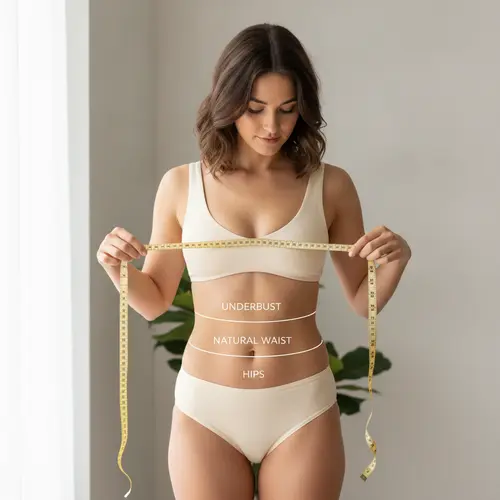
Use a flexible tape and stand naturally in lightweight underwear or a non-padded bra. Keep tape level and take each measurement twice.
Step | How to measure | Why it matters |
|---|---|---|
Bust | Measure around the fullest part of the bust, parallel to the floor. | Guides cup volume, coverage, and top size. |
Underbust | Measure directly below the bust where a bra band sits. | Determines secure band support. |
Waist | Measure the narrowest point of the natural waist; relax your abdomen. | Important for high-waisted bottoms and one-pieces. |
Hips | With feet together, measure around the fullest part of hips and seat. | Guides bottom size, coverage, and leg-opening comfort. |
Use bust and underbust for the top, and waist and hips for bottoms. For low-rise cuts, prioritize hips. For high-waisted bottoms, choose the size smooth at both waist and hip.
Test the suit in motion. It should stay secure without gaping or constant adjustment. As fabric can relax when wet, a close dry fit is usually best.
Swimsuit Ideas for Common Proportions
Fuller Bust, Smaller Hips
Prioritize underwire tops, bra-sized styles, wider straps, molded cups, and adjustable closures. Pair the top with a smaller mid-rise or high-leg bottom.
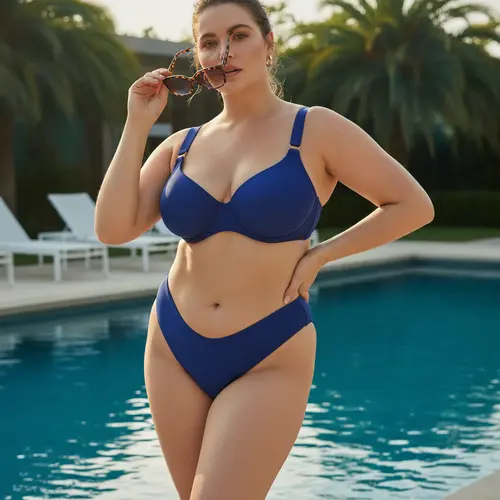
Smaller Bust, Fuller Hips
Choose the bottom for your hips. High-waisted, wider-side, or fuller-coverage cuts are comfortable options. Pair them with a smaller triangle or bandeau top.
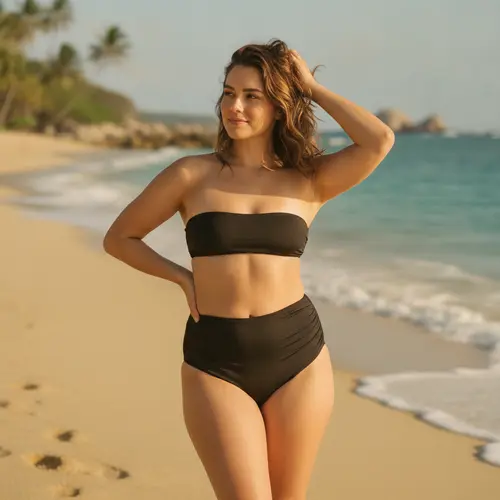
Similar Sizes, but a Brand Runs Large or Small
If a set still feels wrong, the brand’s fit block may be responsible. Check the style chart, fabric stretch, and size pieces independently.
The TideLine Factory View: Flexible Size Matrices Without Inventory Chaos
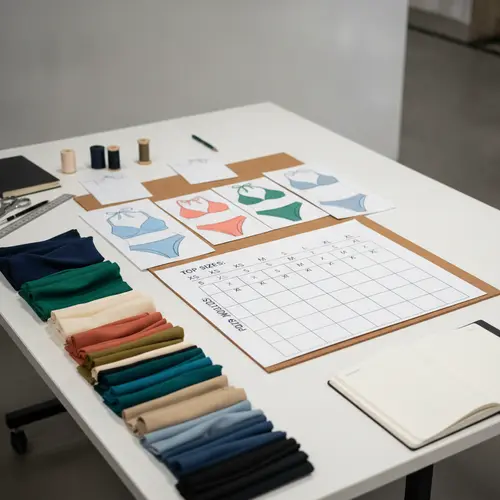
For swimwear brands, different top and bottom sizes are also an inventory concern. A pre-packed set locks one top size to one bottom size. When customers need a large top with a small bottom, or the reverse, stock can become stranded in pairs that do not sell evenly.
TideLine addresses this with a flexible size matrix. A single swimsuit silhouette can be planned in four core sizes for tops and bottoms, then sold as compatible separates. The same silhouette can use smooth performance knit, rib texture, or recycled matte fabric. Brands can manage a shared silhouette, color story, and component system rather than produce a finished set for every pairing.
This structure lowers SKU growth while enabling buyers to test size ratios and replenish combinations customers request.
Build Swimwear That Fits Real Customers
Measure accurately, select pieces separately, and use adjustment for added comfort. For brands, that is a product advantage.
TideLine supports custom swimwear, OEM, and ODM development for any top-and-bottom size combination. From silhouette development and fit refinement to fabric selection, branded production, and scalable assortments, TideLine helps brands create swimwear for real customers. With minimum order quantities starting at 30–50 pieces, brands can test focused capsules, new fit strategies, and private-label collections with flexibility. Contact TideLine to discuss custom swimwear, OEM/ODM production, and brand collaboration services.
Frequently Asked Questions
1. Is it normal to wear different swimsuit top and bottom sizes?
Yes. Bust, waist, and hip proportions naturally differ. Separate sizes often create a more secure and comfortable fit than a fixed set.
2. Should I size up or down if I am between swimsuit sizes?
Choose the size that protects comfort and coverage in the closest-fitting area. Size up in bottoms that dig in or pull across the seat. Do not size down in a supportive top if the band or cups feel restrictive.
3. What swimsuit works best for a large bust and small waist?
Supportive underwire tops, bra-sized styles, wider straps, and adjustable back closures are usually effective. Pair the top with a separate bottom selected for your waist and hip measurement.
4. Can I mix swimsuit colors and fabrics?
Yes. Match undertones and fabric finishes for the most cohesive look. A solid bottom is an easy match for a printed top, while pieces with the same finish look purposefully paired.
5. Can a swimwear brand offer separate size combinations without carrying too much inventory?
Yes. A planned size matrix lets compatible tops and bottoms be sold as separates. Thoughtful color, fabric, and replenishment planning can broaden fit choice while controlling SKU growth and reducing mismatched-set inventory.