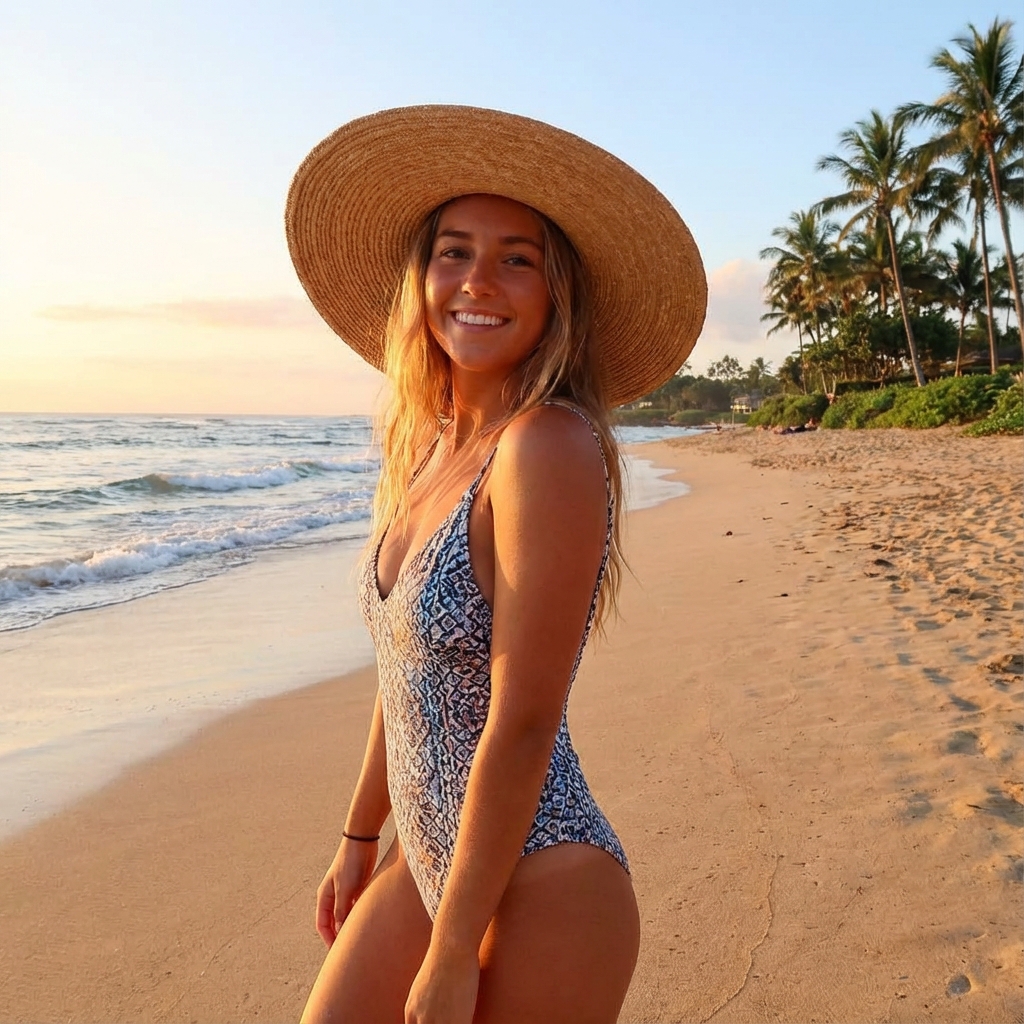
Launching a swimwear brand can be exciting, but developing too many products too early can create unnecessary costs, complicated sampling, and excess inventory. For a new brand, a focused capsule collection of six to ten well-planned styles is often a more practical way to enter the market, test customer demand, and build a recognizable product identity.
A successful capsule collection is not simply a small assortment. It is a coordinated group of products designed to work together through shared colors, fabrics, silhouettes, and brand details. The goal is to offer enough variety for customers while keeping product development, purchasing, and inventory management under control.
This guide explains how to plan a first swimwear collection, allocate styles, choose fabrics and colors, manage sizes, and prepare for production with a private label or custom swimwear manufacturer.
Why Start with a 6–10 Style Collection?
A smaller collection allows a new brand to learn before making a large inventory commitment. Instead of investing heavily in dozens of untested designs, the brand can launch a focused assortment, measure sell-through, collect customer feedback, and reorder the strongest performers.
A limited range also makes the brand easier to understand. Customers should be able to recognize the collection’s point of view, whether that is minimalist resortwear, sporty swimwear, flattering everyday bikinis, luxury beachwear, or inclusive body-conscious design.
For the manufacturer, a focused collection can make sampling and production more efficient. Several styles may share the same fabric, lining, trims, color palette, or hardware, reducing material complexity and making quality control easier.
Step 1: Define the Collection’s Customer and Positioning
Before sketching individual products, define who the collection is for. A first collection should be built around a specific customer rather than trying to serve every possible market segment.
Consider the customer’s age range, lifestyle, preferred price point, body-fit concerns, shopping channel, and main use case. A resortwear customer may prioritize fashion details, prints, and premium hand feel. A customer shopping for active swimwear may care more about support, coverage, chlorine resistance, and secure construction.
Your positioning should also answer a simple question: Why should a customer choose this collection instead of another swimwear brand? The answer could be better support, refined minimalist design, inclusive sizing, sustainable materials, small-batch production, or versatile pieces that can be worn as resortwear.
| Positioning direction | Product priorities | Useful design language |
|---|---|---|
| Minimalist resortwear | Solid colors, clean lines, versatile separates | Refined, timeless, elevated |
| Active swimwear | Supportive tops, secure bottoms, durable fabrics | Performance, comfort, confidence |
| Inclusive swimwear | [Extended sizes](https://www.astm.org), adjustable construction, coverage options | Fit, flexibility, body confidence |
| Eco-conscious swimwear | Recycled fabrics, traceable materials, durable construction | Responsible, long-lasting, considered |
| Fashion-forward beachwear | Statement prints, cut-outs, hardware, distinctive silhouettes | Bold, directional, expressive |
Step 2: Build a Balanced Product Architecture
A six-to-ten-style collection should include a balance of commercial essentials and brand-defining pieces. If every product is highly experimental, the collection may be difficult to sell. If every product is basic, the brand may not stand out.
A useful approach is to divide the collection into three roles: core styles, supporting styles, and statement styles. Core styles are dependable products that are likely to appeal to a broad customer group. Supporting styles add variety through different coverage, construction, or color options. Statement styles communicate the brand’s identity and create visual interest for campaigns and social media.
For a six-style collection, a practical structure could include two bikini sets, one one-piece swimsuit, one adjustable or reversible style, one cover-up or beachwear piece, and one statement design. For a ten-style collection, the brand can add more coverage options, a second one-piece, active swimwear, a separate bottom, and another statement product.
| Collection size | Suggested assortment | Main purpose |
|---|---|---|
| 6 styles | 2 bikini sets, 1 one-piece, 1 versatile/reversible style, 1 cover-up, 1 statement piece | Low-risk market test |
| 8 styles | 3 bikini sets, 2 one-pieces, 1 active or coverage style, 1 cover-up, 1 statement piece | Balanced launch range |
| 10 styles | 4 bikini sets, 2 one-pieces, 1 active style, 1 coverage-focused style, 1 cover-up, 1 statement piece | Broader customer and channel coverage |
The exact allocation should depend on the brand’s category. A performance swimwear brand may need more one-pieces and supportive separates, while a fashion resortwear brand may allocate more products to bikinis, cover-ups, and statement silhouettes.
Step 3: Design Products That Can Be Merchandised Together
A capsule collection becomes more commercially useful when its products can be mixed and matched. Customers should be able to combine multiple tops and bottoms, wear a swimsuit with a cover-up, or purchase a second color without feeling that the products belong to unrelated collections.
Shared design details help create this relationship. You might use one primary fabric across several styles, repeat the same gold hardware, carry one signature print across different silhouettes, or use a consistent binding and strap treatment.
Interchangeability is especially valuable for bikinis. A collection can include a triangle top, a supportive square-neck top, a high-waisted bottom, and a classic brief. These pieces can be sold as sets while also allowing customers to select different sizes for the top and bottom.
However, coordination does not mean every product must look identical. The collection should have a clear visual system with enough contrast to give customers a reason to explore multiple styles.
Step 4: Choose a Focused Color and Print Strategy
Too many colors can increase material requirements and create fragmented inventory. For a first collection, consider using one core neutral, one or two seasonal colors, and one signature print or accent color.
A simple palette might include black or deep espresso as the core color, a warm sand or ivory as a neutral, one seasonal color such as coral or ocean blue, and one exclusive print. This structure supports both commercial selling and visual storytelling.
When deciding whether to add a color, ask whether it can be used across multiple styles. A color that appears on only one product may create a small and difficult-to-manage inventory position. By contrast, a color used across a bikini, one-piece, and cover-up can create stronger merchandising opportunities.
Before production, confirm color standards with the manufacturer. Digital images and screen displays are not reliable substitutes for physical lab dips or fabric swatches. Approve the actual fabric color, lining color, thread, elastic, hardware, and print strike-off where applicable.
Step 5: Select Fabrics According to the Use Case
There is no universally best swimwear fabric. The right choice depends on the product’s purpose, price point, desired hand feel, durability requirements, and brand positioning.
Nylon and elastane blends are often associated with a soft hand feel, comfort, and fashion-oriented swimwear. Polyester blends may be suitable for products that require stronger chlorine resistance and repeated use. PBT-based fabrics can be considered for performance-focused or competitive swimwear. Recycled nylon and recycled polyester may support sustainability positioning, but the brand should request reliable documentation and understand the material’s performance characteristics before making environmental claims.
Every fabric decision should be tested through samples. Review stretch recovery, opacity when wet, colorfastness, resistance to chlorine or salt water, lining compatibility, pilling, seam performance, and comfort against the skin. A fabric that looks attractive on a swatch may behave differently after sewing, stretching, washing, or exposure to water.
Step 6: Plan Fit, Sizing, and Adjustability Early
Fit problems are especially costly in swimwear because they can lead to customer dissatisfaction, returns, and negative reviews. Size planning should begin before final patterns are developed, not after the first sample is completed.
Create a measurement chart that includes bust, underbust, waist, hip, torso length, cup coverage, and recommended body measurements where relevant. Decide whether the product will use standard sizes, extended sizes, adjustable ties, removable padding, multiple cup options, or separate top and bottom sizing.
For a new brand, it may be more practical to launch a carefully tested size range than to offer many sizes with inconsistent fit. The important point is to communicate the range honestly and test every size that will be sold. Grading should be reviewed across the size range because a pattern that fits well in a sample size may not scale correctly into larger or smaller sizes.
Step 7: Control Development Costs with a Clear Tech Pack
A detailed tech pack reduces misunderstandings between the brand and the manufacturer. It should include technical sketches, measurements, construction details, fabric composition, color references, lining requirements, hardware specifications, label placement, packaging instructions, and tolerance allowances.
The tech pack should also identify areas that require special attention, such as bust support, stitch density, elastic recovery, lining coverage, strap adjustability, and print placement. The more precise the technical information, the easier it is for the manufacturer to quote accurately and develop the correct sample.
A typical development process may include an initial sample, fit comments, revisions, and final approval. Do not approve a style only because it looks good in photographs. Test movement, sitting, stretching, wet coverage, strap security, and comfort. Keep written records of every approved measurement and construction change so that the bulk order can be checked against the final sample.
Step 8: Use Sampling to Test the Collection, Not Just Individual Products
The collection should be reviewed as a complete range. Check whether the styles look coherent together, whether the price architecture makes sense, and whether the color palette supports the brand story.
During sampling, prioritize the products that carry the greatest commercial or technical risk. A complex cut-out swimsuit, molded cup, reversible garment, engineered print, or high-support style may require more development time than a basic bikini. Testing these products early can help the brand adjust the collection before committing to bulk production.
Ask the manufacturer how sample fees, pattern changes, revisions, grading, and sample timelines are handled. The commercial terms should be clear before development begins. It is also important to confirm whether patterns are retained for future reorders and whether approved materials can be used for repeat production.
Step 9: Start with a Testable Inventory Plan
The first order should reflect the brand’s learning objectives. A new brand may want to test which silhouette sells best, which colors perform well, whether customers prefer separate sizing, and which price points produce the strongest conversion.
Avoid allocating the same quantity to every style simply because it is easy to calculate. Core styles may justify deeper inventory, while statement styles can be ordered more conservatively. If the manufacturer supports low MOQ or flexible reorders, the brand can use the first order to test demand and reorder proven products.
Inventory planning should also account for size distribution, not just total units. A style with an attractive total quantity may still become difficult to sell if the size curve does not match the target customer. Use pre-orders, waitlists, early customer feedback, or small digital advertising tests where appropriate to improve the initial forecast.
Step 10: Prepare a Reorder and Feedback System
The first collection should be treated as a learning platform. Track sales by style, color, size, channel, return reason, customer review, and time period. These insights are more valuable than simply identifying the single best-selling product.
For example, a bikini top may sell well but receive frequent feedback about limited support. A one-piece may have strong demand but need a longer torso option. A color may receive high engagement but sell slowly because it does not match the customer’s wardrobe. These details should guide the next development round.
Before placing the first order, ask the supplier about reorder lead times, material availability, minimum reorder quantities, and whether the same fabric and color can be secured for future production. A reliable reorder plan can be more important than a large initial assortment.
A Practical Launch Checklist
Before approving the collection, confirm that the brand can answer the following questions:
| Area | Questions to confirm |
|---|---|
| Brand positioning | Who is the customer, and what makes the collection distinct? |
| Assortment | Does each style have a clear role: core, supporting, or statement? |
| Merchandising | Can the products be mixed, matched, or layered together? |
| Materials | Are fabric composition, performance, lining, and test requirements clear? |
| Fit | Have measurements, grading, support, coverage, and size options been tested? |
| Development | Are the tech pack, revisions, approvals, and sample terms documented? |
| Production | Are MOQ, payment terms, lead time, packaging, labeling, and QC requirements clear? |
| Inventory | Are quantities weighted toward commercial styles and realistic size demand? |
| Reorders | Can the supplier support repeat production with consistent materials and quality? |
| Marketing | Does every style have a clear product story, image plan, and sales channel? |
Final Takeaway
A strong first swimwear collection does not need dozens of styles. It needs a clear customer, a focused product architecture, coordinated colors and materials, reliable fit, and a production plan that allows the brand to learn and reorder.
For most new brands, six to ten styles provide enough variety to create a complete market presence without creating unnecessary development and inventory risk. Start with commercially understandable silhouettes, add a small number of distinctive designs, and use the first launch to collect real evidence about what customers want.
The best manufacturing partner should do more than produce finished garments. The partner should be able to support fabric selection, pattern development, sampling, revisions, grading, quality control, labeling, packaging, and repeat orders. When these decisions are planned together, a small capsule collection can become the foundation for a scalable swimwear brand.
Ready to develop your first swimwear capsule collection? Prepare your target customer, preferred styles, estimated order quantity, target price range, size range, and reference images before contacting a manufacturer. A clear brief will help you receive more accurate recommendations on MOQ, sampling, production timelines, and fabric options.