Micro swimwear is redefining beach fashion with its bold, confidence-first aesthetic. What was once a niche look reserved for editorial shoots and private resorts has firmly entered the mainstream — filling social media feeds, runway shows, and poolside scenes from Ibiza to Miami. Yet as the trend grows, so do the questions: How do I find the right size? Where is it actually appropriate to wear one? How do I style it without looking overdone? And how do I avoid those awkward tan lines?
This guide answers every question you have about micro swimwear — from fit and fabric to etiquette and aftercare — so you can wear it with total confidence this season.

Part 1: Sizing & Fit — Finding Your Perfect Match
Sizing is the single biggest challenge when buying micro swimwear. Because the entire design philosophy is built around "less is more," standard swimwear sizing charts often fall short. Getting the fit right from the start will save you from constant readjusting on the beach.
Should You Size Up or Size Down?
Micro bikinis are cut small by design, so the decision comes down to two things: your desired coverage and your comfort level.
Size up if you want a slightly more secure fit, if you fall between two sizes, or if your bust or hips are on the fuller side. Sizing up reduces fabric strain, which means the piece will hold its shape and last significantly longer. Size down only if you prefer an ultra-snug, second-skin feel — for example, if you plan to swim actively and want to minimise any shifting.
"If your top and bottom measurements differ significantly between sizes, always shop from brands that sell separates. Buying a different size for the top and bottom is completely normal — and it makes all the difference in how the suit fits."
Choosing the Right Style for Your Body Type
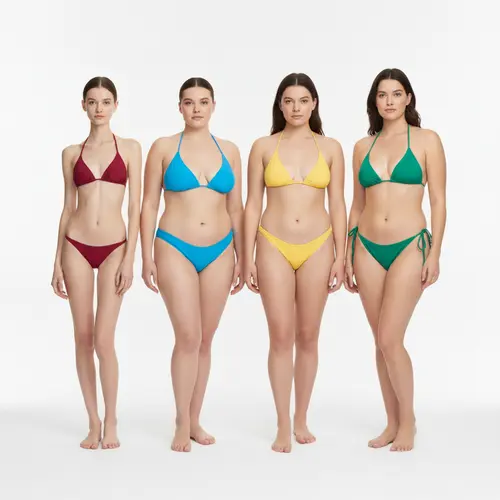
Micro swimwear flatters every body type when the cut is chosen thoughtfully. The goal is not to hide anything, but to use proportion and line to highlight what you love most.
Body Type | Recommended Style | Why It Works |
|---|---|---|
Small bust / Petite frame | Triangle top, Bandeau | Thin straps elongate the torso visually; minimal fabric avoids a baggy appearance. |
Fuller bust / Larger chest | [Halter neck](https://www.swimsuitcustom.com/blogArticle/best-swimsuit-for-body-type), Wide-strap top | Provides upward lift and distributes weight across the neck and shoulders more comfortably. |
Pear-shaped | High-cut / [Brazilian bottoms](https://www.swimsuitcustom.com/blogArticle/what-bikini-parts-called) | The high leg opening visually lengthens the legs and lifts the silhouette of the hips. |
Hourglass figure | [String bikini](https://www.swimsuitcustom.com/blogArticle/types-of-bikinis) with side ties | Fully adjustable ties hug the natural waist-to-hip curve for a custom, flattering fit. |
One practical tip: always check the fit in motion, not just standing still. Bend, twist, and sit down. If everything stays in place without constant adjustment, you have found the right fit.
Part 2: Where to Wear It — Knowing the Rules of the Room

The minimalist cut of micro swimwear means it is not appropriate for every setting. Reading the room — and the local regulations — will spare you from uncomfortable situations and ensure you enjoy wearing it to the fullest.
Where Micro Swimwear Is Perfectly at Home
Private beaches and adult-only resorts are the most welcoming environments for micro swimwear. These venues typically have the most relaxed dress codes, and styles ranging from micro bikinis to thong bottoms are widely accepted and expected.
Yacht parties, beach clubs, and destination hotspots such as South Beach in Miami, Ibiza, or the French Riviera are places where micro swimwear is not just accepted but celebrated as part of the fashion culture. Paired with the right cover-up, you will fit right in.
Private pools and solo sunbathing sessions — whether at a rented villa or your own backyard — are the ideal setting for getting an even tan with minimal tan lines, which is one of the biggest practical advantages of wearing less fabric.
Where to Exercise Caution or Avoid It Entirely
Family-friendly public pools and water parks are generally off-limits for micro swimwear. The vast majority of water parks and family resort pools enforce strict dress codes that explicitly prohibit G-strings, thong bottoms, or any swimwear deemed excessively revealing. Wearing micro swimwear in these settings risks making other guests uncomfortable and may result in being asked to change or leave.
Culturally conservative destinations require extra awareness. While beaches across southern Europe — France, Spain, and Italy — are generally very permissive, the same level of exposure would be considered highly inappropriate, and in some cases illegal, in parts of the Middle East, Southeast Asia, and other more conservative regions. Always research local norms before you pack.
Part 3: Styling — How to Make It Look Effortlessly Elevated

Micro swimwear is far more than just a swimsuit. Worn with intention, it becomes the centrepiece of a complete resort look. The key is knowing what to add — and what to leave out.
The Art of the Cover-Up
A well-chosen cover-up transforms a micro bikini from beachwear into a full outfit, giving you the versatility to move from the pool to a beachside bar without missing a beat.
A mesh or crochet dress offers just enough coverage while keeping the silhouette of the bikini visible underneath — perfect for a seamless transition from sunbed to sundowner. An oversized linen shirt, worn open with the sleeves casually rolled up, creates that effortless, undone elegance that reads as genuinely chic rather than trying too hard. A sarong or silk scarf tied at the hip is the most classic option of all — endlessly versatile, it can be worn as a skirt, a wrap dress, or even a halter top depending on how you tie it.
Accessories: Less Is Always More
Because the swimsuit itself is already a statement, accessories should support rather than compete. A wide-brimmed straw hat, a pair of oversized sunglasses, and one or two delicate gold chains or anklets are all you need. Resist the urge to layer on multiple necklaces, bangles, and belts — over-accessorising with a micro bikini reads as forced and undermines the clean, confident aesthetic the look is built on.
Part 4: Sun Care & Aftercare — The Practical Essentials
How to Avoid Awkward Tan Lines
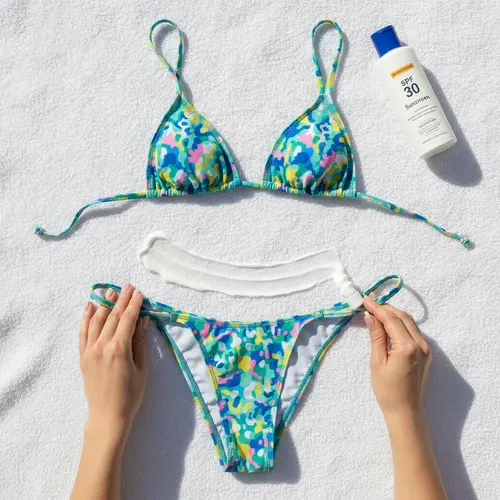
One of the most celebrated advantages of micro swimwear is the minimal tan line it leaves — but the thin straps and ties can still create visible marks if you are not careful.
When your primary goal is tanning, opt for a bandeau-style top or untie the neck strap and lie on your front. This eliminates the most common strap marks across the shoulders. Before putting on your bikini, apply a broad-spectrum sunscreen of at least SPF 30 all over your body. Once dressed, go back and apply an extra layer along the edges of the fabric — this blends the transition between covered and uncovered skin and prevents sharp burn lines from forming.
For those who want to take it a step further, some brands now offer swimwear made from tan-through fabrics (such as Transol®), which allow UV rays to pass through the material itself, delivering a genuinely seamless, line-free tan.
How to Care for Your Micro Swimwear
Micro swimwear is typically made from high-stretch Lycra or Spandex blends — fabrics that are incredibly comfortable but require careful handling to maintain their shape and elasticity.
Never put your micro bikini in a washing machine or tumble dryer. The mechanical agitation of a machine wash and the heat of a dryer are the two fastest ways to destroy the elastic fibres. After every single wear — even if you did not swim — rinse the piece immediately in cold water to remove salt, chlorine, and sunscreen residue. These substances break down Lycra over time if left to sit in the fabric.
To dry, gently press the piece between two towels to absorb excess water, then lay it flat in the shade. Never wring it out, and never leave it in direct sunlight to dry — UV exposure degrades the fabric just as it does your skin.
Finally, give your swimwear a rest between wears. Lycra and Spandex need approximately 24 hours to recover their original shape after being stretched. If you are on a week-long holiday, bring at least two sets and rotate them daily. Your bikinis will look and fit better for far longer as a result.
Final Thoughts
Wearing micro swimwear is, at its core, an act of self-expression and confidence. Get the sizing right, understand where it is and is not appropriate, style it with restraint and intention, and take care of it properly — and you will find that this bold, minimal style rewards you with looks and longevity in equal measure. Here is to your best beach season yet.