
A bikini may appear as a simple two-piece garment, but its construction is a sophisticated blend of engineering, material science, and aesthetic design. Whether you are a consumer seeking the perfect fit or a designer crafting the next summer trend, understanding the anatomy of a bikini is essential. This guide breaks down every component—from the visible hardware to the hidden stitching—to help you identify quality and maximize comfort.
Quick Bikini Parts Glossary
Need answers fast? Here is a quick reference table of the main bikini parts and their functions:
Part Name | Function Summary |
|---|---|
Cup | Primary fabric panel covering the bust. |
Apex | Top point of the cup connecting to the strap; bears tension. |
Bridge | Center connector between cups; impacts support and look. |
Wings | Side panels extending from cups to back; provides lateral support. |
Gusset | Crotch area panel; ensures comfort and durability. |
Hardware (Rings/Sliders) | Connects straps and allows adjustments. |
I. Bikini Top Anatomy: The Architecture of Support
The bikini top is the most complex half of the set, responsible for both style and functional support. Its primary components work together to provide lift, coverage, and shape.
1. The Cups and the Apex
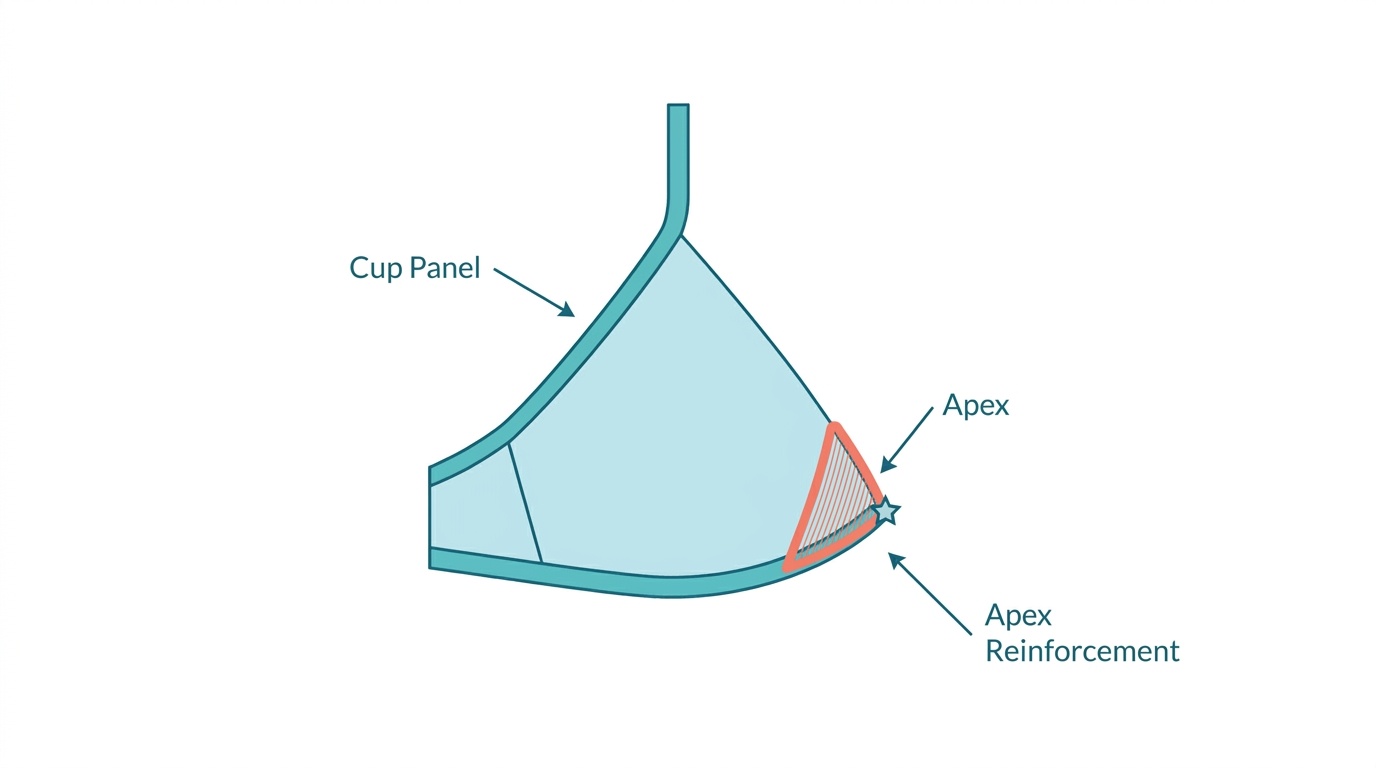 The cups are the primary fabric panels that cover the bust. They can be structured with foam, molded for shape, or remain soft and unlined. At the very top of each cup is the apex—the critical point where the cup connects to the shoulder strap. In high-quality swimwear, the apex is often reinforced because it bears the most tension, transferring the weight of the bust to the straps.
2. The Bridge (Center Front)
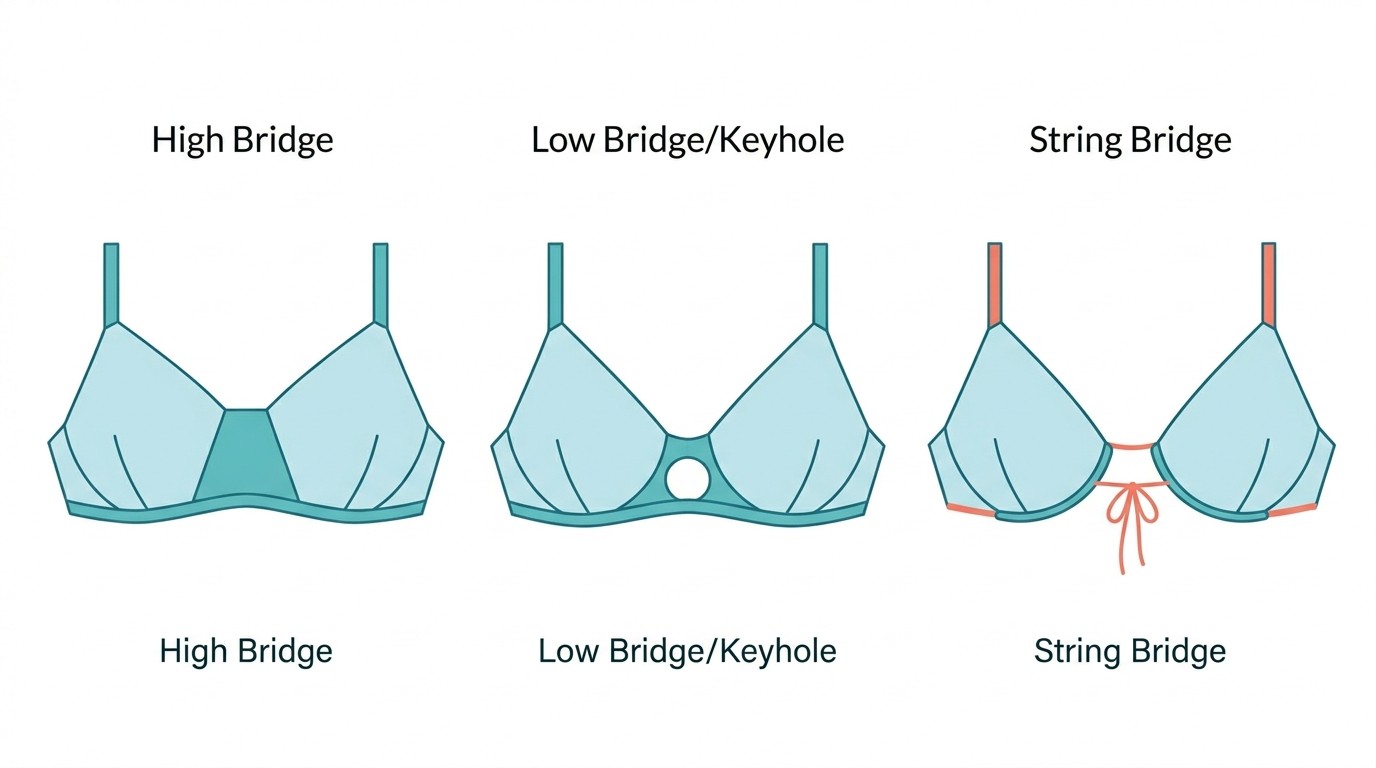 The bridge is the small connector between the two cups. Its height and width significantly impact both the look and support of the top.
High Bridge: Offers more stability and is ideal for larger bust sizes as it keeps the cups securely in place.
Low Bridge or Keyhole: Creates a plunging neckline, often used in more daring designs.
String Bridge: Common in triangle bikinis, offering maximum adjustability but minimal structural support.
3. Wings and Side Panels
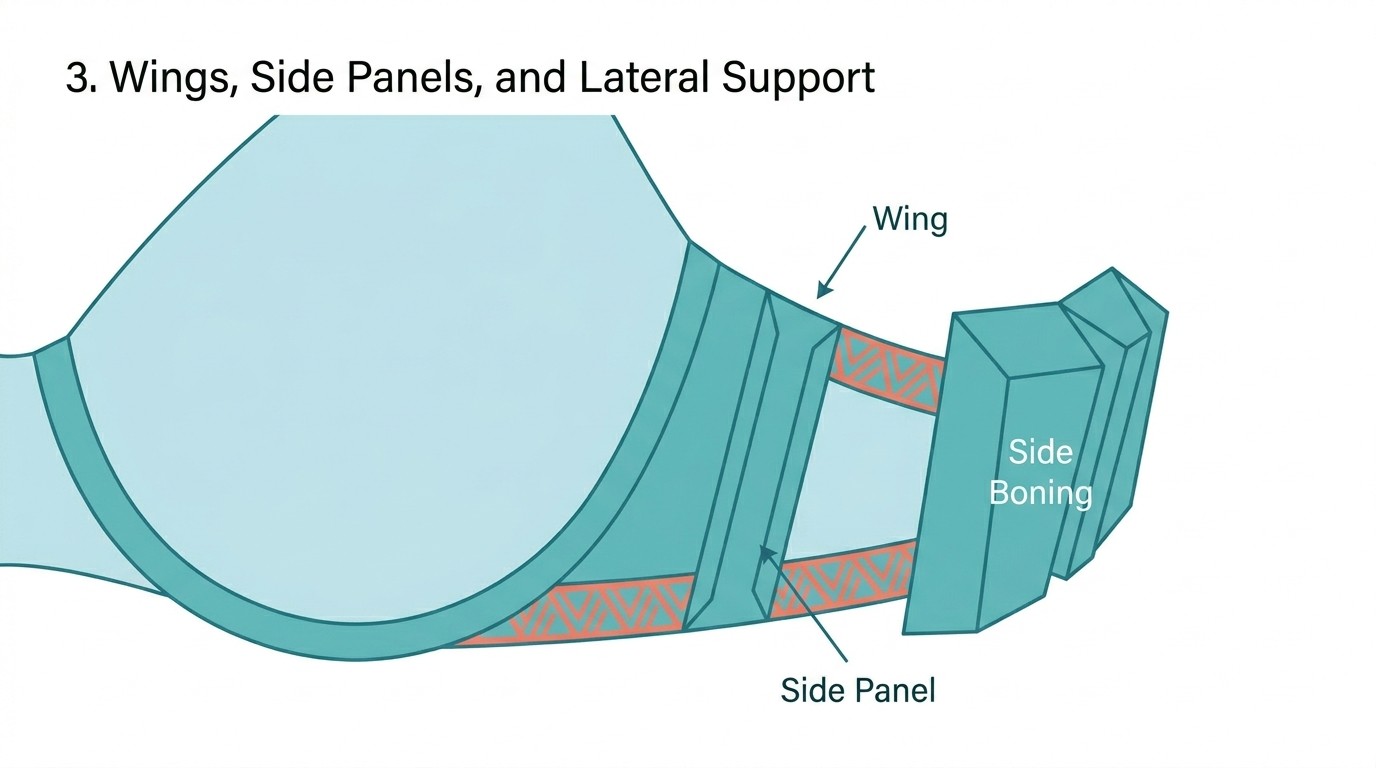 The wings are the sections of the top that extend from the outer edge of the cups toward the back. Wider wings provide better side support and prevent "spillage" under the arms. In strapless or bandeau styles, these panels are often reinforced with side boning (flexible plastic stays) to prevent the fabric from bunching or rolling down.
4. Internal Support Components
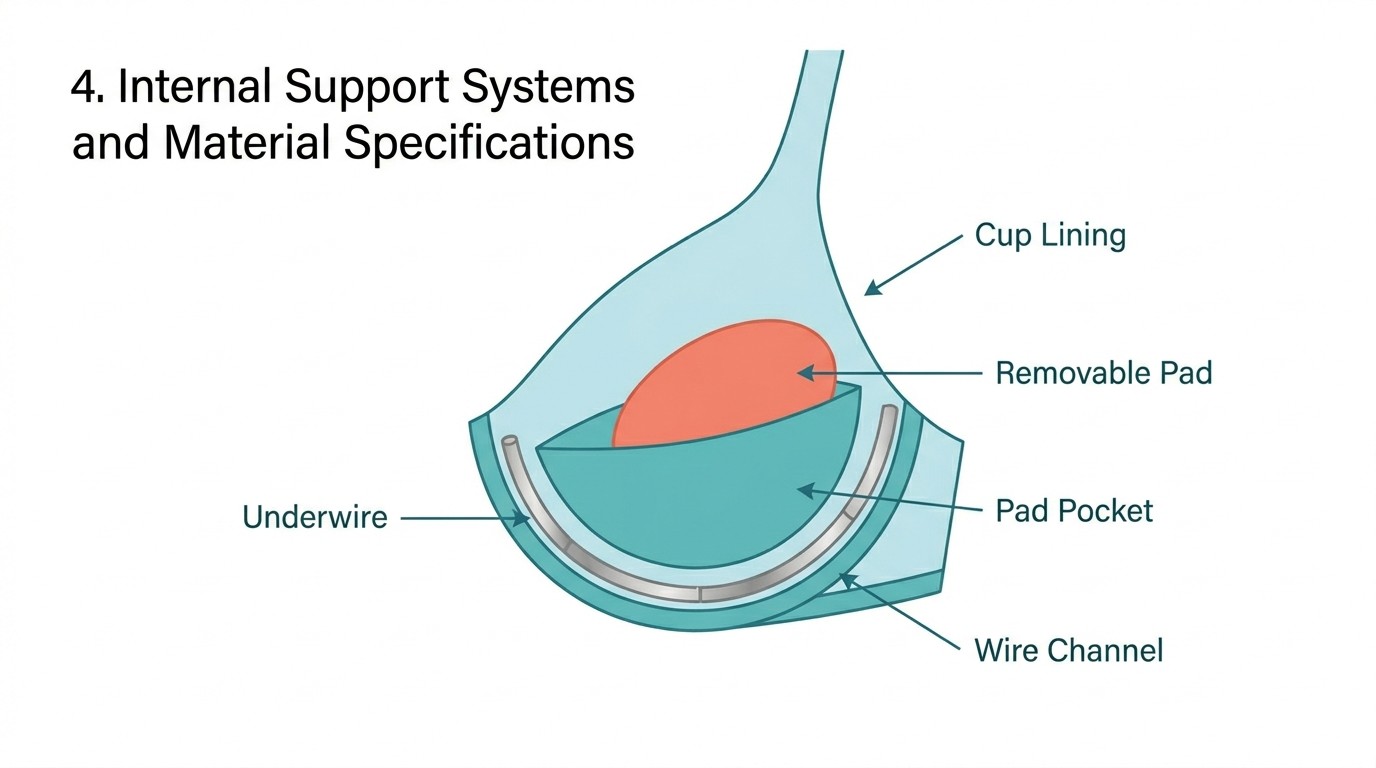 What lies beneath the surface is often what determines the quality of a bikini top.
Underwire: A curved metal or plastic wire encased in a wire channel under the cup to provide lift and separation.
Removable Pads (Cookies): Small foam inserts placed in internal pockets to add shape or extra coverage.
Lining: High-end suits are often self-lined (using the same outer fabric inside) for a luxurious feel and better "snap-back" power.
II. Bikini Bottom Anatomy: Comfort Meets Style
Bikini bottoms are designed with "Negative Ease," meaning they are cut smaller than the body and rely on the fabric's stretch to stay in place.
1. Front and Back Panels
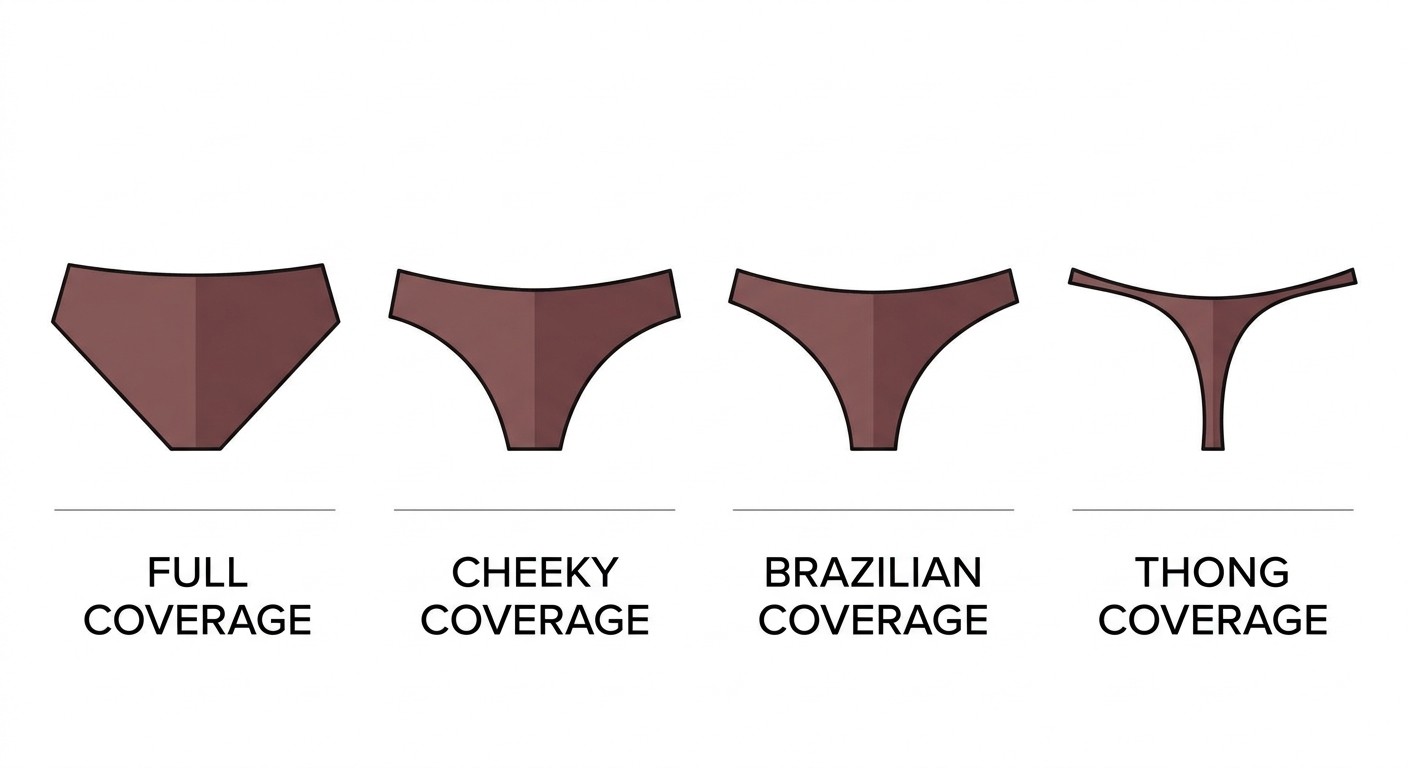 These panels determine the overall coverage of the bottom. While the front panel is relatively standard, the back panel varies widely:
Full Coverage: Covers the entire buttocks.
Cheeky/Brazilian: Cut higher on the leg and narrower across the back to reveal more skin.
Thong: Minimal coverage with a very narrow back strip.
2. The Gusset (Crotch Area)
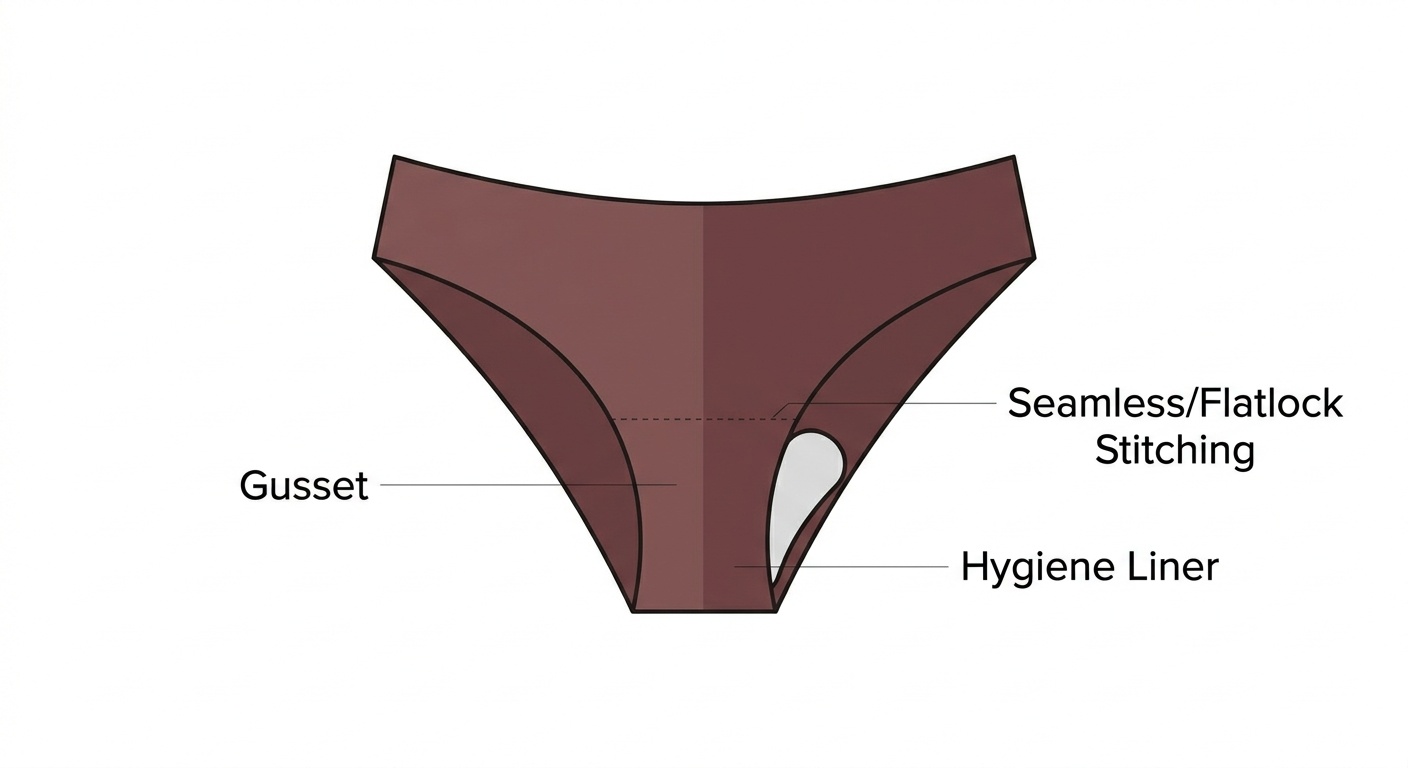 The gusset is the narrowest part of the bottom that sits between the legs. In premium manufacturing, the gusset is wide enough for comfort and often features a seamless construction or flatlock stitching to prevent chafing. Every new bikini bottom also includes a hygiene liner, a temporary adhesive strip required for sanitary reasons during retail try-ons.
3. Waistbands and Leg Openings
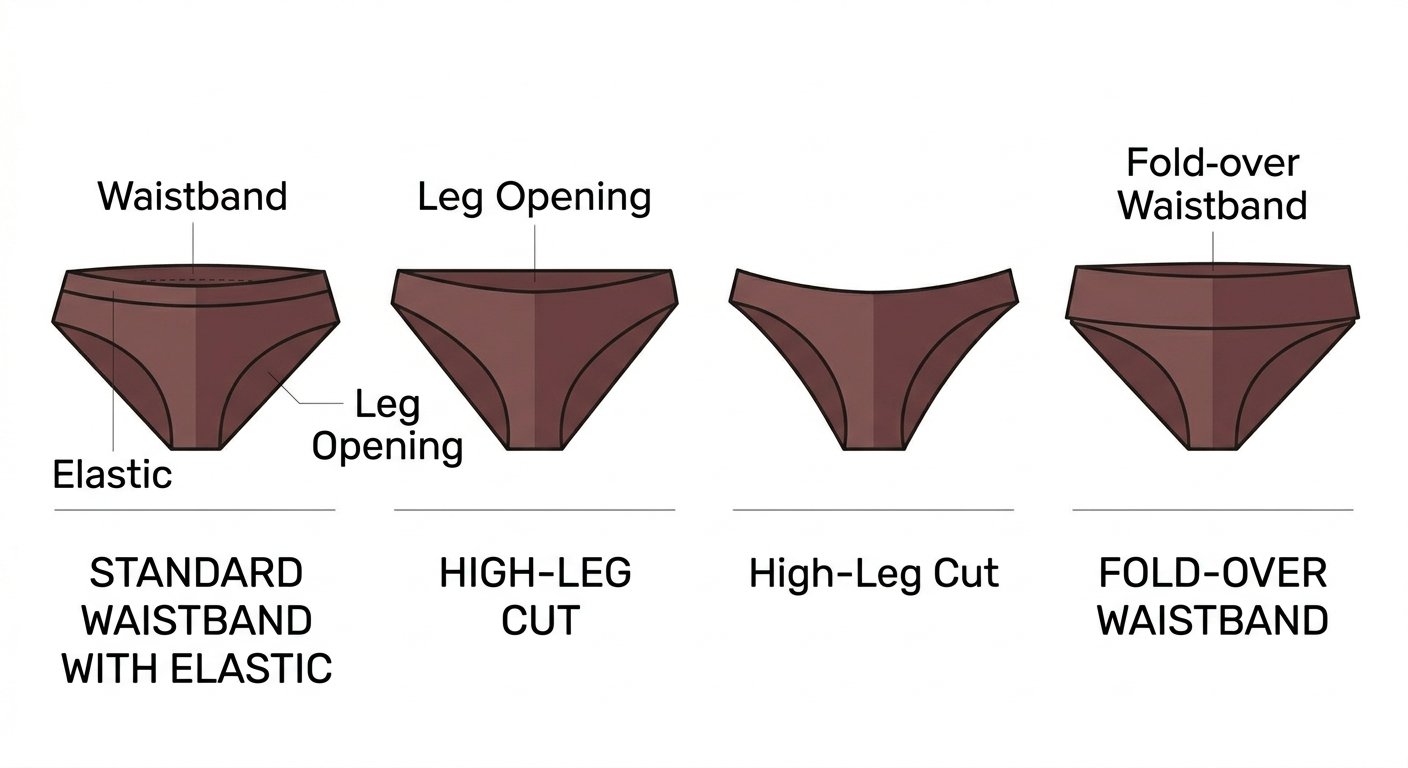 The edges of these openings are reinforced with swim-grade elastic. The placement of these openings defines the style:
High-Leg Cut: Sits above the hip bone, an 80s-inspired look that elongates the legs.
Fold-over Waistband: Uses a double layer of fabric instead of a tight elastic band, providing a softer fit that doesn't "dig in."
III. Hardware, Trims, and Specialized Stitching
The small details of a bikini often dictate its longevity and professional finish.
1. Essential Hardware
Hardware refers to the functional and decorative pieces that join the garment together.
Part Name | Function | Material Recommendation |
|---|---|---|
Rings & Sliders | Connect straps and allow for length adjustment. | Zinc alloy or stainless steel (rust-resistant). |
G-Hooks / Clasps | The primary closure mechanism at the back. | Metal is more durable than plastic for heavy use. |
Aglets (Cord Ends) | Decorative weights at the end of strings. | Prevents fraying and adds a premium feel. |
Pro Tip: For bulk orders of rust-resistant zinc alloy hardware, check out our custom swimwear hardware options.
2. Specialized Stitching
A standard straight stitch will snap when the fabric is stretched. Professional swimwear uses:
Zig-Zag Stitch: The industry standard for attaching elastic, allowing the seam to expand and contract.
Flatlock Seams: Seen in athletic swimwear, these seams lay completely flat against the skin, reducing drag and irritation.
Coverstitch: Provides a clean, "twin-needle" finish on hems, common in retail-ready garments.
IV. Material Science: Fabrics and Elastic
The durability of a bikini is directly linked to the quality of its raw materials.
Fabric Blends: Most swimwear is a blend of Nylon and Spandex (for a soft, shiny finish) or Polyester and PBT (for maximum chlorine resistance). Modern sustainable brands often use Econyl, a regenerated nylon made from ocean waste.
Elastic Types: Rubber elastic is preferred for its resistance to salt and chlorine. Alternatively, Framilon tape (a clear, thin polyurethane tape) is used in "seamless" designs to provide invisible support without bulk.
V. Body Type & Fit Guide: Choosing by Anatomy
Knowing which parts to look for can help you find a suit that flatters your specific shape.
Body Type | Recommended Anatomy/Features | Why it Works |
|---|---|---|
Large Bust | High bridge, underwire, wide wings. | Provides maximum support and stability. |
Small Bust | Ruched cups, padding, triangle tops. | Adds visual volume and allows for custom shaping. |
Athletic Frame | High-cut legs, bandeau tops. | Accentuates curves and creates a long silhouette. |
Pear Shape | Bold, detailed tops; simple, high-leg bottoms. | Draws attention upward and balances the hips. |
VI. The "Tug Test": A 5-Point Quality Checklist
Before purchasing a bikini, perform these quick checks to ensure it will last:
The Apex Tug: Pull gently where the strap meets the cup; there should be no visible gaps or weak threads.
The Elastic Snap: Stretch the waistband; it should immediately "snap back" to its original shape without a crunching sound.
The Gusset Width: Ensure the gusset is wide enough to stay in place comfortably.
The Hardware Weight: Metal hardware should feel cool and slightly heavy; thin, flimsy plastic is prone to snapping.
The Lining Check: Look for a full lining that is securely attached to the outer fabric.
VII. FAQ: Common Questions About Bikini Parts
What is the bridge of a bikini?
The bridge is the center connector between the two cups. It plays a vital role in determining how much support and separation the top provides.
Why do bikini bottoms have a gusset?
The gusset provides comfort, ensures a proper fit between the legs, and adds an extra layer of protection and durability to the most high-friction area of the garment.
How do I know if my bikini top has good support?
Check for a high bridge, wide side wings, and reinforced stitching at the apex. If you have a larger bust, underwire and adjustable straps are also key indicators of good support.
What is the difference between rubber and Framilon elastic?
Rubber elastic is traditional and highly resistant to chemicals, while Framilon is a thin, clear tape used for "invisible" edges in seamless or delicate swimwear styles.
Which parts determine the quality of a custom swimsuit?
The quality of a custom swimsuit is largely determined by the durability of its hardware (like rust-resistant zinc alloy rings and sliders), the resilience of its elastic (such as rubber or Framilon), the integrity of its stitching (like zig-zag or flatlock seams), and the quality of the lining fabric. These components ensure the swimsuit maintains its shape, support, and comfort over time, meeting high factory production standards.
How Brands Can Use This Knowledge
For swimwear brands and designers, mastering bikini anatomy is crucial for clear communication with manufacturers. When creating a design brief or tech pack, using precise terminology (e.g., specifying "zinc alloy G-hooks" instead of "metal clasps", or "flatlock stitching on the gusset" instead of "sewn well") minimizes sampling errors, speeds up production, and guarantees a higher quality final product.
Ready to turn your design into reality? Explore our comprehensive swimwear OEM manufacturing process and let our experts help you source the perfect materials and hardware for your next collection.
Ultimately, a comprehensive understanding of bikini anatomy empowers informed decisions, from selecting the ideal swimwear to crafting innovative designs. This knowledge is the foundation for ensuring superior product quality, enhancing wearer comfort, and building lasting brand value in a competitive market.