Every summer, swimsuit shopping brings the same burning question: "Why does one bikini cost $30 while another costs $300?" Scroll through social media and you'll find countless shoppers fuming: "They look exactly the same — two tiny pieces of fabric — so why is one ten times the price?"
As a content creator with years of experience working inside the swimwear industry, I've heard every version of the "brand markup" and "luxury tax" debate. And yes, brand prestige is real. But the gap between a $30 swimsuit and a $300 one goes far deeper than the label stitched into the back.
Today, I'm taking you behind the scenes of swimwear manufacturing — from fabric science and hidden construction details to factory pricing logic — to break down exactly where that $270 difference actually goes. By the end of this article, you'll know how to evaluate a swimsuit the way an industry buyer does.
1. Fabric Science: It's Not Just "Two Pieces of Cloth
"
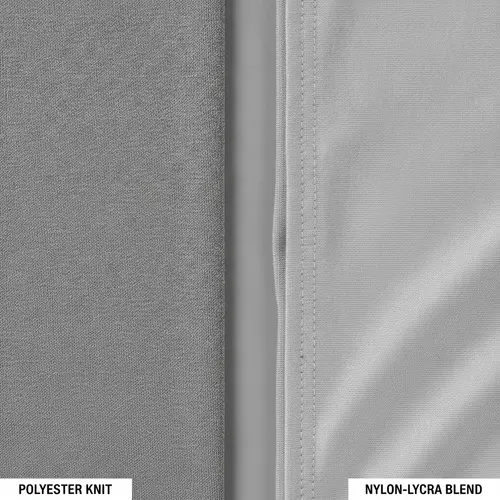
The fabric is the single most important factor in determining a swimsuit's lifespan and how it feels on your body. Most people assume all swimwear is just "spandex," but the base fiber makes an enormous difference.
The Cheap Swimsuit Standard: Basic Polyester
A $30 fast-fashion bikini is almost always made from a standard polyester blend. Polyester has genuine advantages — it's inexpensive, chlorine-resistant, and holds color well .
The critical flaw: Polyester has poor natural stretch and elastic recovery. To compensate without raising costs, budget swimwear brands use a very low percentage of elastane — sometimes as little as 5–10%. The result? After just a few wears in the water, the suit loses its elasticity and begins to sag.
The Expensive Swimsuit Secret: Premium Nylon and Proprietary Fibers
A $300 luxury swimsuit is typically built from high-grade nylon (polyamide) blended with a high proportion of Lycra. The French brand Eres, for example, uses its proprietary "Peau Douce" fabric — an extraordinarily soft, body-sculpting blend that has been developed over years of research .
Hand-feel and fit: At the molecular level, nylon is softer and more skin-friendly than polyester, owing to its lower specific gravity and hydrogen-bonding structure . When blended with 15–25% high-quality elastane, it delivers true four-way stretch — conforming to the body like a second skin and staying in place even during vigorous movement.
The cost: Premium nylon fabrics, especially Italian-milled options like Econyl (a recycled nylon made from ocean waste), can cost several times more per meter than standard polyester .
Property | Budget Swimsuit (Standard Polyester Blend) | Luxury Swimsuit (Premium Nylon/Lycra Blend) |
|---|---|---|
Hand-feel | Stiffer, slightly plasticky | Exceptionally soft, silky smooth |
Elastic recovery | Poor — prone to sagging and deformation | Excellent — retains shape after years of wear |
Water absorption & drying | Absorbs less water, dries faster | Absorbs slightly more, though modern finishes have largely closed this gap |
Cost | Low | High |
2. The Hidden Craftsmanship: Lining, Stitching, and Hardware
The true quality of a swimsuit lives in the details you don't notice at first glance.
Lining: The Most Common Place Corners Are Cut
The lining is what determines a swimsuit's comfort, opacity, and structural support.
Budget swimsuits often cut costs by lining only the front panel, or by using a rough, inelastic mesh that has little in common with the outer fabric. The result: the suit turns transparent when wet, or the inner and outer layers stretch at different rates, creating ugly bunching .
Luxury swimsuits are almost always fully lined, with lining fabric that matches the stretch and quality of the outer shell. The most sophisticated designs incorporate power mesh panels in the lining — providing targeted tummy control and bust support without the need for bulky underwire .
Stitch Technology: Flatlock vs. Overlock
Budget swimsuits rely on basic overlock or zigzag stitching. These are fast and cheap to produce, but the raised seam ridges can chafe the skin, and the stitches are prone to breaking under sustained stretch .
Luxury swimsuits use flatlock stitching or seamless/bonded construction. Flatlock stitching lies completely flat against the skin, eliminating friction entirely. Seamless bonding requires specialized machinery and skilled labor, but the result is a clean, modern edge with no visible seam lines and no risk of digging into the body .
Hardware: Plastic vs. Corrosion-Resistant Metal
Budget swimsuits use inexpensive plastic clasps and sliders. These become brittle under UV exposure and often snap after a handful of washes.
Luxury swimsuits use custom metal hardware with anti-corrosion coatings — gold-plated or silver-plated finishes that won't rust, won't heat up and burn your skin in the sun, and dramatically elevate the overall feel of the garment .
3. Production Scale and Pattern-Making: Mass Production vs. Meticulous Craft
Finally, we need to talk about the core pricing logic of the apparel industry: economies of scale and investment in design development.
Volume Determines the Factory Price
A fast-fashion brand can produce 100,000 units of the same bikini in a single run. That extreme scale compresses the per-unit manufacturing cost down to just a few dollars. An independent designer brand or luxury label, by contrast, may produce only a few hundred pieces per style (a low MOQ). When factories run small-batch orders, the per-unit cost multiplies significantly .
Fit and Pattern-Making
Budget swimsuits are typically cut from generic, off-the-shelf factory patterns with no customization for different body types. This is why an inexpensive swimsuit so often feels like it fits "almost right" — but not quite.
Luxury swimsuits involve months of investment in pattern development. Brands hire specialist pattern-makers and conduct extensive fit testing on real models across multiple sizes, refining the cut until it genuinely flatters the body rather than simply covering it . As one industry professional put it: "A great pattern is one that makes a woman feel confident the moment she puts it on."
Conclusion: Should You Buy the $30 or the $300 Swimsuit?
The physical production cost of a $300 swimsuit is certainly not ten times that of a $30 one. In luxury swimwear, you are paying a premium for design, exclusivity, small-batch production — and yes, some degree of brand prestige .
But that doesn't make expensive swimwear a scam.
If you need a suit to wear once on a vacation photo shoot, a $30 fast-fashion bikini will do the job. But if you want a swimsuit that sculpts your body, stays opaque in the water, holds its shape after three years of wear, and won't be on every other person at the beach — investing in quality swimwear actually delivers a lower cost-per-wear over time .
Next time you shop for a swimsuit, try this insider quality check:
1.The stretch test: Pull the fabric firmly and watch how quickly it snaps back. Instant recovery means quality elastane. Slow recovery means it will sag.
2.Check the lining: Feel whether the lining is as soft and stretchy as the outer fabric. If it's scratchy or stiff, the suit will be uncomfortable and may bunch when wet.
3.Inspect the hardware and seams: Check whether the clasps are solid, corrosion-resistant metal. Run your finger along the seams — they should lie completely flat, with no raised ridges.
Once you know what to look for, no price tag will ever confuse you again.