Over the years of manufacturing swimwear, we’ve spoken with hundreds of founders starting their own brands. During the initial consultation, almost every new entrepreneur says the exact same thing:
“I want premium fabric. The highest quality possible.”
It’s a great vision. But then comes the reality check.
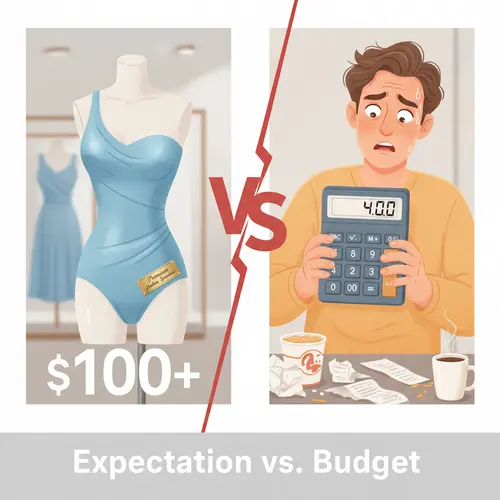
When we ask about their target production cost, the answer is often something like: “I have a budget of $4 per piece.”
This disconnect between expectation and budget is the biggest mistake new swimwear brands make when choosing fabric. It’s not about misunderstanding the difference between nylon and polyester. It’s about getting the entire business logic backward.
The Endless Search for the “Perfect” Supplier

When founders start with the mindset of “I want premium fabric but only want to pay $4,” they usually fall into a frustrating cycle.
They request fabric swatches from supplier after supplier. They reject factories because the quotes are “too high.” They spend months negotiating, trying to find a manufacturer who can magically produce Italian luxury fabrics at fast-fashion prices.
Eventually, they either give up, or worse, they find a supplier who promises to meet their $4 target—only to receive a bulk order of cheap, flimsy swimwear that ruins their brand’s reputation on day one.
As a manufacturer, we don’t just want to take orders; we want our clients’ businesses to survive and grow. That’s why we always stop this conversation and ask a completely different question.
The Question You Should Be Asking
Instead of asking, “What is the best fabric?” you need to ask:
“What price point is my customer willing to pay?”
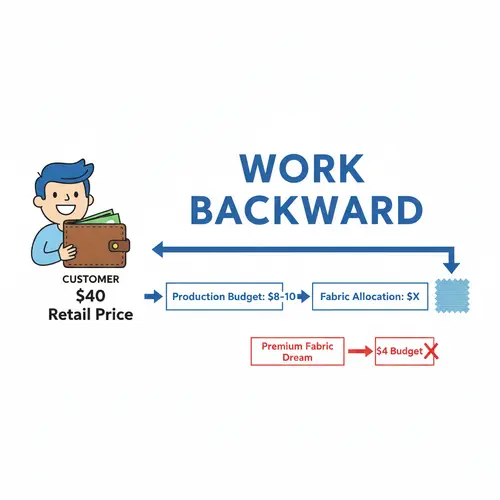
Fabric selection is not just a design choice; it is a business decision. Your retail price dictates your production budget, and your production budget dictates your fabric options.
If you are targeting college students who want trendy, colorful bikinis for a weekend trip and are only willing to pay $30, you cannot afford premium recycled nylon. And that is perfectly fine.
Once you know your retail price, the math becomes clear. If your target retail price is $40, your total manufacturing cost (including fabric, hardware, labor, and packaging) should typically be around $8 to $10. From that budget, you can determine exactly how much you can allocate to fabric.
Making the Right Choice Based on the Math
Only after you understand your numbers should you start looking at fabric options:
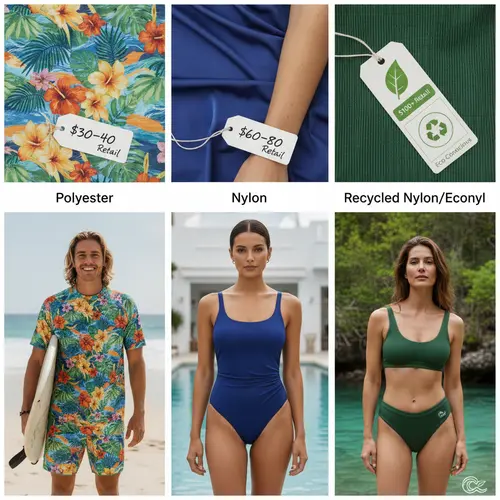
•Polyester: If your retail price is lower and your budget is tight, high-quality polyester is a smart choice. It holds bright prints exceptionally well and is highly resistant to chlorine. You don’t have to apologize for using polyester if it fits your business model.
•Nylon: If your customer expects a softer, more luxurious feel and is willing to pay a mid-tier price (e.g., $60 to $80), nylon becomes a viable option. It feels great against the skin and offers excellent stretch and recovery.
•Recycled Fabrics (e.g., Econyl or Repreve): If your brand is built on sustainability and your target customer is willing to pay a premium (e.g., $100+), then recycled fabrics are the right choice. But you must be prepared for the higher cost of both the raw material and the specialized production process.
Final Thoughts
The most successful swimwear brands we work with didn’t succeed because they chose the most expensive fabric. They succeeded because they understood their market, calculated their margins, and chose the fabric that made sense for their business model.
Don’t let the pursuit of “premium” blind you to the reality of your budget. Start with your customer’s wallet, work backward to your production cost, and let the numbers guide your fabric choice. That is how you build a profitable, sustainable swimwear brand.