The global swimwear market is booming, with projections showing it could surpass $29 billion by 2027. This growth has inspired countless entrepreneurs to start their own swimwear brands. However, behind the glamour of launching a swimwear label lies a harsh reality: the majority of new brands fail within the first two years, and one of the biggest reasons is falling victim to supply chain scams or partnering with the wrong manufacturer.
For those entering the swimwear business, the first major decision—choosing a reliable swimsuit factory or swimwear manufacturer—can make or break your brand. This comprehensive guide will walk you through the process of finding, vetting, and partnering with the right swimwear manufacturer for your brand.
1. Understand Your Brand's Needs Before Reaching Out
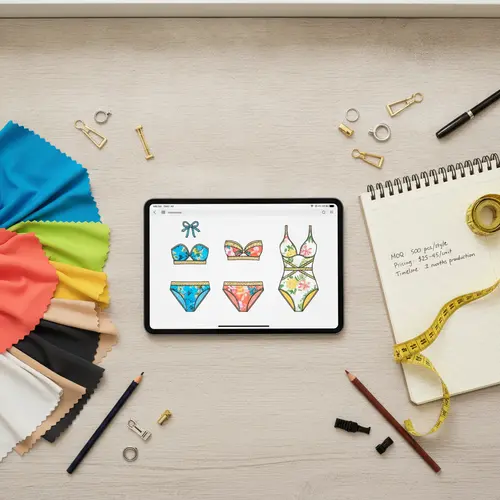
Before you even start searching for a manufacturer, you need absolute clarity on what your brand requires. Manufacturers will take you much more seriously if you approach them with a well-defined plan.
Three questions are non-negotiable before making first contact. First, what is your target Minimum Order Quantity (MOQ)? Are you a startup needing 50–100 pieces per style, or an established brand ready for 500+ pieces? Second, what level of customization do you need? Do you want Private Label (white labeling existing designs) or fully Custom/Cut-and-Sew (starting from your own sketches and tech packs)? Third, what is your fabric focus? Are you prioritizing sustainable materials like ECONYL® or REPREVE®, or standard performance fabrics like nylon-spandex blends?
Most OEM factories agree that 100 pieces per style strikes the best balance between cost, efficiency, and flexibility. At this quantity, brands achieve scalable production without overstock risk, and factories can efficiently manage fabric dyeing and machine setup costs.
2. Where to Find Swimwear Manufacturers: Why Xingcheng Deserves Your Attention
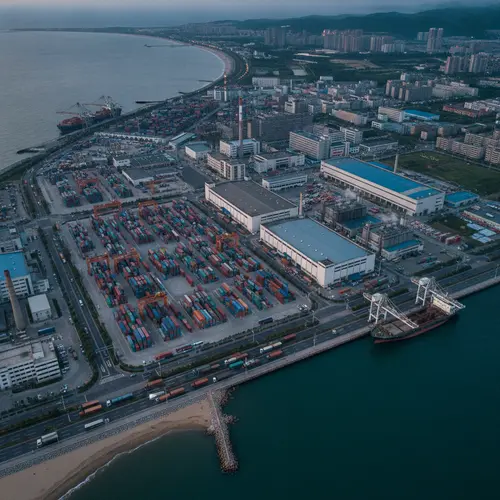
Finding a manufacturer requires digging deeper than the first page of Google. While platforms like Alibaba and Global Sources are common starting points, the most experienced brand founders know that geography matters enormously when it comes to swimwear.
The Xingcheng Advantage: China's Most Complete Swimwear Supply Chain
When it comes to swimwear manufacturing, Xingcheng in Liaoning Province, China stands in a category of its own. Unlike general apparel hubs, Xingcheng has built an end-to-end swimwear-specific supply chain over decades. The city is home to over 1,200 swimwear manufacturers and accounts for a significant share of global swimwear exports. More importantly, the entire ecosystem—from performance fabrics (nylon-spandex, chlorine-resistant blends), elastic trims, underwire and cup molding, to printing and finishing—is concentrated within a small geographic area.
This supply chain density translates into real advantages for brand founders:
•Lower sourcing costs, because fabric and trim suppliers are minutes away from the factory floor, eliminating long-distance logistics.
•Faster sampling and production, because factories can procure materials locally without waiting weeks for shipments.
•Deeper product expertise, because factories in Xingcheng have been producing swimwear—and only swimwear—for generations. The workers, pattern makers, and factory owners understand the category at a level that general apparel factories simply cannot match.
Other well-known production hubs like Yiwu (Zhejiang) and Xiamen (Fujian) also produce swimwear, but Yiwu is primarily oriented toward low-cost wholesale, while Xiamen tends toward mid-to-high-end export. Xingcheng's strength lies in its complete vertical integration and deep category specialization, making it the most reliable destination for brands that prioritize quality and production expertise.
3. The Real Test: How to Judge a Manufacturer Through Conversation
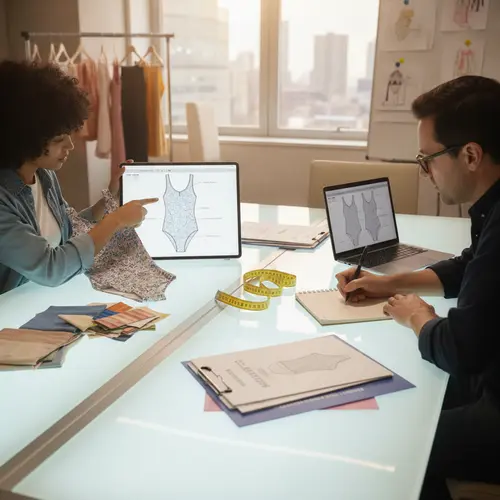
Finding a manufacturer's name is the easy part. The hard part—and the part that most guides skip over—is knowing how to evaluate whether a factory is truly capable before you spend a single dollar on samples.
The most reliable method is not checking certifications or counting factory photos. It is talking to the people who will actually make your product.
Why Conversation Is Your Most Powerful Vetting Tool
A genuine, experienced swimwear manufacturer will not simply tell you "yes, we can make this." They will engage with your design critically and constructively. Before a single sample is cut, a professional factory team will sit down with you—whether in person, via video call, or through detailed written communication—and work through your design with you.
This conversation reveals everything. A knowledgeable factory representative will:
•Identify construction problems immediately. If you bring an AI-generated design concept, a truly experienced manufacturer will flag unrealistic elements on the spot—not after the sample comes back wrong. Many AI-generated swimwear designs look beautiful on screen but are structurally impossible or impractical to produce: straps that cannot be sewn at the required angle, cup placements that would cause the garment to lose shape after one wear, or cutouts that would require a seam in a location that creates discomfort. A professional will tell you this in the first conversation.
•Explain how specific design choices affect quality. For example, they will tell you that a particular strap configuration will cause the fabric to twist after washing, or that a specific print placement near a seam will cause color bleeding during production. These are the kinds of insights that only come from years of hands-on production experience.
•Proactively discuss details before starting the sample. A red flag is a factory that simply says "no problem, we can do it" to every request without asking any clarifying questions. A trustworthy manufacturer will ask about your intended fabric weight, the target fit (relaxed vs. compression), the end customer's body type, and the expected wash and wear conditions—because all of these factors affect how the garment is constructed.
The Difference Between a Professional and a Middleman
This conversational test is also the most effective way to distinguish a real factory from a trading company or middleman posing as a manufacturer. Middlemen can show you catalogs and quote prices, but they cannot answer technical questions about construction. Ask them: "If I use a ribbed fabric for this design, how will it affect the seam allowance and the placement of the underwire channel?" A real factory person will answer immediately and in detail. A middleman will say they need to "check with the team" and get back to you—and their answer will be vague.
The table below summarizes what to expect from each type of contact:
| Question You Ask | Professional Factory Response | Middleman / Unreliable Factory Response |
|---|---|---|
| "Can you make this AI-generated design?" | Reviews the design carefully, flags specific elements that are impractical, and suggests modifications before quoting | "Yes, no problem" — then delivers a sample that looks nothing like the original |
| "What fabric do you recommend for tummy control?" | Explains the difference between compression nylon-spandex blends, recommends specific fabric weights, and discusses lining requirements | Sends a generic fabric swatch list without context |
| "How will this cutout affect durability?" | Explains the seam stress points and recommends reinforcement stitching or a design adjustment | "It will be fine" with no technical explanation |
| "What details do you need before starting the sample?" | Asks for tech pack, target measurements, fabric preference, and intended market | Asks only for a deposit |
4. Essential Questions to Ask Potential Manufacturers
When you initiate contact, use this checklist to gauge a manufacturer's professionalism and capabilities:
1.What is your MOQ per style, color, and size? (The industry standard is often 100 pcs/style; sizes can typically be mixed within that quantity.)
2.What is your sample turnaround time and bulk production lead time? (Typical lead times are 15–20 days for a 100-piece run.)
3.What are your payment terms? (Standard is 30% deposit, 70% before shipment.)
4.Do you hold any ethical or sustainability certifications? Look for BSCI, OEKO-TEX, SGS, or GRS certifications—especially critical if you are marketing an eco-friendly brand.
5.Will you sign a Non-Disclosure Agreement (NDA)? Design theft is a serious and common trap. Unethical manufacturers may reproduce your unique sketches and sell them to competitors. Never share original designs without a signed NDA.
5. Red Flags to Watch Out For
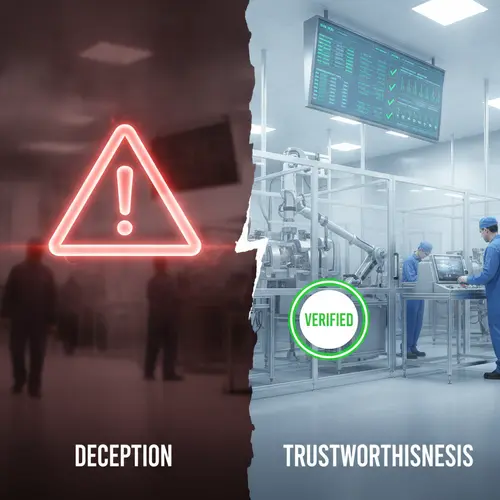
Industry research suggests that up to 90% of swimwear start-ups face fraud, hidden traps, or unreliable manufacturers during their early production stages. The comparison below summarizes the key warning signs:
| Criteria | Red Flags | Trustworthy Manufacturer |
|---|---|---|
| Design Feedback | Says "yes" to everything without asking questions or flagging issues | Reviews designs critically and proactively suggests improvements |
| Factory Verification | Avoids video calls; makes excuses when asked for a virtual tour | Provides virtual tours and live factory verification |
| Product Images | Uses stolen or inconsistent catalog photos | Displays original product photography and client case studies |
| Pricing & MOQ | Unrealistically low prices, then introduces hidden charges | Transparent about all costs and MOQs upfront |
| Payment Terms | Demands full payment or unusually large deposits upfront | Offers structured payments with buyer protection |
The "Bait-and-Switch" Trap
Some manufacturers promise premium swimwear fabrics—such as Carvico Italian Lycra or sustainable recycled textiles—but switch them with cheap polyester once production begins. Always request physical fabric swatches before committing, and for large orders, consider independent lab testing.
6. Navigating the Sampling Phase
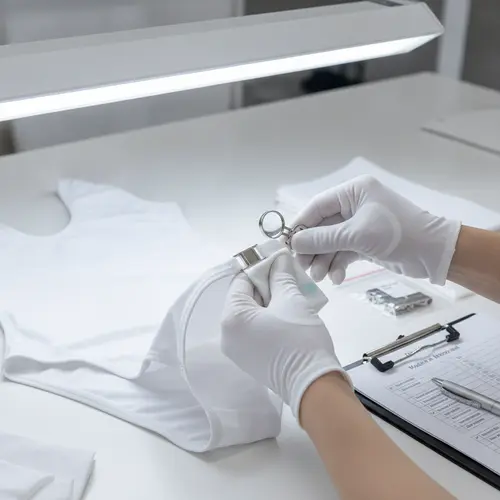
Never proceed to bulk production without an approved sample. The sampling phase is your opportunity to test not only product quality but also the manufacturer's communication speed and reliability.
What to evaluate during sampling:
•Fit and Stretch Recovery: Does the swimsuit hold its shape after being stretched repeatedly?
•Wet Opacity: Test light-colored samples in water to ensure they do not become sheer. Double-lining is often necessary for white, nude, or pastel colorways.
•Construction and Stitching: Check for smooth, flat seams and ensure elastic tension is consistent throughout the garment.
•Hardware Durability: Ensure clasps, rings, and underwires are rust-resistant and securely attached—these are the most common failure points in swimwear.
7. Building a Long-Term Strategic Partnership
Negotiating with a manufacturer is not just about driving the price down—it is about building trust, professionalism, and a mutual commitment to growth. Factories prioritize reliable, growth-oriented brands over one-off buyers.
Three strategies that make a real difference:
First, present a Brand Introduction Pack. Share your brand story, target market, and growth forecast. This signals that you are a serious business partner, not just a one-time buyer, and it often unlocks more flexible terms. Second, use stock fabrics whenever possible. Choosing from a factory's existing fabric inventory instead of requesting custom dyeing can significantly reduce your MOQ and shorten lead times. Third, combine styles under one fabric roll. Negotiate a total MOQ across multiple styles—for example, 400 pcs across 4 styles using the same base fabric—rather than hitting MOQ on each style independently.
Conclusion
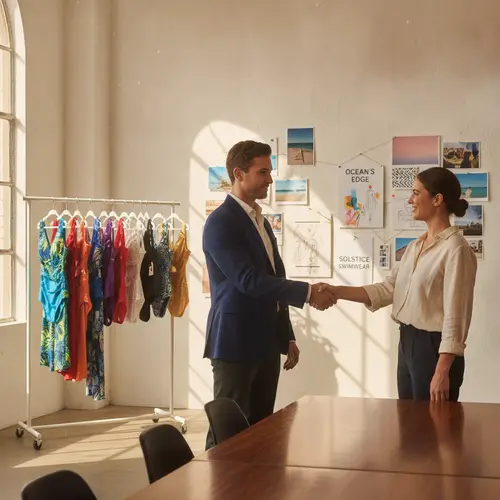
For entrepreneurs entering the swimwear market, the biggest risk is not your design or marketing—it is your supply chain. Finding a good swimwear manufacturer requires patience, rigorous vetting, and—above all—genuine conversation with the people who will make your product.
A manufacturer who engages with your designs critically, flags problems before they become expensive mistakes, and asks detailed questions before starting your sample is worth far more than one who simply says "yes" to everything. If you are sourcing from China, Xingcheng is the destination with the deepest swimwear expertise and the most complete supply chain in the world. Start there.
Take your time, always talk to the people behind the factory, and remember that the right manufacturing partner is not a cost—it is the foundation of your brand.