A bikini bottom that rides up is usually a problem of size, rise, coverage, tension, fabric recovery, or pattern design. For shoppers, a stable fit builds confidence; for swimwear brands, it reduces complaints and supports repeat purchases.
Fit principle: A bikini stays put when it fits the hip, covers its intended area, and has balanced waist and leg-opening tension.
1. Choose the Right Size Using Waist and Hip Measurements
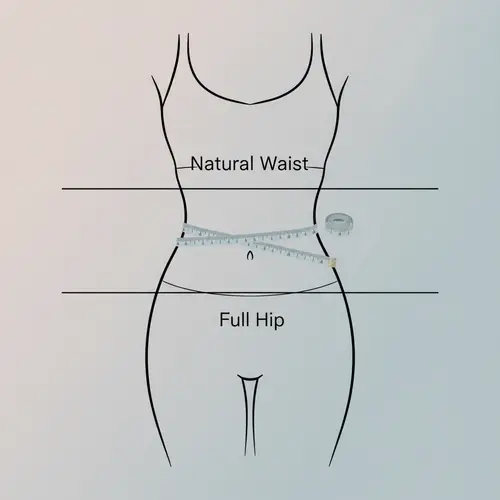
Sizing errors cause most riding-up problems. Measure your natural waist at its narrowest point and your full hip at the widest point of the seat, keeping the tape level and comfortably snug. Use the brand’s chart, not your usual clothing size. If you are between sizes, prioritize the hip measurement and select an adjustable waist.
Visual & scenario: Body outline with waist and hip lines; for new brands and in-between sizes.
2. Match the Rise to Your Body Shape
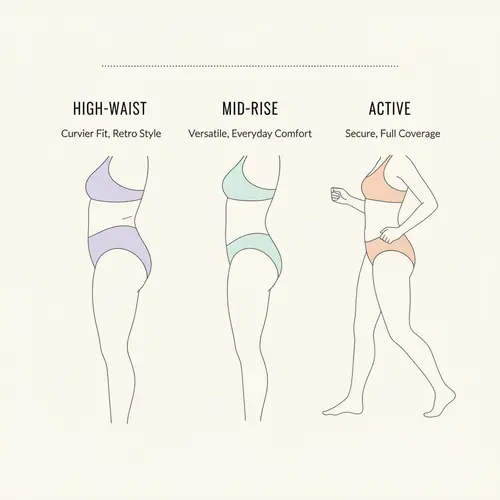
Rise controls where a bottom anchors. A high-waist cut often suits fuller hips; a mid-rise bottom is a versatile option when its band lies flat. A full, continuous waistband gives the steadiest hold for active wear. Low-rise styles can work, but require precise sizing and balanced patterning.
Visual & scenario: High-, mid-, and full-waistband silhouettes; for curvy, everyday, and active wear.
3. Choose the Right Back Coverage
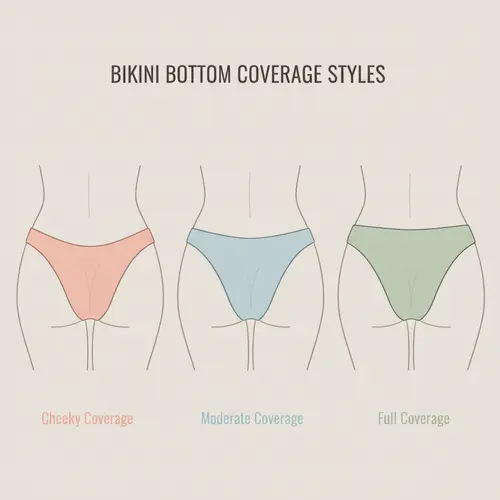
Coverage affects stability and style. Cheeky coverage naturally sits higher on the glutes. Moderate coverage balances shaping with security, while full coverage is the most dependable option for swimming, water sports, or less adjustment. Describe cheeky cuts as intentionally higher-cut and moderate or full styles as comfort-led.
Visual & scenario: Rear flats comparing cheeky, moderate, and full coverage; for fashion, beachwear, and activity.
4. Adjust Waistband Tension and Side-Tie Placement
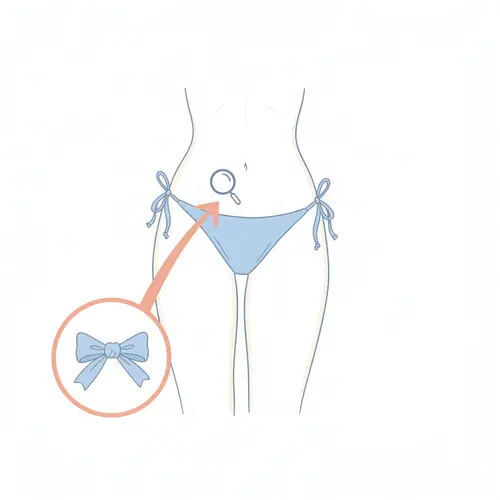
A loose waistband drifts, while an overly tight one can pull upward. On tie-side bottoms, tighten both sides evenly and place knots just above the fullest hip curve. Test the fit by walking, bending, sitting, and lifting one knee; adjust it before swimming if it shifts.
Visual & scenario: Tie set above the hip curve; for tie-side and string bikini adjustment.
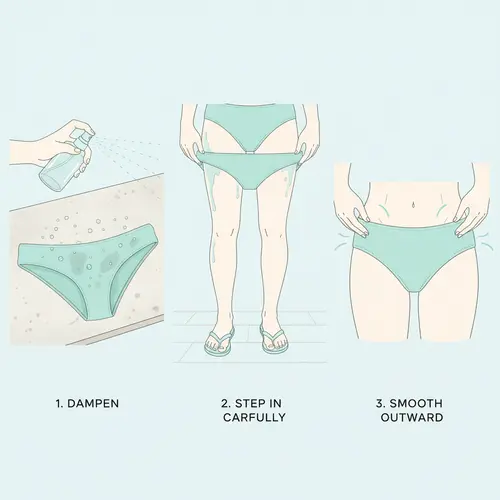
5. Use the Wet-Before-Wearing Method
For snug bottoms, lightly wetting the suit before dressing can reduce friction and twisting. Use clean water, avoid oils or lotion, and do not force wet fabric. Smooth the bottom outward from the center and make sure the leg openings sit evenly. It will not fix the wrong size, but can prevent poor positioning.
Visual & scenario: Dampen, step in carefully, and smooth outward; useful for close-fitting suits and pool changes.
6. Add Non-Slip Strips, Silicone Grips, or Fashion Tape
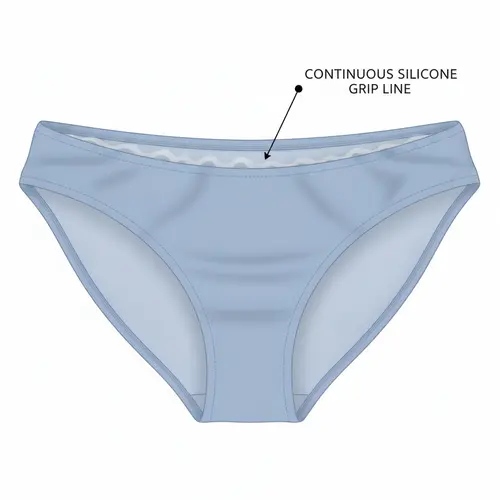
For a photoshoot, resort event, or brief dry-land use, non-slip strips or soft silicone bands inside the waistband add traction. Fashion tape can offer temporary reinforcement on clean, dry skin; test for sensitivity first. These are backups, not substitutes for correct fit. Integrated silicone grip can add discreet performance value.
Visual & scenario: Inside-out waistband with a narrow grip line; for content shoots and occasionwear.
7. Select Fabric with the Right Recovery and Structure
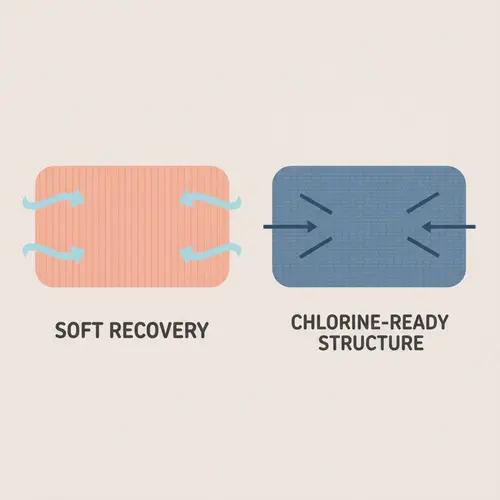
Fabric determines recovery after movement. Nylon (polyamide) plus spandex feels softer with strong recovery, while polyester plus spandex feels firmer and suits chlorine or sport-oriented styles. Soft fabric may need firmer elastic or more coverage; structured fabric must still allow hip movement. Test recovery after stretching and water exposure.
Visual & scenario: Soft rebound versus structured support swatches; for fashion swimwear and chlorine-ready ranges.
8. Consider a More Secure Alternative Style
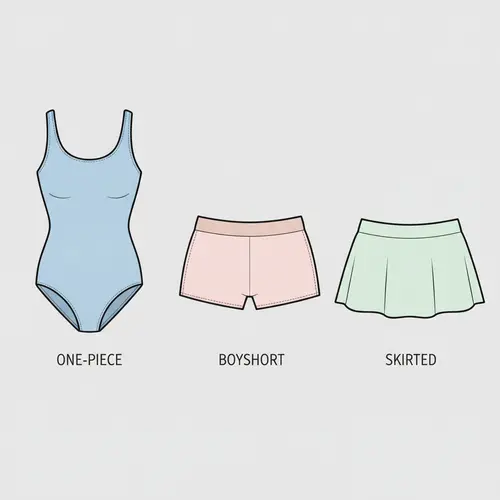
If a traditional bottom still rides up after proper fitting, switch silhouettes. A one-piece swimsuit anchors from torso to hip; boyshorts add side coverage; and skirted bottoms add coverage with a resort look. For brands, these choices serve more preferences without weakening collection identity.
Visual & scenario: One-piece, boyshort, and skirted-bottom flats; for water sports, family resorts, and modest ranges.
Why Factory Pattern Design Affects Bikini Riding Up
Riding up is often determined before bulk production. The back-seat curve must follow the body’s three-dimensional shape; if it is too flat or narrow, fabric pulls inward while walking or sitting. The V angle of the crotch panel matters too: an overly sharp angle concentrates tension at the center and draws the back panel upward.
Fabric recovery completes the system. Effective development aligns pattern, elastic, seam allowance, leg opening, and recovery target for a flattering, stable bottom.
Develop Better-Fitting Swimwear with TideLine
TideLine turns fit concerns into better-performing swimwear. Through custom swimwear OEM and ODM development, we refine rise, coverage, waistband construction, leg tension, fabric selection, and pattern shape for your customer and price position. Flexible small-batch starting quantities support fit-block tests, focused capsules, and bestseller improvements before scaling.
Contact TideLine to discuss custom swimwear, OEM/ODM manufacturing, and brand collaboration services for a more secure, reliable fit.
FAQs: How to Stop a Bikini from Riding Up
1. Why does my bikini bottom ride up when I walk?
Typical causes include inaccurate sizing, limited back coverage, uneven tension, or a narrow seat pattern. Check waist and hip measurements, then consider moderate or full coverage.
2. Does riding up always mean the bikini bottom is too small?
No. A small bottom may pull upward, but a loose one can also slide and bunch. A good fit feels secure without digging in, and its gusset and back panel lie flat.
3. What bikini bottom stays in place best for swimming?
A moderate- or full-coverage bottom with a continuous waistband is usually most stable. Boyshorts and one-piece swimsuits also work well for high-movement activities.
4. Can fashion tape keep a bikini in place in water?
Fashion tape is best for short dry-land use, such as fittings or photoshoots. Water, sunscreen, and movement reduce adhesion, so it is not dependable for extended swimming.
5. How can a swimwear brand reduce riding-up complaints?
Test fit blocks on varied body shapes, review seat curves and crotch-panel angles, use controlled elastic tension, and match the pattern to fabric recovery. An OEM/ODM partner can refine these details during sampling before bulk production.