For a swimwear brand, social media spending competes with sampling, inventory and cash needed for the next collection. Choosing the wrong platform can mean plenty of views but too few profitable orders.
The TikTok vs Instagram for swimwear brands decision is not about which app is more popular. It is about how your customers discover products, how much content you can produce and what must happen before someone trusts your fit enough to buy.
In 2026, TikTok can be a strong starting point for discovery-led products and rapid creative testing. Instagram can be a stronger foundation for relationship-building, detailed product education and premium positioning. Neither platform guarantees lower acquisition costs or higher sales.
You do not have to abandon either account. But small brands should choose a primary investment channel rather than split limited resources evenly. Here is how to make that choice—and connect marketing demand with a production plan you can actually fulfill.
TikTok vs Instagram: The Swimwear Brand Comparison
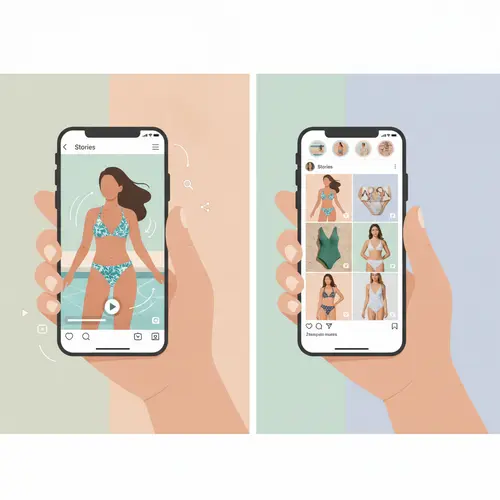
Dimension | TikTok | Commercial implication | |
|---|---|---|---|
Audience positioning | Strong youth-culture and discovery opportunities; broader adult audiences also participate | Strong young-adult reach alongside established lifestyle communities | Validate actual buyers, not age stereotypes |
Algorithm emphasis | For You discovery heavily informed by viewer behavior and content signals | Feed and Stories support relationships; Reels and Explore also drive discovery | TikTok suits testing unfamiliar audiences; Instagram supports discovery and ongoing trust |
Content production | Frequent, native-feeling demonstrations and creator videos | Reels plus consistent imagery, carousels and Stories | Compare total creative workload, not equipment costs alone |
Conversion journey | Discovery can lead to website purchases or TikTok Shop where available | Reels, profiles, Stories and DMs can support website purchases | Match checkout friction and product education to customer needs |
Main business risk | Unpredictable reach and sudden demand for limited stock | Overinvesting in appearance without generating buying intent | Optimize contribution profit rather than views or followers |
Four Differences That Affect Swimwear Marketing ROI
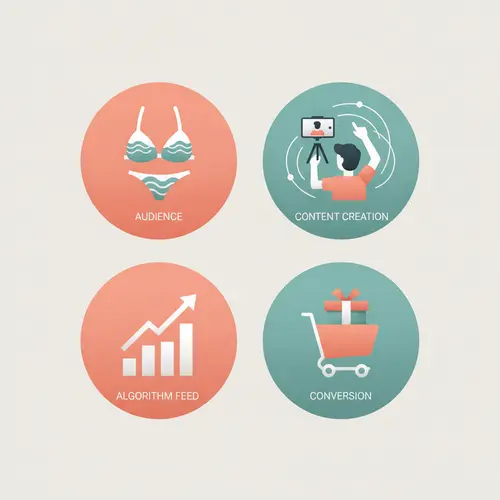
1. Audience: Youth Culture vs More Established Buying Habits
“TikTok ages 13–25 versus Instagram ages 25–40” is a useful creative shorthand, not a reliable demographic boundary. Both platforms serve overlapping age groups. Pew Research Center’s 2025 U.S. survey found that 80% of adults aged 18–29 used Instagram, so treating it as an older-only platform would miss substantial young-adult demand.
For a youth-oriented bikini label, TikTok offers opportunities around holiday preparation, styling and creator-led discovery. An adult 18–25 customer might respond to a clear demonstration of reversible styling or adjustable coverage.
A brand targeting customers aged 25–40 might prioritize resort wardrobes, supportive fits and coordinated collections on Instagram. These shoppers may need more reassurance about sizing, comfort and construction before ordering.
However, age does not establish purchasing power. A premium swimsuit can sell through TikTok, while an affordable bikini can perform well on Instagram. Segment customers by use case, price tolerance and fit needs. Treat teenage cultural influence separately from adult purchase targeting and follow applicable youth advertising restrictions.
2. Algorithms: Content-Led Discovery vs Relationship-Supported Trust
TikTok’s For You recommendations consider interactions such as watching, skipping, sharing and commenting. A small account can reach people who have never encountered the brand. That creates an opening for a compelling product demonstration without a large existing following.
For swimwear, lead with a recognizable problem: “Why does this bikini top move when you swim?” Then demonstrate the relevant feature, rather than starting with a logo animation.
Instagram is not purely relationship-driven. Stories emphasize viewing and engagement history, but Reels and Explore also recommend unfamiliar accounts. The practical difference is that Instagram offers several connected opportunities to deepen a relationship after discovery.
A shopper might watch a Reel, inspect a fit carousel, check customer Stories and send a sizing DM before purchasing. Build those supporting assets. The objective is not merely to earn attention; it is to answer the questions that prevent an order.
3. Content Costs: Faster Experiments vs a Consistent Brand Presentation
TikTok often makes lightweight creative testing possible. One filming session can produce three different hooks: a fit demonstration, a founder explanation and a styling comparison.
But “make three videos and one will go viral” is not a performance rule. All three may underperform. The useful principle is to test distinct ideas inexpensively, learn from qualified responses and improve the next batch.
Instagram benefits from consistent presentation, especially when selling premium custom-designed swimwear. Consistent colors, clear product photographs and useful fit information help shoppers understand the collection. That does not require an expensive location shoot: credible customer content and straightforward Reels can work on both platforms.
Include creator fees, samples, editing, usage permissions and founder time in your cost comparison. Also distinguish allowed organic content from advertising eligibility. Swimwear creative should demonstrate the product without unnecessarily sexualized framing, and brands should check current platform policies before paying to distribute it.
4. Conversion: Discovery Bursts vs Higher-Consideration Purchases
TikTok can compress discovery and purchase when a video demonstrates an obvious benefit. TikTok Shop may shorten that journey where the market, seller and product are eligible.
Instagram can support higher-consideration purchases through repeated exposure, styling context and fit assistance. That can suit premium collections, but Instagram does not automatically produce higher average order value. Your pricing, assortment and customer experience determine that outcome.
For both channels, calculate the amount available to acquire a customer: net sales minus product cost, fulfillment, payment or marketplace fees, creator commissions and expected return costs. Swimwear sizing mistakes can make apparent advertising success unprofitable.
Compare customer acquisition cost, return-adjusted contribution and repeat purchases over a consistent period. Platform-reported return on ad spend, or ROAS, measures attributed revenue relative to advertising spend—not net profit or proof that every order was incremental.
Where to Spend at Four Budget Levels

The tiers below refer to monthly marketing budgets, excluding inventory and product development. Suggested allocations are starting points, not market benchmarks. The historical cases illustrate tactics; they do not establish each brand’s monthly spending tier.
$0 Paid Budget: Choose the Channel You Can Sustain
Start with TikTok if the founder can regularly demonstrate products and respond to comments on camera. Prioritize Instagram if you already have a relevant community or access to strong product imagery. Maintain a simple presence on the other channel without doubling your workload.
“Zero budget” means no paid distribution—not zero labor or free products.
Real case: Slate Swim. Founder Jessica Liao Mayers launched with $300 for fabric and did not invest in paid ads until 2021, according to her 2026 Entrepreneur interview. Early Instagram visibility helped attract trade-show interest, while creator relationships supported sales. This historical example shows that TikTok is not the only organic route. Distinctive products and credible relationships can matter more than constant posting.
$500–$2,000: Concentrate on One Measurable Test
Avoid spreading a small budget across multiple platforms, audiences and objectives. Reserve funding for creative production and measurement alongside media.
Choose TikTok when organic demonstrations already generate meaningful product interest. Choose Instagram when the stronger opportunity is a collection launch, sizing assistance or an established audience. Near the lower end, prioritize creative validation over an always-on campaign.
Real case: Kulani Kinis. Gatsby reported that an $800, four-day Instagram Stories and Reels advertising test generated 236 SMS subscribers through a DM-based early-access offer. That was subscriber acquisition, not 236 purchases. The established brand’s results are not a startup benchmark, but the mechanism is useful: offer a reason to join an owned audience instead of chasing followers alone.
$2,000–$10,000: Develop Acquisition and Conversion Together
An illustrative $5,000 plan could assign $1,500 to creative, $2,500 to the strongest acquisition channel and $1,000 to retention, measurement and supporting tests. Add paid activity on the second platform only when you have enough budget and purchase data to evaluate it meaningfully.
TikTok can test designs and messages with unfamiliar audiences. Instagram can support launch communication, fit education and community engagement. Retargeting should depend on sufficient audience volume, not an automatic percentage allocation.
Real case: 437. In a 2020 Forbes interview, its founders described Instagram community feedback, user-generated content and DM-based customer assistance. Their monthly media budget was not disclosed. The relevant lesson is that a growing swimwear label needs a system for answering fit questions and learning from customers—not simply more impressions.
$10,000+: Scale the Winner, Not Your Assumptions
At this level, operate across both platforms, but weight spending toward demonstrated performance. Keep a meaningful creative and measurement allocation, then distribute media according to return-adjusted customer economics, stock availability and fulfillment capacity.
Test discovery, conversion and retention separately. Where feasible, use holdout or lift testing rather than accepting overlapping platform attribution as additional sales.
Real case: Dippin’ Daisy’s. TikTok’s published case study describes native creator content, Spark Ads and value-based optimization. It reports average ROAS rising from 3.5x to 8x and more than 6,000 campaign purchases. The spending level was not disclosed, and the result is platform-reported rather than an Instagram comparison. Its practical lesson is to scale authentic, effective creative with a purchasing objective—not assume TikTok is only for awareness.
Which platform should a new swimwear brand prioritize?
Prioritize TikTok when you can consistently produce native product demonstrations and need discovery. Prioritize Instagram when you have an engaged community or a collection that benefits from detailed fit education. Validate either choice against purchases and contribution profit, not views alone.
Should a small swimwear brand divide its budget equally?
Usually not. Concentrate spending on one measurable acquisition test while maintaining a useful organic presence on the other platform. Add a second paid channel when creative capacity, purchase volume and budget allow a meaningful comparison.
Four TikTok and Instagram Combination Strategies
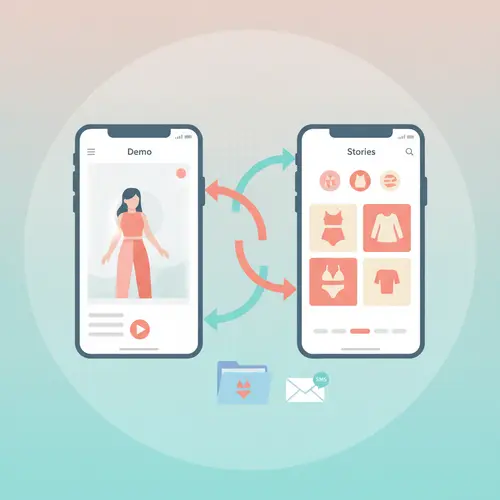
1. Use TikTok for Discovery and Instagram for Deeper Engagement
Introduce a distinctive design or fit benefit on TikTok. Give interested shoppers consistent product naming and clear reasons to explore your Instagram content, such as a fit guide or collection preview.
Organize sizing and customer feedback into Instagram posts and Highlights. Keep a direct purchase path available; viewers may not switch apps.
2. Test TikTok Shop With a Focused Assortment
Where eligible, start with a limited assortment of well-explained, ready-to-ship styles rather than an entire collection. Confirm current seller requirements, fees, commission commitments and shipping obligations before launching.
Swimwear needs accurate measurements, coverage descriptions and realistic product demonstrations. Monitor return reasons by size and style. A popular video can produce demand that a small production run cannot fulfill, so coordinate stock and replenishment before increasing paid reach.
Treat TikTok Shop as a consumer-sales test, not the default destination for OEM inquiries or wholesale negotiations.
3. Reuse Footage, Not Identical Packaging
Record clean, watermark-free footage and edit it for each platform. A founder explaining adjustable straps can become a TikTok demonstration, an Instagram Reel and a carousel supporting sizing decisions.
Adapt the opening, captions, pacing and call to action. Secure creator permission for the intended platforms and paid usage; an organic repost agreement does not automatically include advertising rights. Use audio licensed for the intended commercial use.
For custom swimwear brands, filming sampling and fitting can create useful content while also revealing which product details customers value.
4. Build an Owned Customer and Business Audience
Use an appropriate incentive—early collection access, a fit guide or restock notifications—to collect consent-based email or SMS subscriptions. An Instagram follower is still a platform audience, not an owned customer relationship.
Separate consumer messages from business inquiries. Boutique buyers and emerging labels need information about minimum quantities, customization, sampling and production planning. A dedicated inquiry route should capture their target market, expected quantity and design requirements.
Measure qualified inquiries and sample-to-order conversion separately from consumer purchases. This matters when your social presence serves both retail demand and brand collaboration opportunities.
Turn Platform Insights Into a Better Swimwear Collection

Repeated questions about fuller-bust support, coverage or matching separates can inform product development. Discuss those needs with your manufacturing partner before expanding styles or purchasing more advertising.
For a small label, a focused collection is often easier to explain and replenish than a broad launch with shallow stock across many sizes. Confirm what your minimum order quantity covers: the total order, each style or each color. A small minimum does not automatically make every customization equally economical.
Ready to build a collection that supports your marketing strategy? Contact TideLine to discuss custom swimwear, OEM/ODM development and brand collaboration services, with small-batch starting quantities of 30–50 pieces. Share your customer profile, design direction, target retail price and planned launch window. Discuss factory support for sampling, fabric selection, fit development, private-label details and production planning, with the final scope and minimums confirmed for your project.
OEM suits brands bringing their own designs; ODM can support development from manufacturer-provided design options. Whether you are launching your first capsule or testing a new range, align the product, content and production plan before scaling spend.
Frequently Asked Questions
1. Is TikTok cheaper than Instagram for swimwear advertising?
Not necessarily. Compare customer acquisition cost after including creative production, creator fees and expected returns. Lower-cost views or clicks do not establish lower-cost profitable customers. Results vary by market, audience, offer and campaign execution.
2. Can premium swimwear brands sell successfully on TikTok?
Yes, but premium pricing needs a clear reason to buy. Demonstrate fit, construction and styling value rather than relying on trends alone. Instagram can complement discovery with detailed product education, customer feedback and sizing assistance.
3. Is TikTok Shop suitable for a small swimwear collection?
It can be, where seller and product eligibility requirements are met. Start with ready-to-ship styles, accurate sizing information and a realistic fulfillment plan. Include marketplace fees, affiliate commissions and return costs when assessing profitability.
4. What content should a custom swimwear brand create for both platforms?
Create product demonstrations, fit explanations, sampling stories and customer styling content. Reuse clean footage with platform-specific edits and appropriate usage rights. For business buyers, also explain customization options, minimum quantities and the development process.
5. Can TideLine support a small custom swimwear launch?
Contact TideLine to discuss custom swimwear, OEM/ODM and brand collaboration services with starting quantities of 30–50 pieces. Confirm how minimums apply to your styles and colors, along with sampling requirements, customization scope and production timing.