How Many Types of Bikini Tops Are There? Here Is the Honest Answer
There is no single, industry-wide number for bikini-top styles. Brands and retailers often combine several different ways of classifying swimwear in one list. Some organize tops by cup shape or neckline, some by strap placement, and others count support structures, length, or decorative cuts as separate styles. For example, PROTEST lists eight bikini-top categories, Lulus highlights five in its guide, and PatPat includes twelve.
For that reason, this article does not present “12” as the only correct industry number. Instead, it uses twelve styles as a consumer-friendly framework. The list covers the main silhouettes you are most likely to encounter when browsing or shopping, without counting multiple features of the same top over and over. A triangle top, for instance, may also have halter ties and removable padding, but it does not need to be treated as three entirely different styles.
How this guide classifies styles: A name is treated as a core type when it clearly changes the overall silhouette, strap path, coverage, or support method of a bikini top. Names that only change the neckline, padding, trim, or a small design detail are explained as features that can be added to more than one style.
At a Glance: 12 Core Types of Bikini Tops
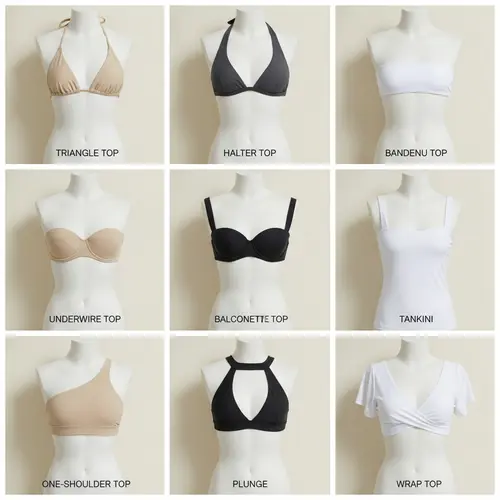
Use this table as a quick starting point. Rather than choosing based solely on claims about what is “best” for a particular body shape, first decide what matters most to you: staying secure during activity, more coverage, shaping and lift, fewer tan lines, or a particular look.
| Style | Common English name | Key identifying feature | A good starting point if you want… |
|---|---|---|---|
| Triangle top | Triangle Top | Two triangular cups connected with ties or slim straps | A classic, adjustable, easygoing beach look |
| [Halter top](https://www.swimsuitcustom.com/blogArticle/custom-bikini-manufacturing-brand-identity) | Halter Top | Straps fasten or tie behind the neck | Adjustable lift and a more defined neckline |
| Bandeau top | Bandeau Top | A horizontal band across the bust, often strapless or with removable straps | Fewer shoulder tan lines and relaxed sunbathing |
| Underwire top | Underwire Top | An underwire or structured cup sits beneath the bust | More defined support and shaping |
| Balconette top | Balconette Top | Lower-cut cups, a more open neckline, often with wide-set straps | A vintage-inspired lifted shape and polished look |
| [Tankini](https://www.swimsuitcustom.com/blogArticle/what-bikini-parts-called) top | Tankini Top | A separate top with tank-top-like length | More midriff coverage with two-piece convenience |
| Longline top | Longline Top | A longer underband or hem extends below the bust | A wider underband and a crop-top-inspired silhouette |
| Sport / high-neck top | Sport / High-Neck Top | A higher neckline and greater coverage with a sportier structure | Swimming, surfing, or beach activities |
| Off-the-shoulder top | Off-Shoulder Top | Both shoulders are exposed, often with ruffles or loose sleeves | Poolside styling, vacation photos, and a romantic look |
| One-shoulder top | One-Shoulder Top | A single strap creates an asymmetrical silhouette | A modern, statement-making swimwear look |
| Plunge top | Plunge Top | A noticeably deep V-shaped neckline | A neckline that emphasizes the neck and décolletage |
| Wrap top | Wrap Top | Front panels cross, wrap around the body, or tie in place | Adjustable fit and waist-defining detail |
1. The Classics: Triangle, Halter, and Bandeau Bikini Tops
1. Triangle Top: Why This Classic Never Disappears
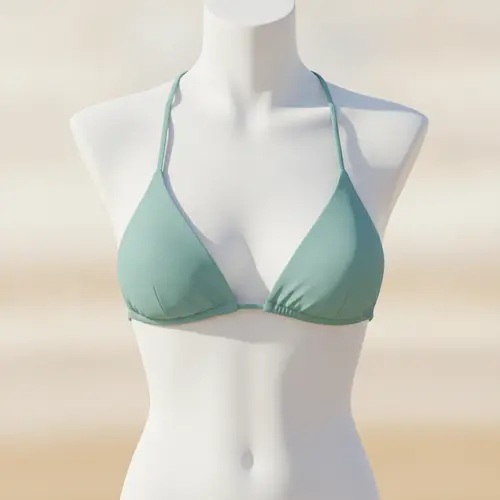
A triangle bikini top usually has two triangular cups secured with slim straps, back ties, or neck ties. Its staying power does not come from being suitable for only one type of person. It remains popular because the construction is easy to understand, prints and colors work beautifully on it, and many versions let you adjust the fit by moving the cups or tightening the ties. Both PROTEST and Lulus treat the Triangle Top as a core bikini-top style.
When choosing a triangle top, do not focus only on making it look as small or revealing as possible. Check that the cups cover the amount of breast tissue you want them to cover and that the back ties stay secure when you move. If you plan to swim or be active in the water, look for a wider underband, adjustable straps, and a more stable lining. If sunbathing and vacation styling are your main goals, slim ties, beadwork, and textured fabrics can add more personality.
2. Halter Top: Lift Created by Neck Ties
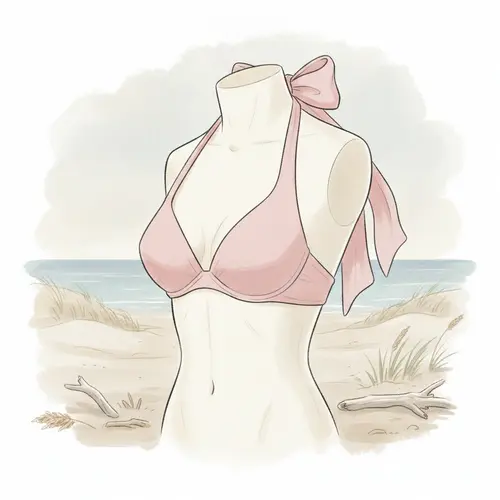
The defining feature of a halter top is its strap path: the straps travel upward from the cups and tie or fasten behind the neck. It often appears together with triangle cups, which is why a “triangle halter bikini top” is not a contradictory name. “Triangle” describes the cup shape, while “halter” describes the way the straps are positioned. PatPat lists the Halter Top as a main category and connects its neck fastening with added support.
This style can be a good option if you like the ability to fine-tune lift and prefer a more defined neck and shoulder line. However, a secure fit should come from the combined work of the underband, cups, and straps—not from pulling the neck ties as tight as possible. When trying one on, raise your arms, turn your torso, and bend forward to make sure the top does not strain your neck or shift out of place.
3. Bandeau Top: Clean Shoulder Lines and Fewer Tan Lines
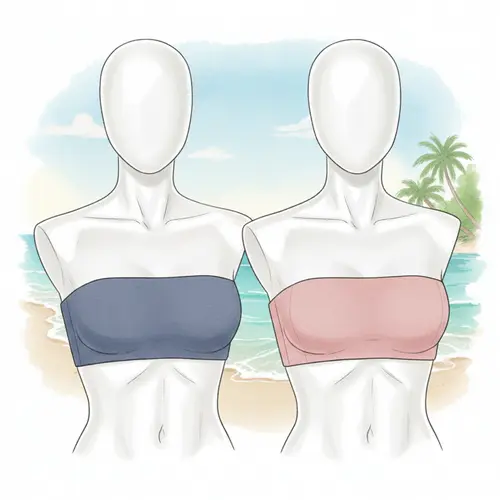
A bandeau bikini top forms a horizontal band around the bust. The most familiar versions have no fixed shoulder straps, although some styles use removable straps, side boning, underwire, or silicone grip bands for extra security. PROTEST notes that some bandeau styles include removable shoulder straps, while Lulus points out that strapless versions are generally better for lounging and sunbathing than for active time in the water.
If your top priority is minimizing shoulder tan lines or creating a clean, simple shoulder-and-neckline area, a bandeau is worth trying. It is not automatically unsuitable for any particular bust size. What matters is whether the underband is secure enough, the cups have the right amount of structure, and your planned activity level is realistic for the design. For extra confidence, consider a bandeau with side boning, removable straps, or structured cups.
2. Support and Shape: Underwire and Balconette Bikini Tops
4. Underwire Top: Bringing Structured Support to Swimwear
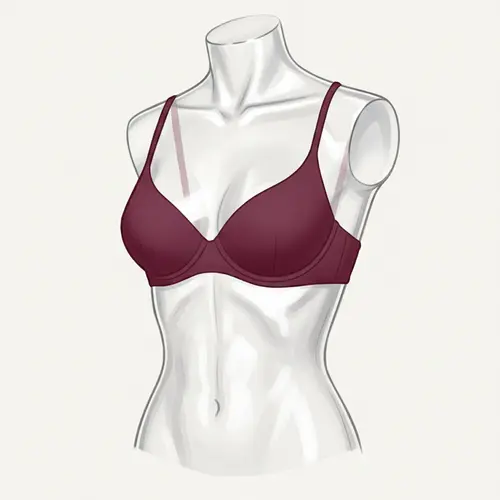
An underwire bikini top includes a wire or bra-like structure beneath the bust. Some versions also use molded cups, supportive side panels, and adjustable straps. PROTEST describes underwire styles as tops that often include built-in wiring and molded cups, while Lulus highlights the support and lift provided by the underwire.
This style is a strong option if stability and shaping are high on your list. When shopping, check that the underwire follows your breast root comfortably rather than sitting on breast tissue. You should also look at the back closure, the stretch of the band, and how much adjustment the straps allow. Even among tops labeled “underwire,” cup depth, band length, and fabric stretch can vary a great deal by brand, so trying it on matters more than relying on a size label alone.
5. Balconette Top: A Lower Cup for a Vintage-Inspired Lift
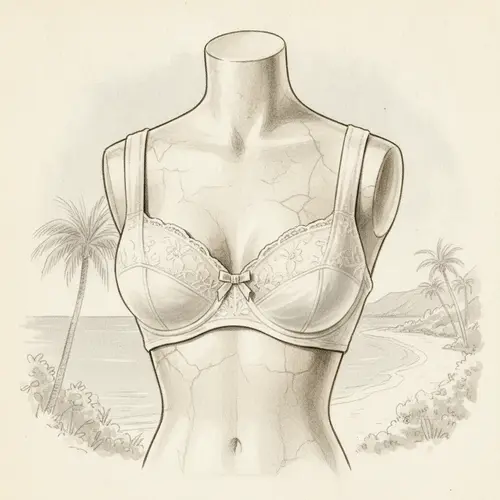
The name “balconette” comes from the visual idea of a balcony-like lift. Common features include a lower cup edge, a more open neckline, wide-set straps, and a structure that is often paired with underwire. Lulus and PatPat both present the Balconette Top as a distinct type, with PatPat specifically noting its wide-set straps and lifted, rounded shape.
Compared with an underwire top, a balconette top is more about cup cut and visual effect. Many balconette bikini tops also have underwire, so the two categories can overlap. A helpful way to think about the difference is this: “underwire” tells you about the support technology, while “balconette” tells you about the cup shape and neckline style. If you want swimwear that feels polished and offers clearly defined support, a balconette is an excellent style to try.
3. More Coverage and Freedom to Move: Tankini, Longline, and High-Neck Tops
6. Tankini Top: A Higher-Coverage Two-Piece Option
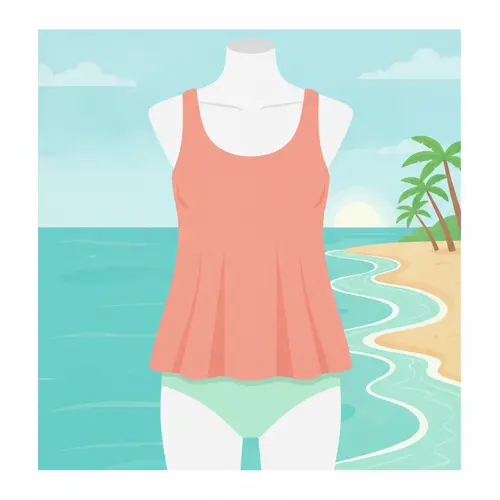
A tankini combines the length of a tank top with the flexibility of a two-piece swimsuit. The top usually reaches the waist or upper hip area, while still allowing you to mix and match it with separate bottoms. PROTEST defines a tankini as a combination of a tank top and a bikini, and PatPat similarly categorizes it as a two-piece option with more coverage than a standard bikini.
A tankini can work especially well if you want more coverage through the midriff without giving up the convenience of separate pieces. Fits can range from close-fitting and athletic to loose, flowy, or built around an integrated bra. Before purchasing, pay special attention to whether the hem rides up once you are in the water and whether the built-in bust support matches the intensity of your planned activities.
7. Longline Top: A Wider Underband with a Crop-Top Feel
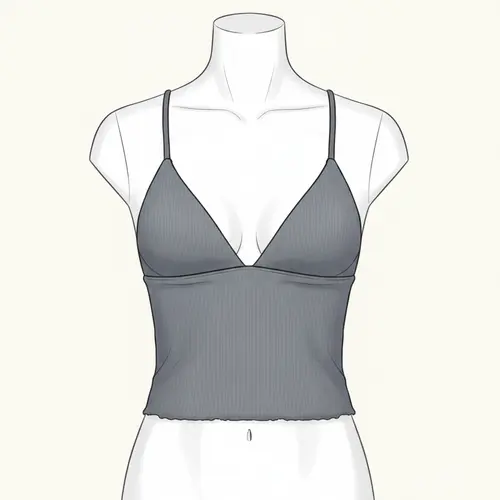
A longline bikini top has an underband or hem that extends farther below the bust than a typical bra-style swim top. This creates a wider-band appearance and a crop-top-inspired silhouette. PatPat also describes the Longline Top as extending farther down the torso, adding support, and creating a crop-top look.
Longline styles can be a great fit if you want your top to look more substantial or plan to pair it with high-waisted bikini bottoms. It is important to remember that longline does not automatically mean high-neck or sporty. A longline top can have slim straps, triangle cups, or underwire. The defining feature is the longer underband or hem, not one specific neckline.
8. Sport / High-Neck Top: Built for More Active Beach Days
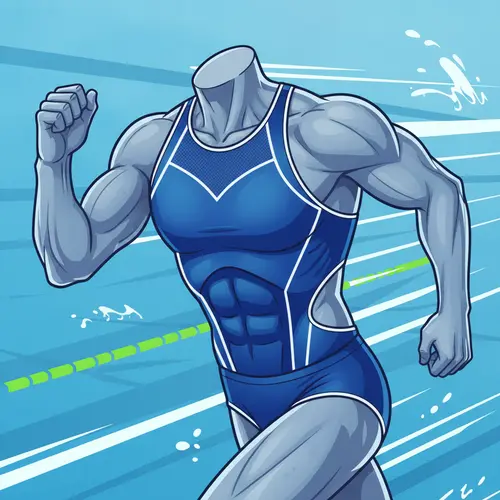
Sport and high-neck bikini tops share a higher neckline, more coverage across the chest, and a silhouette that often resembles a sports bra or cropped athletic top. PROTEST describes high-neck styles as sportier bikini tops for active time at the beach, while PatPat connects them with swimming, beach volleyball, and surfing.
If you expect to swim often, paddle, surf, play beach volleyball, or simply want to spend less time readjusting your top as you move, a high-neck sport style is usually a better starting point than a strapless, deep-V, or heavily off-the-shoulder design. Beyond neckline height, inspect the arm openings, back construction, strap adjustability, and how well the fabric retains its support when wet.
4. Style Through Cut: Off-the-Shoulder, One-Shoulder, Plunge, and Wrap Tops
9. Off-the-Shoulder Top: Designed for Style More Than Intense Activity
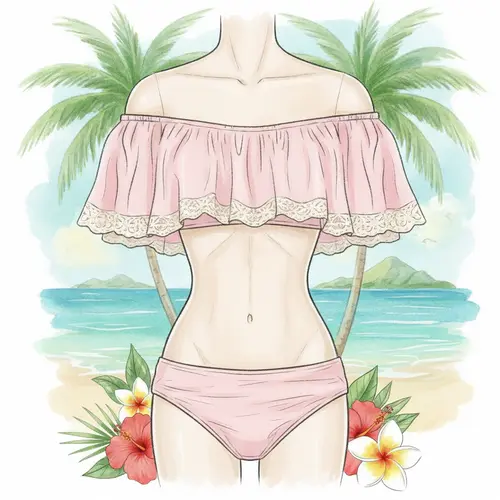
An off-the-shoulder top leaves both shoulders exposed and often uses ruffles, loose sleeves, or elastic neckline construction to create a romantic vacation feel. PatPat describes the Off-Shoulder Top as a feminine, decorative design with relatively limited support, making it better suited to relaxed beach settings.
If you are shopping for a resort pool day, a beach walk, vacation photos, or a top to wear under a cover-up, an off-the-shoulder style can bring more dimension to your outfit. If you expect to swim continuously or do high-intensity water activities, evaluate the neckline grip and shoulder mobility first rather than deciding on appearance alone.
10. One-Shoulder Top: A Modern Asymmetrical Statement
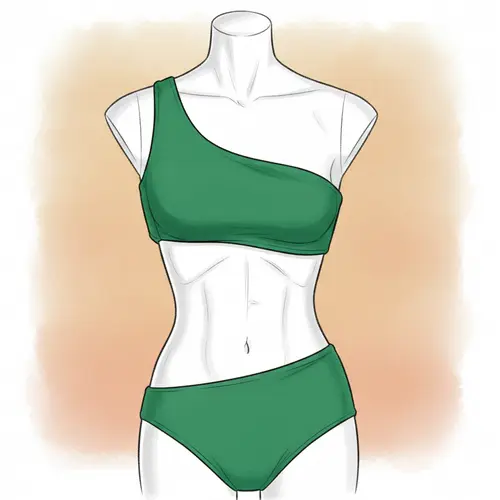
A one-shoulder bikini top uses a single strap to create an asymmetrical outline. It can retain some of the security of a shoulder strap while delivering more visual impact than a conventional two-strap top. The design may be minimal and streamlined, or feature pleats, ruffles, or cutout details. PatPat presents the One-Shoulder Top as a modern, asymmetrical swimwear style.
This option is especially appealing if you see swimwear as part of your full vacation wardrobe, not just something you wear in the water. When trying it on, notice whether the single strap pulls the cup to one side or limits how comfortably you can lift your arm. If the strap is not adjustable, finding the right cup and torso fit becomes even more important.
11. Plunge Top: A Deep V Neckline That Creates a Longer Line
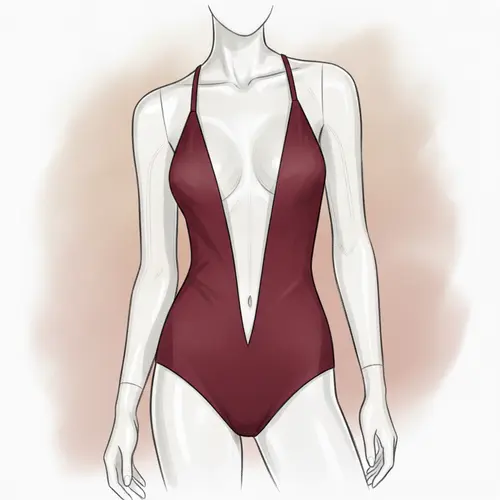
The defining detail of a plunge bikini top is a V-shaped neckline that extends noticeably downward. PatPat lists the Plunge Top as a distinct style and describes the deep V as a way to create a bolder, more noticeable neckline.
A plunge neckline does not have to mean sacrificing security. Some versions use inner mesh, fixed bands, crossover construction, a wider underband, or structured cups to help keep the top in place. Think first about your activity plans. If you are sunbathing or doing brief, casual swimming, aesthetics may take priority. If you expect to swim for a long time, pay close attention to stability at the center front, side panels, and underband.
12. Wrap Top: Adjustable Fit with Cross-Front Detail
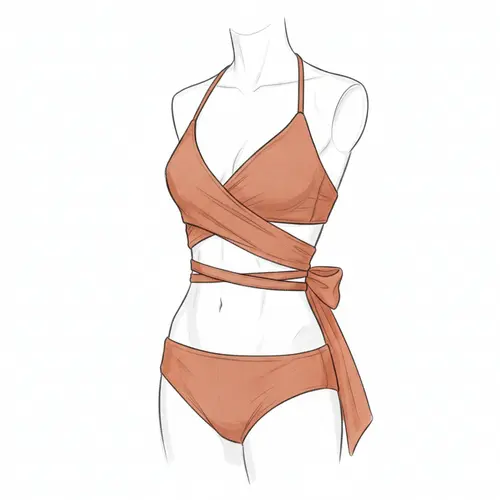
A wrap bikini top usually crosses over at the front before wrapping around the torso or tying in place. PatPat describes the Wrap Top as a style with adjustable fit that uses crossing panels to emphasize the waist.
Its main appeal is the added visual dimension and the ability, in many designs, to make small fit adjustments. It can be a great choice if you prefer to control the tightness through ties or the position of the wrap. Before buying, however, check whether the ties could loosen in the water, whether the crossover area could roll or gape, and whether there is enough internal structure to keep the top secure.
5. How to Read Common Product Terms: Choosing Push-Up, Scoop, Crop Top, and Bralette Styles
When shopping for bikini tops, you will often see words such as Push-Up, Scoop, Crop Top, and Bralette in product titles or filter menus. These are not intimidating technical terms. They are useful clues about how a top may fit, feel, and look on your body. They can appear alongside a core style such as a triangle, underwire, or sport top, so you do not need to worry about forcing an item into only one category. Instead, use these terms to decide whether the top matches your expectations for comfort, support, and style.
| Common product term | What it usually means | You may want to consider it if… | What to check before buying |
|---|---|---|---|
| Push-Up | Often uses padding, cup shaping, or built-in structure to create a more lifted, centered bust appearance. | You want a more defined bust shape or prefer a fuller-looking silhouette. | Whether padding is removable or too thick, and whether the result feels natural and comfortable—not just visually dramatic. |
| Scoop | Refers to a broad, rounded neckline that typically sits between a high neck and a deep V in terms of coverage. | You prefer a clean, easy-to-wear neckline or want a more open shoulder-and-neck area. | Whether the neckline sits flat against the body and still gives you enough coverage when bending or lifting your arms. |
| Crop Top | Has a more top-like appearance and usually offers more coverage than a traditional bra-style bikini top. | You want some extra coverage above the waist, or want to pair it with high-waisted bottoms for a more complete vacation outfit. | Whether the hem stays put, rides up when wet, and feels comfortable with your chosen bottoms. |
| Bralette | Usually has softer, lighter-structure cups and an underband inspired by a wire-free bra. | You value a relaxed feel, a natural bust shape, and lower-pressure support. | Whether the band stretch and strap adjustment are sufficient; for intense activity, make sure the structure is supportive enough for you. |
If you want a more centered, lifted bust shape, start by trying push-up versions of underwire, balconette, or triangle tops. If natural comfort is your priority, bralette styles and soft longline tops may deserve more attention. If you want your swimwear to feel like an outfit while walking along the beach, having lunch, or taking photos, a crop top style can be particularly versatile. If you prefer a clean neckline that does not overly emphasize the bust, a scoop neck is often a strong choice.
You may also see Strappy, Ruffle, and Lace-Up in product titles. Strappy refers to multi-strap or slim-strap details that add visual interest. Ruffle describes flounced trim that can create a softer, more romantic effect. Lace-up refers to lacing or tie details that may offer some room to adjust the fit. With these styles, consider whether the extra straps, ruffles, or ties will interfere with your activities. The best design should suit your taste without making you constantly rearrange your top after getting in the water.
In short, start with the twelve main styles above to identify the coverage and stability you need. Then use these product terms to refine your choice by shaping effect, neckline, and overall style. This makes it much easier to narrow down your options and find a bikini top that feels both comfortable and confidence-boosting.
6. How to Choose a Bikini Top: Start with Your Activities and Priorities
Body-shape guidance can be useful inspiration, but it should never replace trying a top on and noticing how it feels on you. A more practical approach is to ask yourself a few simple questions first. Will you be doing water activities? Do you care more about coverage or avoiding tan lines? Do you want structured support, or is your main goal a particular look? Use the table below as a starting point.
| Your top priority | Styles to try first | What to check while trying them on |
|---|---|---|
| Fewer shoulder tan lines | Bandeau styles, especially versions with removable straps | Underband grip and whether the top remains stable once straps are removed |
| Feeling more secure during activity | Sport / high-neck tops, halters, and structured underwire styles | Cup coverage and underband stability when raising your arms, turning, and bending |
| More midriff coverage | Tankini and longline tops | Whether the hem rolls or rides up in water, and whether the built-in bust structure is comfortable |
| Clearer support and shaping | Underwire and balconette tops | Whether the underwire follows the breast root comfortably and whether straps and back closure adjust well |
| Swimwear that works as part of an outfit | One-shoulder, off-the-shoulder, and wrap tops | Shoulder mobility, tie security, and whether the style works with your cover-up |
| Emphasizing the neckline, décolletage, or waist | Plunge, wrap, and balconette tops | Stability at the center front, side panels, and underband during movement |
No matter which style you choose, do a few simple movements while trying it on: raise both arms, lean forward slightly, rotate your upper body, and simulate sitting down and standing up. If you do not feel the need to keep pulling or adjusting the cups afterward, the top is more likely to work well for your real-life plans. Fabric recovery, lining, adjustable straps, back closures, and removable padding will often tell you more about whether a top will suit you than a generic “best for your body type” label.
7. Frequently Asked Questions: Making Sense of Bikini-Top Names
Are Triangle Tops and Halter Tops the Same Thing?
Not necessarily. “Triangle” refers to the cup shape, while “halter” refers to the straps fastening behind the neck. One top can be both a triangle and a halter, which is why a product title such as “triangle halter bikini top” is completely normal rather than repetitive.
What Is the Difference Between Underwire and Balconette Bikini Tops?
Underwire refers to the support structure beneath the bust. Balconette refers to the lower cup, open neckline, and lifted visual effect. Many balconette tops include underwire, so the two often overlap. Think of underwire as the support technology and balconette as the cup and neckline style.
Does a Tankini Count as a Bikini?
In retail categories and everyday wear, a tankini is generally treated as a two-piece swimwear top. It provides more coverage than a conventional bikini top while still allowing you to mix and match it with separate bottoms. Both PROTEST and PatPat include tankinis in their bikini-top-related classifications.
What Should I Avoid if I Want a Bikini Top for Swimming?
Rather than avoiding one name outright, evaluate how secure the actual design is. Strapless, off-the-shoulder, deep-V, and heavily decorative tops are not impossible to swim in, but if you plan to swim for extended periods, surf, or play beach sports, a high-neck sport top, a halter, or a top with a structured underband is usually easier to move in. Your final decision should still depend on real fit, strap adjustability, and the intensity of your planned activities.
Final Thoughts: Choose for the Way You Want to Feel
“Types of bikini tops” is not a list of English fashion terms you need to memorize. It is a map that can help you understand swimwear design. Triangle, halter, and bandeau tops offer enduring classics. Underwire and balconette styles address support and shape. Tankini, longline, and high-neck tops expand your options for coverage and activity. Off-the-shoulder, one-shoulder, plunge, and wrap styles let swimwear become a more expressive part of your personal style.
The next time you shop, start with how you plan to use the top, then narrow the options through these twelve core styles. The right bikini top should not make you constantly adapt to it. It should let you feel natural, secure, and at ease whether you are being active, relaxing, or taking vacation photos.