The best swimwear brands in 2026 do more than sell a beach look. They convert a clear promise—support, confidence, texture, compression, or easy fit—into reliable engineering. For brand teams, fit, recovery, wet opacity, and delivery discipline matter as much as campaign imagery.
This is a factory-planning comparison, not a private supplier map. Public brand signals are separated from indicative planning guidance. Actual MOQ and lead time depend on materials, components, sizing, testing, and approvals.
Brand | 2026 positioning | Typical retail band | Comparable complexity | Indicative bulk planning |
|---|---|---|---|---|
Cupshe | Value vacation swim | $25–$55 | Medium–high | 300+ units/style-color |
L*Space | Premium resort swim | $90–$195 | Medium–high | 300+ units/style-color |
Skims Swim | Inclusive shaping swim | $32–$148 | High | 500+ units/style-color |
Triangl | Signature fashion swim | $119–$135/set | Medium–high | 300+ units/style-color |
Monday Swimwear | Body-positive resort swim | $80–$115/piece | Medium–high | 300+ units/style-color |
Frankies Bikinis | Trend-led premium swim | $90–$110/piece | Medium–high | 100–300 pilot units |
Summersalt | Compression fit-system swim | $50–$135 | High | 500+ units/style-color |
Andie | Comfortable inclusive DTC swim | $110–$155 | Medium–high | Low-hundreds pilot units |
Vitamin A | Conscious premium swim | $90–$220 | Medium–high | 200+ units/style-color |
Hunza G | Specialist-textile luxury swim | $255–$315 | High | Material-led commitment |
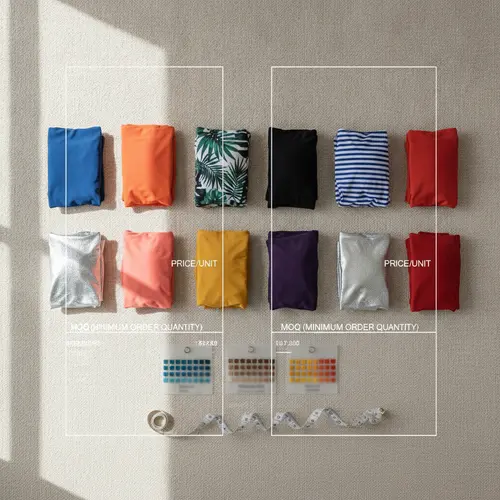
1. Cupshe
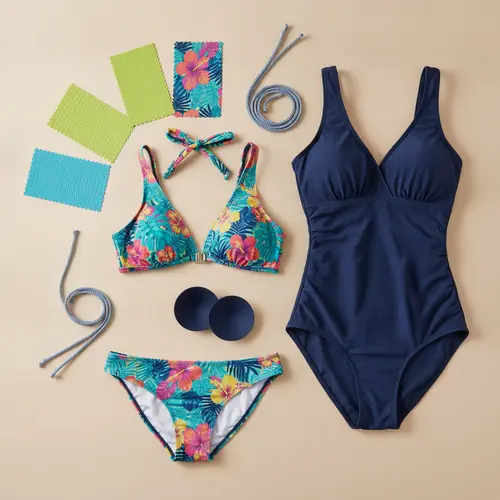
Positioning. Cupshe owns accessible, trend-led vacation swim. Its broad assortment, tummy-control options, and inclusive messaging serve shoppers who want newness and coverage choices at a low entry price. Most core suits fall around $25–$55, making it a commercial fashion-swim benchmark.
Factory view. Public signals describe a China-based digital business, not a complete current supplier map. Comparable lined swim is medium difficulty; PowerMesh, molded cups, underwire, cut-outs, and engineered prints are medium-high. Factories often plan 300–800 pieces per style-color and 45–120 days after approval.
Construction. Adjustable straps, removable cups, shaping panels, and coverage variation create value. Firm linings can roll, cups can migrate, and twist fronts can torque when shell stretch, elastic tension, and grading do not match. Recycled claims need lot-level evidence.
TideLine opportunity. Evolve one verified block through several support packages instead of redrawing every fashion style. TideLine adds transparent material records, wet-opacity testing, and size-set approval before bulk. Our 30–50-piece development route lets labels test color and fit before broader replenishment.
2. L*Space
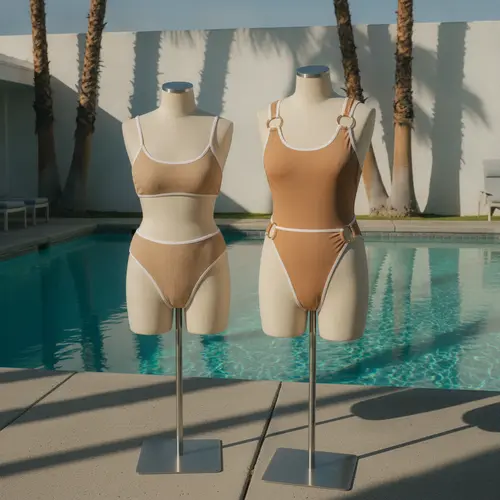
Positioning. L*Space represents polished California resort swim. The customer pays for flattering shape, premium hand feel, and styling that works from poolside to a casual resort setting. Bikini separates sit around $90–$130, while one-pieces approach $175–$195.
Factory view. Public materials connect selected programs with U.S. production and recycled fabrics, but not every style or factory. Comparable work is medium-high because it combines D/DD fit, underwire, rings, contrast binding, ribs, and texture. Plan 300+ pieces per style-color; proven solids take 10–16 weeks, while prints and hardware take longer.
Construction. Its strength is fit architecture: support, coverage, rise, and adjustment are specified rather than implied. Minimal coverage and high-cut legs leave little tolerance for drift. Textured fabrics can stretch unevenly, while contrast trims and hardware add alignment, corrosion, shade, and comfort checks.
TideLine opportunity. Sell fit architecture, not a mood board. TideLine provides recovery, opacity, and hand-feel data before sampling. We quote stock solids, custom prints, recycled fabric, and support hardware separately, so buyers see MOQ and calendar drivers.
3. Skims Swim
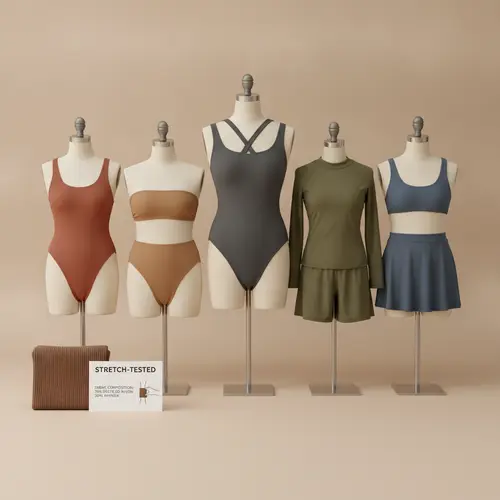
Positioning. Skims Swim translates a shaping-led identity into mix-and-match swim. Its customer expects broad sizing, confidence-building fit, and a sculpted visual effect rather than purely athletic performance. Separates retail around $40–$70, while shaping one-pieces reach about $148.
Factory view. Public descriptions support observations about recycled stretch fabric, lining, and broad size offers—not a named supplier or factory. Comparable compression swim is high difficulty because comfort must survive extended grading. Pilots may use low hundreds, but efficient bulk often needs 500–1,500 units per style-color and 14–26 weeks.
Construction. Compression works when recovery, opacity, and mobility agree. It fails when negative ease creates digging, rolling, seam stress, or difficult entry. Extended sizing is not proportional: bust placement, torso length, rise, and leg opening need independent validation. Deep shades need colorfastness control.
TideLine opportunity. Validated shaping bodies can support many necklines and straps. TideLine runs fit trials across several body shapes. We can start with 30–50-piece prototypes, confirm recovery and fit, then scale only proven silhouettes.
4. Triangl
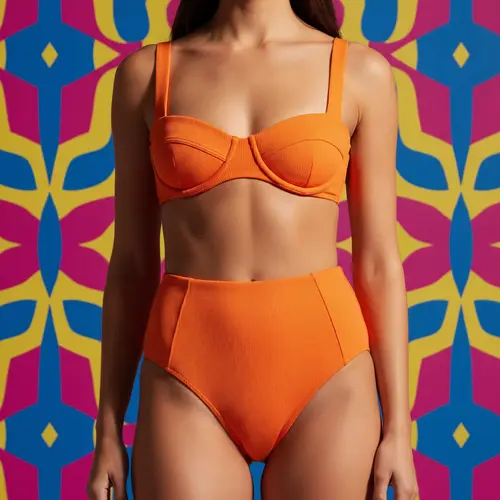
Positioning. Triangl is a color-forward, digitally fluent fashion-swim brand built around clean lines and signature fabrication. It appeals to resort shoppers wanting an instantly recognizable silhouette. A typical branded bikini set sits around $119–$135, with the proposition centered on visual confidence rather than basic coverage.
Factory view. Historical public supply-chain stories should not become claims about current manufacture. Comparable nylon/spandex swim is medium complexity, but neoprene-like constructions, velvet, sparkle, crochet, or structured balconettes raise risk. A core program may plan 300–800 units per style-color; specialty materials need reservations, fit rounds, testing, and 12–20 weeks.
Construction. Firm sculpting fabric delivers sharp color and distinctive feel. Its trade-off is lower tolerance for grading, entry ease, binding tension, and pressure balance. Bright colors and white contrast expose crocking, bleed, and shade variation. Minimal bottoms are unforgiving: small errors materially alter coverage and returns.
TideLine opportunity. Treat material as product engineering, not decoration. TideLine can develop an original, legally distinct texture-and-color direction without copying brand identifiers. We use approved-material controls, confidentiality, and documented sample approvals, helping a young label protect its concept with repeatable blocks.
5. Monday Swimwear
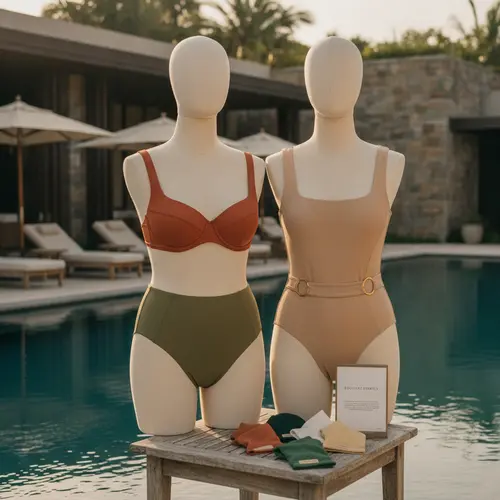
Positioning. Monday Swimwear is premium, body-positive resort swim with a timeless tone. Its customer values softness, flattering coverage, and cup-aware fit while still wanting polished hardware and vacation styling. Individual pieces commonly sit around $80–$115, above mass swim but below specialist luxury textiles.
Factory view. Public information signals imported supply into California fulfillment, not a specific factory allocation. Comparable work is medium-high when D-to-G cup options, extended sizing, underwire, texture, and hardware combine. A specialist supplier may target 300–800 pieces per style-color; repeat solids can take 8–14 weeks, while custom fabric and trims extend planning to 12–20 weeks.
Construction. Recycled nylon blends, full lining, adjustable straps, and fuller bottoms create a premium foundation. A wider cup range needs more than a larger cup: wire channels, elastic tension, and wear tests must remain stable. Hardware must tolerate saltwater without compromising comfort.
TideLine opportunity. Coverage and cup fit should be deliberate product choices. TideLine uses shared blocks, cup options, and a pre-production size set. A 30–50-piece development run can identify the winning support package before materials are reserved for bulk.
6. Frankies Bikinis
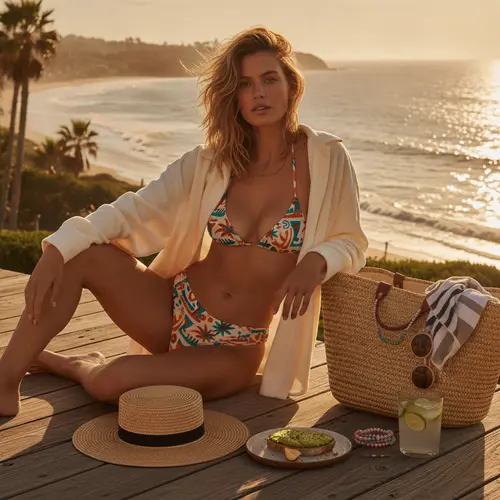
Positioning. Frankies Bikinis is Malibu-coded, trend-led premium swim with celebrity visibility, playful prints, and silhouettes from micro strings to supportive shapes. Its fashion-first customer accepts separates around $90–$110 and expects newness, collaborations, and strong social distinction.
Factory view. Public references to Los Angeles and Bali describe broad production capability, not style-by-style sourcing. A basic triangle is medium difficulty; underwire, reversibility, terry, eyelet, engineered stripes, and fashion prints move it to medium-high. Premium pilots can begin around 100–300 units, while custom fabric often requires 300–800-plus and 10–24 weeks.
Construction. Adjustable ties and visible support or coverage labels reduce fit friction. Fashion details add hidden operations: textured fabrics change seam behavior, stripes need placement control, and reversible suits multiply bulk and symmetry checks. Skimpy cuts require movement fitting because exposure shifts quickly when recovery drifts.
TideLine opportunity. Fashion drops work best when novelty sits on proven foundations. TideLine retains tested lining, elastic, and blocks while changing print, trim, and neckline. That makes a 30–50-piece capsule more commercial and prevents a full-scale order before fit, print placement, and recovery are approved.
7. Summersalt
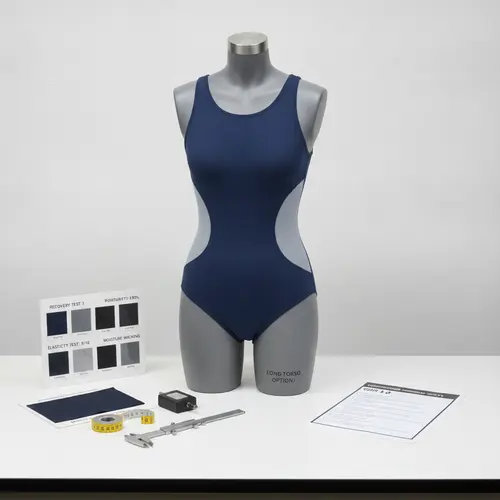
Positioning. Summersalt is a fit-system and compression brand in polished resort clothing. It attracts women seeking practical coverage, long-torso options, support, and durable shaping rather than a minimal bikini. Separates often retail around $50–$75, while signature one-pieces typically land around $125–$135.
Factory view. The brand publicly describes manufacturing across China and Asia, but supplier-level conclusions would be speculative. A comparable compression one-piece is high difficulty because panel tension, lining, shelf bras, long-torso grading, and wet performance must align. Existing fabric programs may support 500–800 units per style-color; custom fabric or broad grading needs 800–1,500-plus and 12–20 weeks.
Construction. The winning formula is performance translated into reassurance: quick drying, recovery, and a held-in feel. Too much compression harms comfort; too little weakens the claim. One-shoulder, ruched, belted, and cut-out designs intensify stretch mapping, cup retention, seam stability, and wet-opacity requirements.
TideLine opportunity. Manage swim as a performance system, not only cut-and-sew fashion. TideLine can add recovery targets, chlorine and sunscreen testing, and long-torso fit gates. Our OEM/ODM team starts small, then expands after size-set approval.
8. Andie
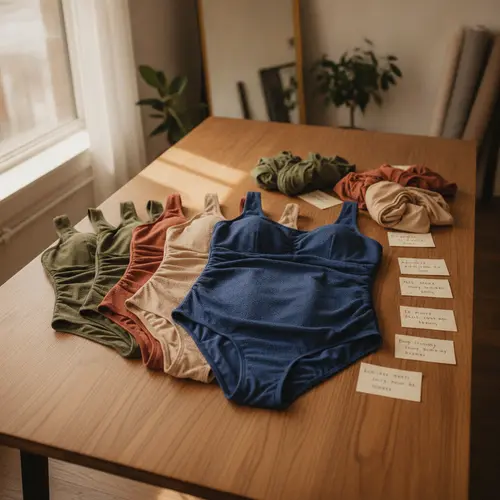
Positioning. Andie targets the comfortable, inclusive, real-life swim buyer. Its offer includes polished one-pieces, D+ and long-torso solutions, maternity options, and measured coverage. Customers value a suit that feels wearable as much as photogenic. Most one-pieces sit around $110–$155 before promotional pricing.
Factory view. The brand has publicly discussed partners in China and Sri Lanka, recycled materials, smaller batches, and ocean freight; none proves a SKU’s country or fabric. Comparable work is medium-high due to torso blocks, support, maternity ruching, snaps, and textures. Stock-fabric pilots can start in low hundreds; custom colors and prints can approach 500–1,000-plus, with 8–16 weeks or more.
Construction. Its strength is a menu of fit solutions rather than one “universal” body. The weak point is multiplied grading: long torso, plus, D+, and maternity cannot share a base pattern. Rib, crinkle, and jacquard alter stretch and marker efficiency. Recycled elastane availability also affects recovery consistency.
TideLine opportunity. Quote fit complexity honestly. TideLine can offer a lower-risk stock recycled-fabric route for launch and a custom-material route once demand supports mill minimums. With 30–50 pieces, buyers can compare support before custom dye lots.
9. Vitamin A
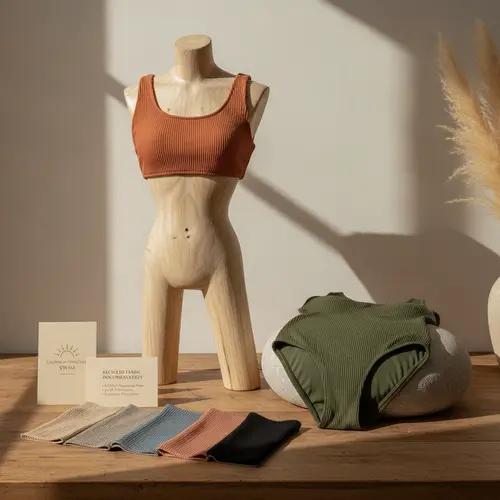
Positioning. Vitamin A occupies conscious premium swim: elevated California styling where sustainability, softness, and longevity contribute to value. Its customer pays for refined silhouettes and a recycled-fabric story. Core pieces often range from $90–$165, while premium one-pieces and coordinated looks can move toward $220 or more.
Factory view. Public language connects selected bikinis and bodysuits with California production and recycled-fabric programs, but that scope should not extend to every category. Comparable production is medium-high because recovery, clean finishing, rib, digital print, and certified inputs must align. Specialist programs may start at 200–500 units per style-color; custom yarn or print can need more and several months.
Construction. Fabric is the product story. Recycled nylon and recycled-spandex platforms can deliver excellent hand, but each lot still needs recovery, opacity, colorfastness, and chlorine testing. Coverage variants, padded options, and digital prints introduce pattern, lining, registration, and inspection work beyond basic swim.
TideLine opportunity. A sustainable claim must travel with proof. TideLine supports that through material composition records, test plans, and style-level documentation. Start with a tested recycled base, then add exclusive colors or prints after fit approval. This protects launch budgets while strengthening the product promise.
10. Hunza G
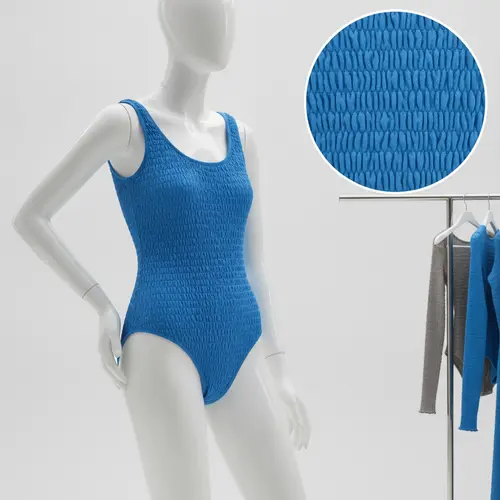
Positioning. Hunza G is luxury swim defined by stretch-crinkle texture and a low-friction one-size proposition. It serves fashion-conscious resort customers who value color, sculpting surface, and reduced sizing complexity. Core one-pieces typically retail around $255–$315, a different technical and economic category from standard cut-and-sew swim.
Factory view. Public descriptions support a British-designed-and-produced identity and specialist tubular crinkle construction, not a current complete factory map. Comparable custom fabric is high difficulty because loom capacity, stitch density, relaxation, dyeing, and recovery govern the critical path. A custom platform may begin around 150–300 pieces per style-color and take 10–16 weeks or more after fabric development.
Construction. The textile creates immediate differentiation and can reduce conventional size-SKU exposure. One-size is not one-fit-for-all, however. Small changes in tubular width, recovery, binding, or torso length change the experience. Premium crinkle also makes twisting, puckering, and uneven openings highly visible after water and sunscreen exposure.
TideLine opportunity. Treat fabric platform as product intellectual property. TideLine can help smaller labels explore original stock or semi-custom crinkle routes before funding custom knitting. We validate stretch, color, and coverage through a staged pilot before scaling.
What These 10 Brands Teach a New Swimwear Label
Strong brands reuse reliable body blocks, then create distinction through fabric, color, support, coverage, print, and finishing. That is the practical path to control MOQ and lead time. A simple suit becomes difficult when compression, broad grading, custom fabric, underwire, and fashion hardware are stacked together.
TideLine OEM/ODM call to action. TideLine turns a mood board or technical package into a production-ready collection. We support custom swimwear development, private-label OEM, collaborative ODM, fabric and trim sourcing, sample refinement, grading, testing coordination, and bulk production. Start with 30–50 pieces for focused development or market testing, then scale through approved blocks, reserved materials, and transparent production milestones. Contact TideLine to discuss your customer, price architecture, fit priorities, and launch window.
FAQs: Swimwear Brand and OEM/ODM Planning
1. What is a realistic MOQ for custom swimwear in 2026?
For a simple suit using available fabric, factories can discuss pilot quantities in the low hundreds, while efficient bulk often begins around 300–800 pieces per style-color. Custom fabric, prints, hardware, molded cups, and broad size curves can raise the requirement. TideLine supports 30–50-piece development quantities before bulk.
2. How long does custom swimwear production take?
A repeatable solid-color style can often move through bulk in roughly 8–14 weeks after materials and approvals are locked. A new program with custom fabric, printing, complex support, or multiple fit rounds commonly needs 12–24 weeks. Fabric approval and fit testing often control the critical path.
3. Which swimwear features create the most factory risk?
Compression one-pieces, underwire, molded cups, asymmetric cuts, long-torso grading, extended sizing, reversible construction, specialty textures, and engineered prints all require extra validation. The highest-risk styles stack several of these features together. A staged sample process prevents a strong sketch from failing in real wear.
4. Can a new brand use recycled swim fabric at a small MOQ?
Yes, when it begins with an approved stock recycled fabric and limits its initial color and style matrix. A custom recycled yarn, exclusive color, or unique texture usually needs higher mill minimums and more time. Documentation, recovery, and delivery window must fit the launch plan.
5. What should a buyer prepare before requesting an OEM or ODM quote?
Provide the target customer, retail price range, reference images, coverage and support requirements, size range, color count, quantity by style-color, material preference, and launch date. For ODM, TideLine can translate a visual brief into a practical fit block, fabric direction, and production specification.