Modular swimwear is changing how swim brands develop collections, how consumers pack for travel, and how manufacturers turn more colorways and print ideas into commercially viable programs. Rather than treating every swimsuit as a one-off SKU, modular design creates a compatible system of interchangeable pieces, adaptable fit features, and repeatable production components.
For consumers, that can mean one bikini top worn with several bottom silhouettes, straps that shift from straight to halter, or a reversible piece that offers two looks in one garment. For brands, it can mean building a coherent range around proven base silhouettes, then refreshing the assortment with prints, colors, trims, and detachable elements without restarting development from zero.
This guide explains what modular swimwear is, how it functions on both the consumer and manufacturing sides, why it can improve speed and inventory flexibility, and what to look for when sourcing a modular collection. It is designed for founders, product teams, retailers, travel-focused brands, and anyone exploring custom swimwear manufacturing, OEM, or ODM development.
What Is Modular Swimwear?
Modular swimwear is swimwear designed as a system of compatible, configurable, or interchangeable components. A modular swimsuit may allow the wearer to pair separate tops and bottoms, change the position of straps, reverse a garment for a second colorway, attach or remove accessories, or select pieces according to coverage, activity, and personal fit preferences.
At the product-development level, modular swimwear goes further. A manufacturer or brand creates a library of base blocks—such as a triangle top, bandeau, longline bralette, high-leg bottom, mid-rise bottom, or one-piece body—and applies multiple print, color, trim, and hardware options to those validated shapes. The silhouette and the surface design are deliberately separated so the collection can expand without duplicating the full development process for every variation.
In practical terms, modular swimwear turns a collection from a set of isolated products into an intentionally compatible wardrobe system.
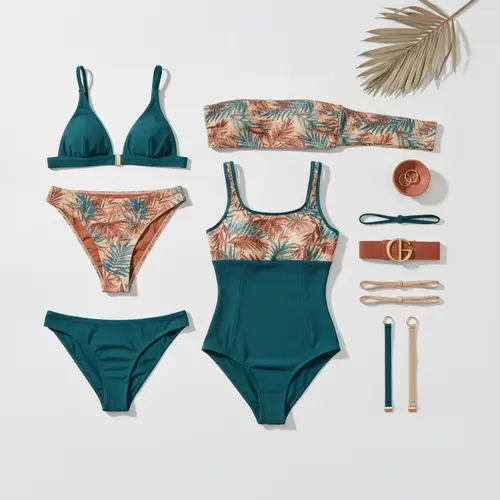
This approach is especially valuable in swimwear because fit, styling, and travel needs vary widely. One customer may prefer a supportive top with a minimal bottom; another may want a high-waist bottom for sun coverage; a third may want a top that works under a resort shirt or with a skirt after the beach. A modular collection makes those choices easier without sacrificing a unified brand aesthetic.
Modular Swimwear vs. Traditional Swimwear
Traditional swimwear is often merchandised as fixed sets or individual styles that were not designed to coordinate beyond one seasonal print story. Modular swimwear uses consistency in fit blocks, color logic, attachment points, and visual direction to create combinations that look purposeful.
Dimension | Traditional Swimwear | Modular Swimwear |
|---|---|---|
Product logic | Individual styles or fixed sets | Compatible pieces within a design system |
Consumer choice | Limited to predetermined combinations | Tops, bottoms, straps, and accents can be selected independently |
Product development | New style and artwork may be developed together | Reusable silhouette library plus flexible prints, colors, and trims |
Collection refresh | Often requires new styles to create novelty | Newness can be added through surface design and accessories |
Inventory strategy | Demand risk is carried by each finished SKU | Repeatable core shapes can support smaller, more targeted variants |
Brand value | Focuses on the single garment | Builds a wardrobe, travel, and personalization proposition |
A Short Origin Story: From Separates to Configurable Swim Systems
The roots of modular swimwear can be traced to the long-standing popularity of bikini separates. Once consumers began buying tops and bottoms independently to improve fit or styling options, the commercial rationale for mix-and-match swimwear became clear: bodies are not standardized, and neither are personal preferences.
Over time, swimwear labels expanded this idea through adjustable neckties, removable cups, convertible straps, and reversible constructions. Resortwear and active swim also influenced the category. Consumers wanted pieces that could move from swimming to lounging, watersports to hotel pools, and beach days to casual evening plans. As vacation wardrobes became more compact and content-driven, garments that created multiple looks with fewer packed pieces became even more appealing.
Today, modularity is no longer limited to a bikini sold as separates. It can include coordinated one-pieces, rash guards, swim skirts, wrap layers, detachable straps, clip-on rings, removable belts, and capsule-level color systems. In a B2B context, the concept has also matured into a manufacturing strategy: product teams can build an efficient core silhouette architecture and scale variation in a more controlled way.
Consumer-Side Modularity: How Wearers Build More Value Into Each Piece
For the end customer, modular design is about versatility, fit confidence, and personal expression. The strongest collections make this versatility obvious without making the garment complicated to wear.
Mix-and-Match Tops and Bottoms
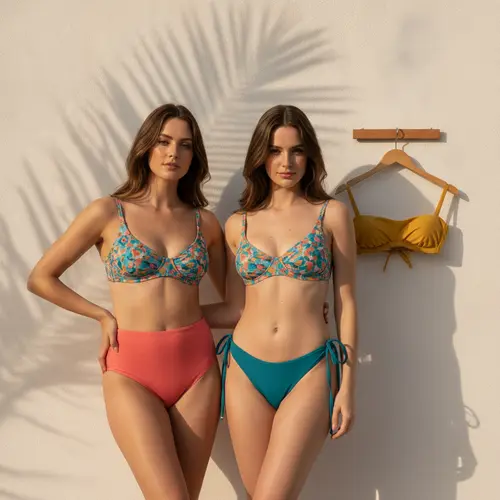
Mix-and-match swimwear is the most familiar form of modularity. Instead of selling a bikini only as a matched set, the collection offers compatible tops and bottoms separately. A customer can choose a triangle, underwire, bandeau, or longline top, then pair it with a cheeky, classic, high-waist, tie-side, or fuller-coverage bottom.
This is more than a styling opportunity. It addresses a real fit issue: many shoppers wear different sizes on their top and bottom halves. Selling coordinated separates gives them a more comfortable purchase path and may reduce the compromise associated with fixed-set sizing.
For brands, the key is disciplined compatibility. Not every top needs to work with every bottom, but customers should immediately understand the intended pairing logic. Shared fabrics, consistent color labels, coordinated print scale, and clear photography help turn separate SKUs into a confident system rather than a confusing assortment.
Adjustable and Convertible Straps
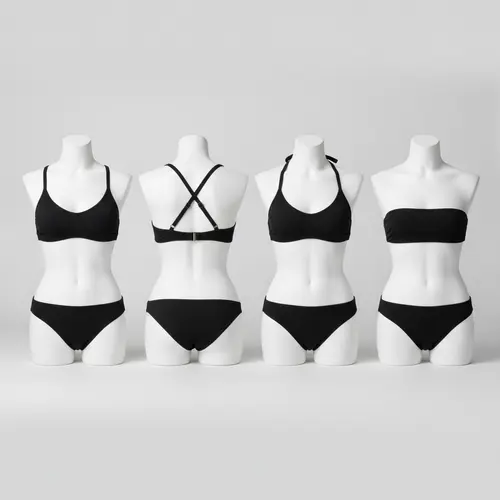
Adjustable straps make fit tuning possible, while convertible straps change the visual or functional configuration of a garment. A top may be worn with straight shoulder straps, crossed straps, a halter neck, or strapless support using detachable components. A one-piece may include adjustable back placement, convertible tie lengths, or a removable belt.
The design value lies in purposeful engineering. Strap placement must preserve support, hardware must be comfortable against the skin, and every configuration needs to maintain an attractive line. In product development, these details should be sampled and tested in every intended wearing mode—not only photographed in one position.
Convertible Feature | Consumer Benefit | Development Consideration |
|---|---|---|
Adjustable shoulder straps | More personalized torso fit and support | Use stable sliders, balanced elastic recovery, and reinforced attachment points |
Multiway straps | Several looks from one top or one-piece | Confirm support and symmetry in each approved configuration |
Halter-to-straight conversion | Shifts emphasis between neckline and shoulder support | Specify strap length, hook strength, and neck comfort carefully |
Removable shoulder straps | Creates a clean bandeau option | Build sufficient internal support for strapless wear |
Convertible ties | Allows coverage or styling adjustment | Define secure tie length, seam finishing, and knot durability |
Reversible Swimwear
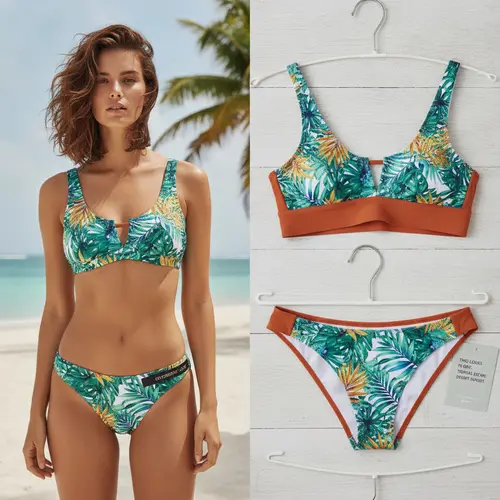
Reversible swimwear gives a garment two wearable faces, typically through double-layer construction. A solid color on one side and a print on the other can extend styling possibilities, while two coordinated colors can support a cleaner minimal aesthetic.
Reversibility is appealing for travel because it increases outfit options without adding bulk. However, it is not a simple “two prints equal two products” proposition. The construction must avoid exposed seam allowances, unwanted show-through, twisting, or compromised stretch recovery. Labels, padding access, and internal finishes require deliberate planning.
For brands, reversible pieces work best when both sides are equally intentional. The reverse should not feel like an afterthought. A well-designed two-sided story can create a premium point of difference and gives marketing teams more visual content from the same product architecture.
Replaceable Accessories and Detachable Details
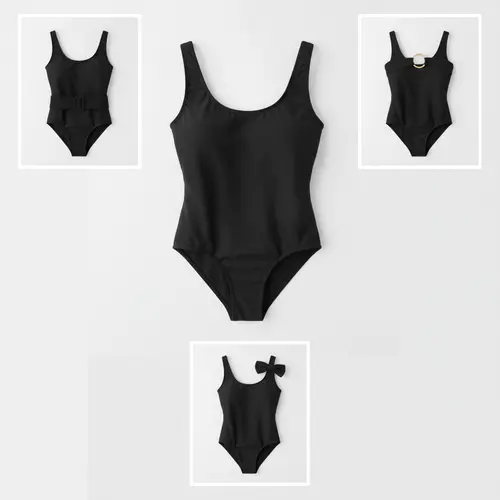
Replaceable or detachable elements add another layer of modularity. These may include removable rings, decorative chains, belts, bows, tassels, shoulder straps, sleeves, or modesty panels. A minimal black one-piece can become a resort statement with a removable waist belt; a simple bikini top can shift its mood with a metal ring, soft bow, or contrast tie.
The commercial advantage is that accessories can refresh a core style with lower design disruption than a complete new silhouette. The customer can also personalize the garment according to destination, occasion, or comfort preference.
The caution is quality and safety. Detachable components should not create sharp edges, snagging risk, or instability in water. They should be corrosion-resistant where appropriate, compatible with the care requirements of swim fabrics, and designed so the primary garment remains beautiful when the accessory is removed.
Production-Side Modularity: The System Behind an Efficient Collection
Consumer-facing modularity is only half the story. The most scalable modular swimwear programs are built on production-side modularity: a repeatable framework that allows a brand to create distinct collections efficiently.
Build a Base Silhouette Library
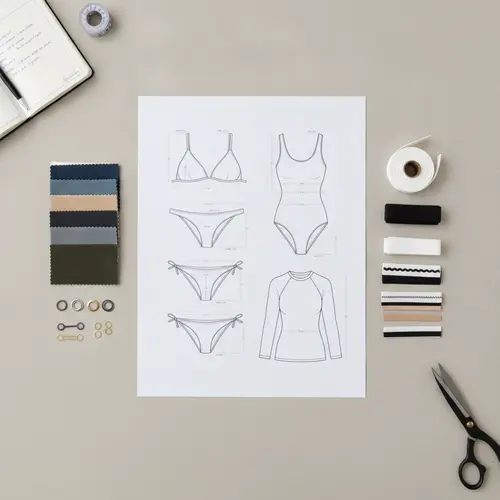
A base silhouette library is a curated set of approved swimwear blocks that can be reused across seasonal capsules. Instead of developing every shape from scratch, a brand may establish a core group of commercial fits: for example, a triangle top, underwire top, scoop-neck one-piece, high-waist bottom, tie-side bottom, and rash guard.
Each base style should include a standardized technical package: graded measurements, construction specifications, elastic requirements, lining guidance, cup or support options, placement areas for branding, and quality checkpoints. Once a style is approved, it becomes a platform for future color, print, trim, and minor design updates.
This does not mean every collection becomes repetitive. It means creative energy can be focused where it creates the most customer-visible value. A familiar, high-converting shape can be expressed in a new tropical placement print, a refined monochrome palette, contrast binding, textured fabric, or a new accessory package.
Module Layer | Examples | Why It Helps Brands |
|---|---|---|
Core fit block | Triangle top, underwire top, one-piece, high-leg bottom | Protects validated fit and reduces redevelopment work |
Fabric module | Matte recycled-look knit, rib texture, compression fabric, shimmer fabric | Matches handfeel and performance to the brand position |
Surface-design module | Solid colors, all-over prints, placement prints, engineered stripes | Creates seasonal freshness without reinventing the block |
Trim module | Rings, sliders, contrast elastic, binding, ties, belts | Builds price-tiered variations and recognizable details |
Support module | Removable pads, underwire, power mesh, internal shelf bra | Adapts the same visual family to different support needs |
Branding module | Woven labels, heat transfers, hangtag story, packaging | Keeps identity consistent across a growing assortment |
Decouple Prints From Silhouettes
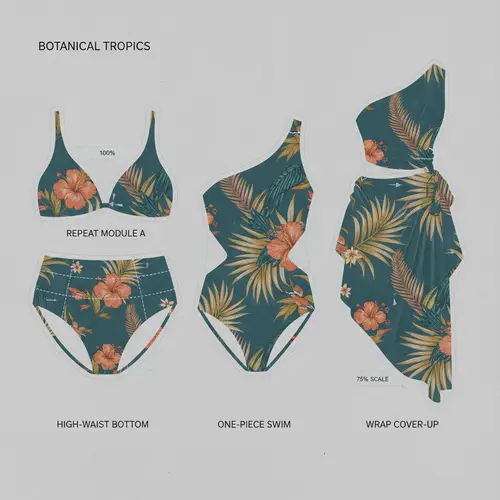
A major advantage of production-side modularity is print decoupling. In a conventional process, a designer may treat every print-and-style combination as a separate development project. In a modular system, the print is treated as a surface layer applied to an existing, approved garment block.
The process begins with print engineering. The print scale, repeat, direction, placement zones, and color behavior are reviewed against each intended silhouette. A botanical print may require different placement on a triangle cup than on a high-waist bottom; a stripe may need matching rules at side seams; a logo print may need a reserved area. These decisions are made systematically so the artwork can be adapted instead of recreated each time.
For a brand, this unlocks practical merchandising. A signature print can appear across a bikini top, matching bottom, one-piece, and cover-up, while a core solid color can provide easy pairing. A consumer sees more outfit-building opportunities; a buyer sees a more coherent collection; and a production team sees a more reusable framework.
Standardize What Customers Do Not Need to Re-Evaluate
Modularity works when brands standardize the invisible parts of the system. This can include lining colors, elastic widths, care label positioning, size grading rules, hardware suppliers, packaging dimensions, and approved color standards. These choices do not eliminate creativity. They reduce repetitive decisions, protect consistency, and make the collection easier to scale.
A strong OEM or ODM partner can support this process by translating visual direction into a modular development map. That map identifies which parts are fixed, which parts are selectable, and which parts need engineering review before production. It is particularly useful for brands moving from a first collection into recurring seasonal launches.
How Modular Swimwear Can Lower MOQ and Shorten Sampling Cycles
Modular design does not automatically make every swimwear order low-MOQ. Custom fabrics, specialized hardware, complex print methods, and extensive size runs still influence minimums and lead times. However, an intelligently modular program can remove unnecessary development friction and make smaller, more focused launches easier to manage.
Reuse Approved Patterns and Construction Methods
Pattern development is one of the most important stages in swimwear. Fit balance, elastic tension, lining behavior, stretch direction, and grading must all work together. When a brand uses a validated base block, it can avoid re-solving those fundamentals for every print or color refresh.
This can shorten the path from concept to sample because the development team is refining an existing platform rather than creating an entirely new garment. It also reduces the risk of spending multiple rounds correcting a silhouette that could have been proven earlier in the collection lifecycle.
Consolidate Material and Component Decisions
A modular collection can share fabrics, linings, elastics, and hardware across several styles. This concentration can make material sourcing more manageable and helps a brand avoid fragmenting volume across too many one-off components. A shared hardware family, for example, can support multiple tops and one-pieces while still allowing color or finish variation.
The result is not merely operational efficiency. It also improves visual consistency. When finishes, handfeel, and construction language align across the collection, even a small launch can feel like a developed brand world.
Test Demand With Focused Colorways and Capsules
With a stable silhouette library, a brand can test a new print or color on selected shapes instead of committing it across an entire unproven range. A launch might begin with one top, two bottoms, and one one-piece in a seasonal print, supported by core solids. If demand is strong, the same artwork can later expand into additional modules.
This supports more responsible buying. Instead of overcommitting to a large number of unrelated SKUs, brands can make targeted bets and learn from customer response. It is a useful model for start-ups, influencer-led labels, boutique retailers, and established companies testing a new market position.
Traditional Development Challenge | Modular Response | Potential Business Effect |
|---|---|---|
Every seasonal style requires a new fit cycle | Reuse an approved base silhouette | Fewer fit unknowns and faster sample refinement |
Print ideas require complete collection redevelopment | Apply artwork to a planned set of compatible blocks | More color/print variety from existing foundations |
Component volume is scattered across many styles | Share lining, elastic, trim, or hardware modules | More controlled sourcing and quality consistency |
Too many untested SKUs increase inventory risk | Launch selected combinations as a capsule | More focused demand testing and replenishment logic |
Small brands need differentiation without excessive complexity | Use configurable details and branded surface design | A distinctive offer with clearer development priorities |
A Practical Note on MOQ
MOQ should be discussed at the program level, not only style by style. A factory may be able to support a lower starting quantity when several SKUs share the same base fabric, construction platform, print setup, or trim family. Conversely, a small order can become difficult when every variant requires unique fabric, hardware, or finishing.
For brands seeking flexible starts, the right question is not only, “What is the MOQ for this bikini?” It is, “Which modules can be shared across this capsule so we can create the strongest assortment within our target order volume?” That discussion helps both the brand and manufacturing partner find a commercially sensible solution.
Who Is Modular Swimwear Best For?
Modular swimwear is broad enough for many customer types, but it is especially effective when the buyer values choice, flexibility, and repeatable collection building.
Emerging and Growth-Stage Swimwear Brands
For a new brand, modularity can create a more substantial offering without requiring dozens of unrelated designs. A founder can start with several core blocks, a tightly edited color palette, and a recognizable print story. The assortment still gives shoppers choices, while the development plan remains easier to control.
As the brand grows, the silhouette library becomes an asset. Best-selling fits can return in new colors or materials, and new styles can be introduced selectively to fill a genuine gap rather than merely create seasonal volume.
Established Brands Seeking Better Collection Architecture
For established brands, modularity can bring order to a fragmented line. It can clarify which shapes are evergreen, which are trend-led, which components are shared, and where custom development is worth the investment. This is valuable for brands managing multiple channels, regions, or price tiers.
A core collection may use dependable fit blocks and year-round solids, while a seasonal capsule uses the same patterns with a fresh print, statement texture, or limited accessory module. The overall range becomes easier for merchandising teams to communicate and easier for customers to shop.
Retailers, Private Labels, and Resort Programs
Private-label buyers and resort retailers often need coordinated collections that can be adapted to a defined customer, destination, or seasonal theme. Modular construction allows a buyer to curate a capsule around a preferred coverage level, color story, or price architecture while preserving development efficiency.
The system can also support exclusive variations. A retailer might use a shared core shape with its own print placement, contrast binding, branded hardware, or packaging presentation. The result can feel distinctive without requiring every technical element to be newly engineered.
Travelers and Experience-Led Consumers
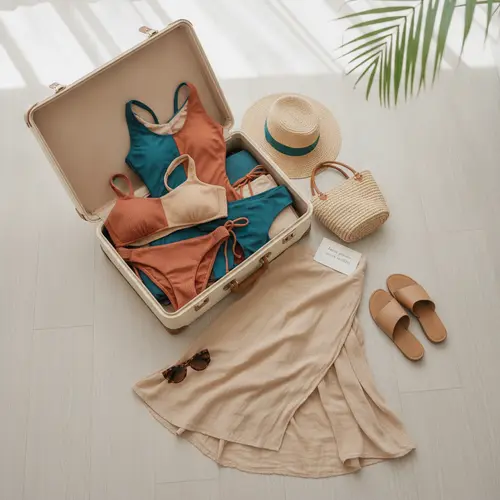
For consumers, modular swimwear is naturally suited to travel. A few coordinated pieces can create many beach, pool, boat, and resort combinations. Adjustable features help accommodate different activities, while reversible or convertible elements offer visual variety with less packing volume.
This is especially relevant for destination-focused brands. The product story can center on a versatile swim wardrobe rather than one single swimsuit: fewer pieces, more outfit possibilities, and a more personalized travel experience.
Modular Swimwear Buying Checklist
Whether you are purchasing for yourself, curating a retail buy, or briefing a custom manufacturing project, use the following checklist to assess whether a modular swimwear program is genuinely useful rather than simply marketed as flexible.
Checklist Area | What to Check | Why It Matters |
|---|---|---|
Compatibility | Confirm which tops, bottoms, one-pieces, and layers are designed to coordinate | Prevents mismatched colors, prints, or visual proportions |
Fit range | Check independent top and bottom sizing, support options, and coverage choices | Improves comfort and reduces fit compromise |
Fabric performance | Assess stretch recovery, lining, opacity, chlorine and saltwater suitability, and handfeel | Swimwear must perform as well as it looks |
Strap engineering | Test every advertised configuration for comfort, support, and secure attachment | Convertible features need to work in actual movement |
Reversible finish | Inspect seams, label placement, padding access, and print show-through | Determines whether both sides are truly wearable |
Hardware and accessories | Review corrosion resistance, skin comfort, edge finish, and attachment security | Decorative modules must be durable and safe |
Print continuity | Ask how artwork is scaled and placed across different blocks | Maintains a polished, intentional collection appearance |
Manufacturing logic | Identify shared fabrics, trims, and approved patterns across the capsule | Helps manage MOQ, development time, and quality consistency |
Brand identity | Verify that colors, trims, labels, and packaging support a recognizable point of view | Modularity should strengthen—not dilute—the brand |
Reorder potential | Consider whether successful blocks can return in new colors or prints | Turns a single launch into a reusable commercial platform |
Questions B2B Buyers Should Ask Before Development
Before beginning a custom modular swimwear project, define the commercial goal alongside the creative brief. Are you trying to offer better fit choice? Build a travel capsule? Test a print-led concept? Create a recurring core range? Launch a private-label resort edit? Each objective leads to a slightly different module architecture.
It is also important to decide which elements should be fixed and which should be customizable. For example, the silhouette, lining, and construction may stay fixed, while print, binding color, logo application, and packaging vary. Clear boundaries keep the program efficient and help the factory provide more accurate sampling and MOQ guidance.
2026 Modular Swimwear Design Trends: A Fast Overview
In 2026, modular swimwear is likely to move beyond basic bikini separates toward more intentional systems of styling, support, and production flexibility. The direction is not simply “more removable parts.” It is meaningful versatility: pieces that solve a styling, fit, travel, or collection-development need.
1. Elevated Core Silhouettes With Interchangeable Styling
Minimal triangle tops, square-neck one-pieces, bandeaus, and high-waist bottoms are expected to remain foundational. The newness will come from how they are styled: detachable straps, swappable rings, removable belts, contrast ties, and layer-friendly proportions. Brands can maintain a refined core while creating campaign-level variation.
2. Coordinated Capsule Color Systems
Rather than relying only on one matching print, collections will increasingly use color systems that make combinations easy. A small palette may include a neutral anchor, a seasonal statement color, a soft accent, and one signature print. This gives shoppers freedom while keeping every pairing within a recognizable brand world.
3. Reversible Pieces With a More Premium Finish
Reversible swimwear will continue to develop through better material selection, cleaner edge finishes, and deliberate two-sided color stories. The strongest examples will prioritize two equally wearable identities rather than treat one side as a backup. This supports travel-focused storytelling and premium perceived value.
4. Support Modularity Across Fashion-Forward Shapes
Customers increasingly expect visually expressive swimwear to offer practical support options. The 2026 opportunity is to build removable pads, adjustable underbands, power-mesh zones, multi-position straps, and internal shelf structures into modern silhouettes without making them look overly technical.
5. Print Placement Designed for Cross-Style Continuity
Brands will place greater emphasis on print engineering across a full modular range. This means considering how a motif appears on each body area, how stripes align, how logos remain legible, and how separate pieces look together. Strong placement planning makes a small collection look more premium and more editorial.
6. Modular Resort Layering
Swimwear will be designed alongside compatible resort layers: wrap skirts, mesh dresses, short sarongs, cropped shirts, swim skirts, and reversible cover-ups. For brands, this expands average outfit value and strengthens the “swim wardrobe” concept. For customers, it makes the collection more useful beyond the pool.
7. Low-Risk, High-Identity Development Programs
On the production side, brands will continue to seek ways to protect creative identity while reducing unnecessary development time. An approved core block, customized through proprietary prints, trims, label systems, and packaging, offers a balanced route. It supports focused launches without making the range generic.
How TideLine Supports Modular POD Swimwear Programs
TideLine helps swimwear brands turn modular concepts into practical production programs. Our approach combines configurable base silhouettes with flexible custom development so brands can create coordinated collections without carrying the full complexity of building every style from the ground up.
For a modular project, TideLine can support the development of mix-and-match bikini families, convertible strap solutions, reversible styles, detachable details, custom print applications, branded labels, and packaging concepts. The process begins with the right base architecture: identifying the silhouettes, fabrics, support levels, color system, and trim modules that align with your target customer and commercial plan.
Our modular POD capability is designed for brands that want a more flexible path to custom swimwear. With OEM/ODM starting from 30–50 pieces, subject to the selected materials and customization requirements, we can help emerging labels, private-label buyers, and established brands test focused capsules, refine a signature fit family, or launch a print-led collection with clearer production logic.
The most effective projects are built collaboratively. Share your mood board, target market, intended price positioning, preferred coverage level, artwork direction, and order goal. TideLine can help translate that vision into a manufacturable modular swimwear capsule that balances brand distinction, fit, and scalable production.
Ready to Build a Modular Swimwear Collection?
If you are planning a mix-and-match bikini range, a convertible resort capsule, a reversible swimwear program, or a repeatable private-label collection, TideLine can support your next step. Consult with our team about custom swimwear development, OEM/ODM manufacturing, modular POD programs, custom prints, and brand collaboration services.
Bring us your initial idea or a fully formed tech pack. Together, we can define the right base silhouettes, customization modules, sampling path, and order strategy for a swimwear collection that is distinctive for your brand and practical for your customers.
Frequently Asked Questions About Modular Swimwear
1. What is modular swimwear?
Modular swimwear is swimwear designed with compatible or configurable elements. It may include mix-and-match bikini separates, adjustable or convertible straps, reversible garments, detachable accessories, or coordinated pieces that can be styled together in multiple ways. For brands, it can also refer to a production system that combines reusable fit blocks with changeable prints, colors, and trims.
2. Is modular swimwear the same as mix-and-match swimwear?
Mix-and-match swimwear is one form of modular swimwear, but modularity can be broader. In addition to separate tops and bottoms, modular designs may include reversible construction, removable accessories, adjustable support features, convertible straps, and coordinated resort layers. The common principle is that the wearer or brand can create more than one useful configuration from a connected system.
3. Can modular swimwear help a brand reduce MOQ?
It can help create a more manageable MOQ strategy when multiple styles share approved base patterns, fabrics, lining, trims, or print processes. MOQ still depends on the chosen materials, customization level, hardware, and production requirements. The best approach is to plan the entire capsule around shared modules rather than treat every SKU as a separate project.
4. What should a brand prepare before developing modular swimwear with an OEM or ODM factory?
A brand should prepare a clear design direction, target customer profile, preferred silhouettes, expected support and coverage levels, size range, color or print concept, desired customization features, target quantities, and price positioning. Even an early mood board is useful when it is paired with a clear commercial goal, such as launching a travel capsule, building core bestsellers, or testing a new print story.
5. What is the best modular swimwear format for travel-focused customers?
A travel-focused capsule often begins with two or three compatible tops, two or three bottoms with different coverage levels, one versatile one-piece, and one layer such as a wrap skirt or cover-up. Reversible pieces, adjustable straps, and a tight color palette can add more outfit options without adding excess packing volume.