
When developing a new swimwear collection, many brands hear the word "Lycra" from fabric suppliers and manufacturers.
You may see descriptions like:
- Nylon fabric with Lycra
- Lycra swimwear fabric
- Made with LYCRA® fiber
- Premium stretch fabric with Lycra technology
But many new swimwear entrepreneurs have the same question:
What exactly is Lycra?
Is Lycra a type of fabric?
Is Lycra the same as Spandex?
Why do premium swimwear brands choose Lycra?
And does Lycra really make swimwear better?
Understanding Lycra is important because fabric selection directly affects the quality, comfort, durability, and price of your swimwear products.
In this guide, we will explain everything swimwear brands need to know about Lycra fabric.
What Is Lycra Fabric?
The first thing to understand is:
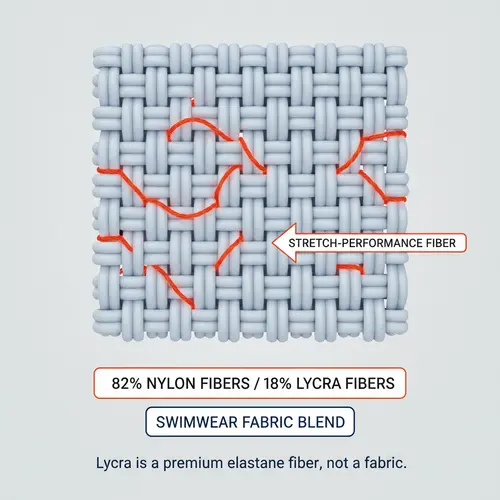
Lycra is not actually a fabric.
Lycra is a brand name for a type of elastane (also called spandex) fiber known for its exceptional stretch and recovery performance.
Unlike fabrics such as:
- Nylon
- Polyester
- Cotton
which are main textile materials, Lycra is a performance fiber that is usually blended with other fibers.
For example:
82% Nylon + 18% Lycra
This means:
- Nylon makes up the main structure of the fabric
- Lycra provides stretch, elasticity, and shape recovery
In swimwear production, Lycra is usually combined with nylon or polyester to create fabrics that can move with the body while maintaining their original shape.
Is Lycra the Same as Spandex?
This is one of the most common questions from new swimwear brands.
The short answer:
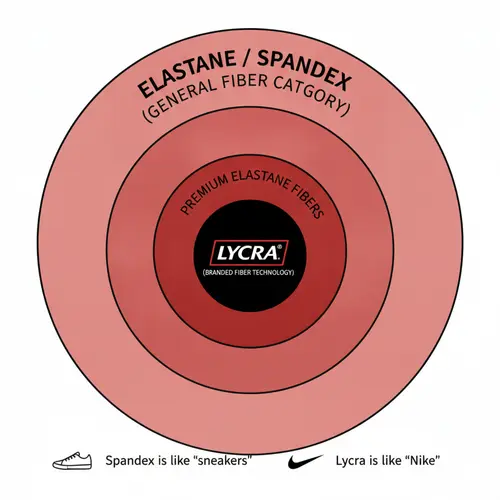
Lycra is a type of spandex, but they are not exactly the same thing.
Spandex is the general name for a stretchy synthetic fiber.
Lycra is a trademarked fiber brand developed for high-performance elasticity.
A simple comparison:
| Spandex | Lycra | |
|---|---|---|
| Meaning | A fiber category | A branded fiber technology |
| Purpose | Provides stretch | Provides high-quality stretch and recovery |
| Usage | Common in many fabrics | Often used in premium performance fabrics |
| Relationship | General term | A specific brand of elastane fiber |
Think of it like this:
Spandex is the category.Lycra is one premium version within that category.
Many manufacturers may use the word "spandex" when talking about elasticity, while brands may highlight "Lycra" because it represents a recognized performance standard.
Why Is Lycra Used in Swimwear?
Swimwear is one of the most demanding clothing categories.
Unlike casual clothing, swimwear needs to handle:
- Constant stretching
- Water exposure
- Body movement
- Repeated washing
- Sun exposure
This is why stretch performance is extremely important.
Lycra provides several key benefits.
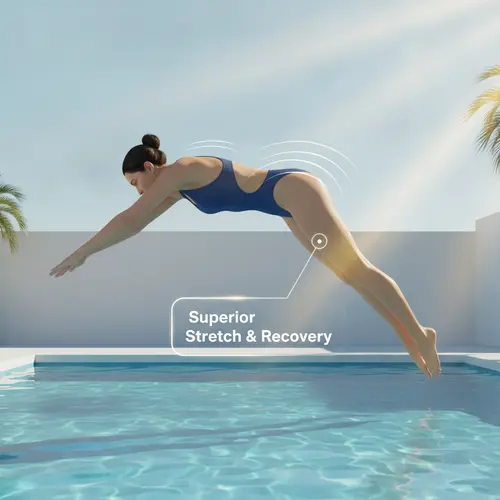
1. Superior Stretch and Flexibility
The biggest advantage of Lycra is its elasticity.
A bikini or swimsuit needs to stretch when the wearer:
- Moves
- Swims
- Exercises
- Sits
- Bends
A fabric without enough elasticity can feel restrictive and uncomfortable.
Lycra allows swimwear to stretch with the body while maintaining comfort.
For brands, this means:
- Better fit
- More comfortable wearing experience
- Improved customer satisfaction
2. Excellent Shape Recovery
Stretch alone is not enough.
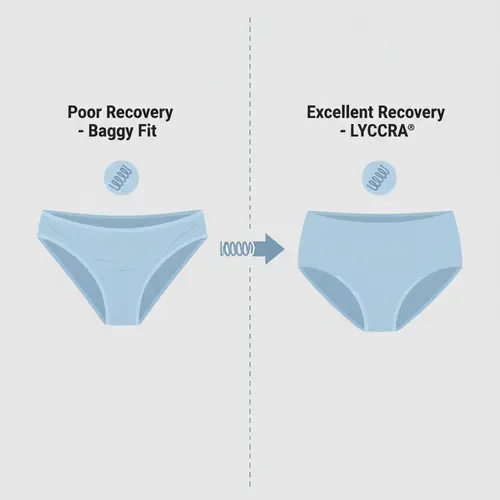
A good swimwear fabric must also recover its original shape.
Imagine a swimsuit that fits perfectly when new.
After several uses:
- The waist becomes loose
- The straps lose tension
- The fabric becomes baggy
This usually happens because the fabric has poor recovery performance.
Lycra helps swimwear return to its original shape after stretching.
This is especially important for:
- Bikini bottoms
- One-piece swimsuits
- High-cut designs
- Compression swimwear
3. Better Fit and Body Contouring
Swimwear is designed to fit closely to the body.
The fabric needs to follow body curves while providing enough support.
Lycra helps create:
- A smoother silhouette
- Better body shaping
- More secure fitting
This is one reason why many premium swimwear brands prefer fabrics containing Lycra.
4. Improved Durability
Swimwear goes through challenging conditions:
- Chlorinated pools
- Salt water
- Sun exposure
- Frequent washing
A high-quality Lycra blend helps the fabric maintain elasticity for longer periods.
For brands, this can reduce complaints related to:
- Loose fit
- Fabric deformation
- Short product lifespan
Does Lycra Make Swimwear More Expensive?
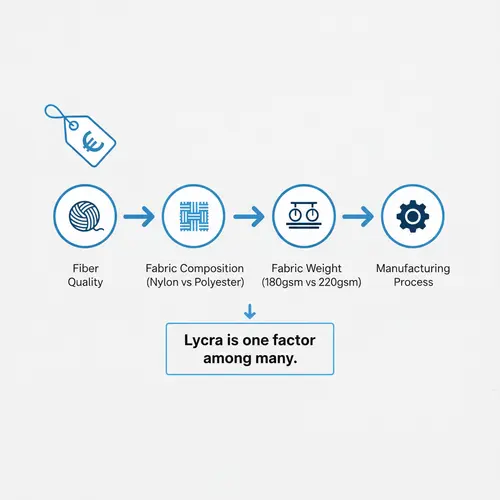
Generally, yes.
Fabrics containing premium Lycra fibers usually cost more than basic stretch fabrics.
However, the price difference comes from more than just the fiber itself.
The final fabric cost depends on:
Fiber Quality
Higher-quality elastane fibers provide better recovery and durability.
Fabric Composition
For example:
82% Nylon + 18% Lycra
will usually have different performance and cost compared with:
90% Polyester + 10% Spandex
Fabric Weight
A heavier fabric often provides:
- Better coverage
- More premium feel
- Better support
For example:
- 180gsm
- 220gsm
can create very different swimwear experiences.
Manufacturing Process
Fabric knitting, dyeing, finishing, and quality control also affect pricing.
Therefore:
Lycra is an important factor, but it is not the only factor that determines fabric quality.
How Much Lycra Is Usually Used in Swimwear?
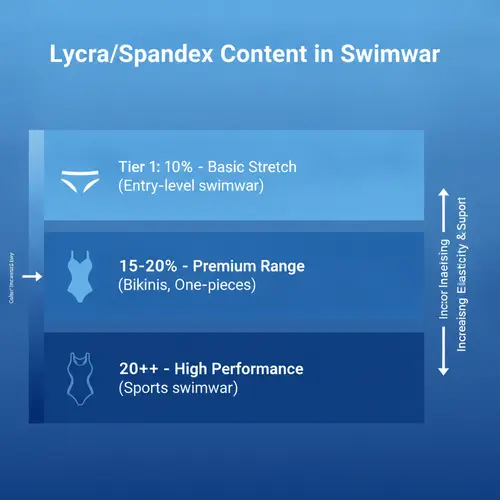
There is no single "correct" Lycra percentage.
The right amount depends on the product purpose.
Common compositions include:
10% Spandex / Lycra
A basic stretch level.
Suitable for:
- Entry-level swimwear
- Less demanding designs
15%-20% Spandex / Lycra
The most common range for premium swimwear.
Examples:
- 82% Nylon + 18% Lycra
- 80% Nylon + 20% Lycra
Suitable for:
- Bikinis
- One-piece swimsuits
- Fashion swimwear
20%+ Spandex / Lycra
Higher stretch performance.
Suitable for:
- Sports swimwear
- Performance swimwear
- Active designs
Is Lycra the Best Fabric for Every Swimwear Brand?
Not necessarily.
Choosing swimwear fabric depends on your brand positioning.
Different brands may need different solutions.
Fashion Swimwear Brands
Recommended:
Nylon + Lycra
Why?
- Softer hand feel
- More luxurious touch
- Better comfort
Ideal for:
- Designer bikinis
- Boutique swimwear brands
- Premium collections
Sports Swimwear Brands
Recommended:
Polyester + Lycra
Why?
- Better chlorine resistance
- Higher durability
- Good shape retention
Ideal for:
- Training swimsuits
- Athletic swimwear
Sustainable Swimwear Brands
Recommended:
Recycled Nylon + Lycra
Why?
- Supports sustainability positioning
- Maintains premium performance
Suitable for brands targeting environmentally conscious customers.
Common Questions About Lycra Swimwear Fabric
Is Lycra waterproof?
No.
Lycra itself is not waterproof.
However, Lycra is often used in swimwear because it provides stretch and recovery, while the complete fabric construction provides swimwear performance.
Does Lycra stretch out over time?
High-quality Lycra fabrics are designed to maintain elasticity.
However, poor care, excessive chlorine exposure, or low-quality blends can reduce fabric lifespan.
Is Lycra better than regular spandex?
Lycra is a premium branded form of elastane/spandex.
The actual performance depends on:
- Fiber quality
- Fabric construction
- Manufacturing process
Why do luxury swimwear brands use Lycra?
Because premium brands focus on:
- Better fit
- Better comfort
- Longer product life
- Better customer experience
Fabric quality is part of brand value.
Final Thoughts: Why Understanding Lycra Matters for Swimwear Brands
For new swimwear brands, choosing fabric is one of the most important decisions during product development.
Lycra is not simply a material name.
It represents a performance technology that helps swimwear achieve:
- Better stretch
- Better recovery
- Better fit
- Better durability
However, the best swimwear fabric is not always the one with the highest Lycra percentage.
The right choice depends on:
- Your product design
- Target customers
- Price positioning
- Performance requirements
Working with an experienced swimwear manufacturer can help you select the right fabric combination and avoid costly mistakes during production.
A well-designed swimsuit starts with the right fabric choice.